The “Mood” of Your Art

One of the tools that’s always helped me plan out my artworks is a ‘mood board’. In fact before I discovered mind mapping, creating a mood board was a precursor to each of my paintings. Being a Fashion Design graduate I remember using mood boards a lot for various projects at my design college and it’s this practice that I have carried forward to my art as well.

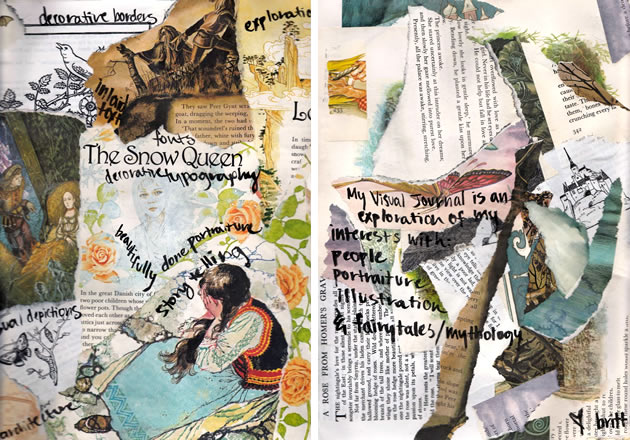
But do artists really use mood boards? Yes! They aren’t “mood boards” per say, but more like collages of pictures and or small objects created to express the “mood,” of a concept or theme. A typical mood board is an amalgamation of images, fonts, colors, and textures defining the theme of the work. It comes in many forms and might even be called something different depending on the industry that you’re in.

How does it help?

A mood board is a visual means for artists to keep track of what inspires them thereby keeping their creative thoughts and ideas aligned.   In art the possibilities are endless, so having a gentle way to keep you aligned can be a big help. This can be done in sketchbooks too, but they are often forgotten in a bag or abandoned in some shelf, but a mood board is a big visual that can’t be overlooked once it has been put up on display in your studio. If you feel stuck, you have a tangible object to come back to and rekindle your ideas, perhaps see what’s missing or where you were stuck and figure out a way to move on. 

How to begin…

There is no hard and fast rule for starting your mood board but here’s how I do it. I like to begin with images and lots of them! It can be anything that expresses the idea or theme I intend working with. Then comes the writing, which helps put my thoughts into words – essentially keywords that pop up in my mind about the concept behind my idea.

So how is it different from a Mind Map?

The thing about a mind map is that it’s more words than pictures. You start with a single word that describes your idea. Then you keep adding more words or phrases in the form of branches and sub branches. Keep following this spider web of branches and you will keep pushing your ideas further. This can be challenging, but being more specific will help your ideas. Some people do add images to their mind maps but as I said, it’s more about words. On the other hand, a mood board is primarily visual and images doing most of the talking.

What should you put on it?

Almost anything, but here are some examples:

  • Images from magazines – All those colorful and ‘artistic’ visuals and adverts from fashion magazines work well for backgrounds. Travel magazines can be a good source of interesting textures and shapes.
  • Fabric strips – Though this applies more for design projects, for an artist they can be a good source of colors and textures.
  • Colour swatches – Either from paint sample charts, or paint your own. Although I am personally not in favor of this as I feel it restricts an artist’s color range, so I like to leave this one out.
  • Images of other artists’ work – What is it about them that inspires you and how can you incorporate this inspiration into your own work?
  • Photos from your sketchbook.

Even though it’s a mood board, I do throw in a few words here and there just to add on to the visuals. If you are creating a mood board by hand you can cut out letters from magazines, use a stamp, print using your favorite font on your computer or just write by hand. If it’s a digital mood board then get innovative with all those lovely fonts on your computer!

Where should you display it?

I like to place my mood somewhere close to my painting so that it’s readily available for me to draw inspiration from. Ideally it should be somewhere near your work table in your studio or better still, take a photo with your phone and use it as your screensaver!

How to go about it….

·       Come up with an idea – Go through any ideas you may have in your mind. Browse through your sketchbooks and pictures on your phone for inspiration. Look up books and search Google to ignite that spark.

·       Research – Whether you’re making a physical mood board or a digital one do your research online or at a library, to collect as much material as possible.

·       Organize your thoughts and material – Spread out all your material and organize it systematically so that everything falls into place in accordance with your idea or concept. Get rid of anything that doesn’t fit in.

·       Put it all together – Once you are sure of your layout and placement, stick everything in place (in case of a physical mood board).

·       Use a mood board app for creating a digital mood boardGoMoodboard is one of the most popular online mood board apps. With no account required, simply click and drag images onto your project to create a mood board.

Here’s a mood board for a painting that I am going to be starting soon – based on Adbhuta rasa (the emotion of wonder). I used Adobe Photoshop to do this one.  It’s not an exact blueprint for the painting, but just a representation of the concept and ideas I wish to express through the final artwork. I had shared a mind map for this very artwork in an earlier post. Do check it out as well to see the difference!

The mood board for my next project

A Tour of My Sketchbook

I have a confession to make. I have never been the type to maintain a proper sketchbook. More or less all my sketches are done directly on the canvas or the paper that will eventually end up being the final artwork. But lately I have realized that sketchbooks are a great way for artists to practice and fine tune their art. The sketches and doodles you create in your sketchbook are essentially the seeds of your creative thoughts and ideas that will ultimately sprout and grow into your masterpieces.

The alliance between an artist and his or her sketchbook can take a number of forms — a daily log of inspiration, a blueprint for an upcoming artwork, or an outlet for expressing his or her thoughts. No matter what form it takes, it will have a definitive impact on the artist’s creative process. This creative process plays an important role in an artist’s attempts to successfully execute a concept. Essentially, your sketchbook can be your verbal and or visual medium of expression.

Benefits of a Sketchbook

Maintaining a sketchbook has a lot of benefits.If you ever feel uninspired or want to track your progress, you can glance back at your old sketchbooks to see how you have evolved. You can also refer to them to determine your style. It can help you preserve your ideas for posterity. It is a handy way of recording all your observations and learning from real life. Keeping a sketchbook is a great way to explore new avenues and venture into seemingly unchartered territories.
Being a storehouse of inspiration, sketchbooks keep motivating us to hone our skills every time we glance through them. The more we practice the better results we get and the further we move along in our creative journey.

How to get the most out of your Sketchbook

  • Log the date every time you start working in a sketchbook so that you can monitor your progress. This can be extremely motivating especially when you have an artist’s block.
  • Carry a compact sketchbook whenever you are out and about so that you can document your ideas as soon as you come across something that inspires you. Sometimes great ideas are easily forgotten once the inspiration is out of sight. So having them safely recorded in your sketchbook makes them available for the future.
  • There is a sketchbook for every medium, whether it is oils, watercolors, gouache, pencil, pen and ink or mixed media. All you need to do is get hold of the right one.
  • Jot down notes and self critic your work about the subject, concept and technique for the artwork at hand.  This will contribute greatly to your growth as an artist. 
  • Don’t try to be perfect.
    Your sketchbook is a place for you to explore and learn. It’s your personal space where you are free to mess around. After all, great art comes out of a mess!  Just relax and enjoy the process!

I have come to realize that a sketchbook is even more important than the final piece as it displays all the work you have put in to get to where you are today. It also made me realize that sometimes working directly onto the canvas doesn’t necessarily get you the outcome you expect.

Since this realization has dawned upon me, I have tried to make a conscious effort to fill up that sketchbook of mine that has been lying in a state of neglect for years. There was a time when I used to sketch in it before I got down to working on my canvas but over time I seem to have overlooked this step. These simple pencil sketches they made me aware of my evolution as an artist and thus motivated me to pick up the habit once again.

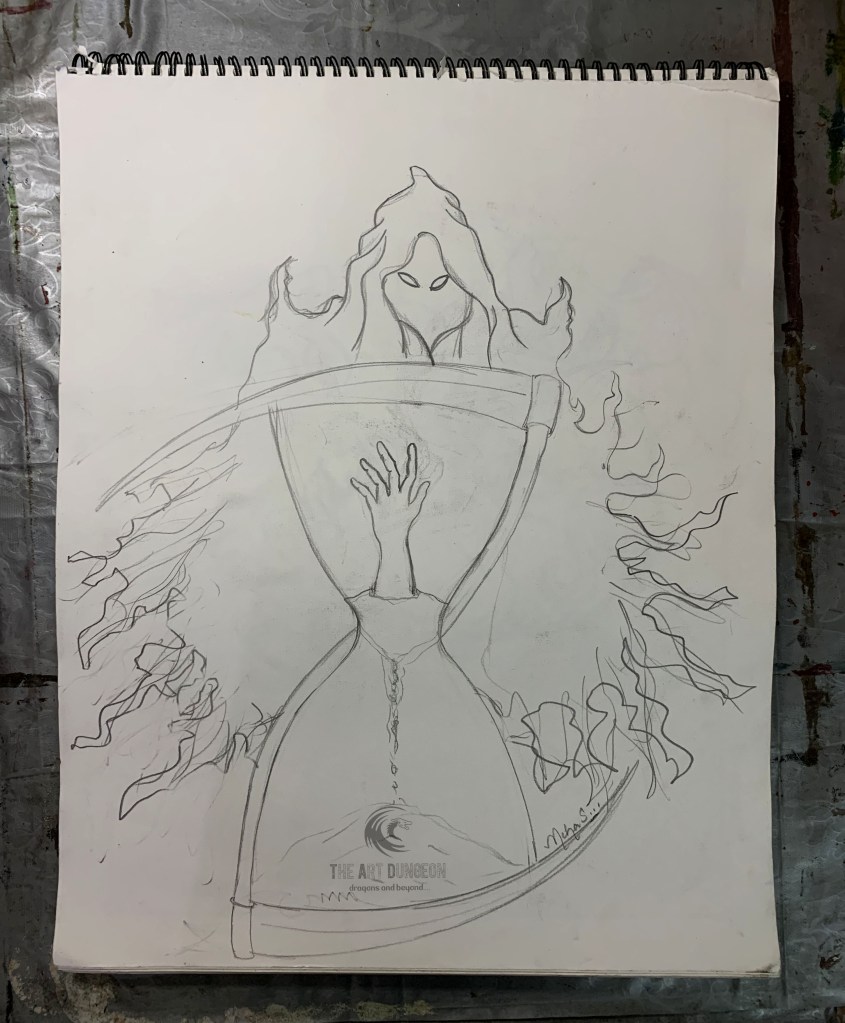
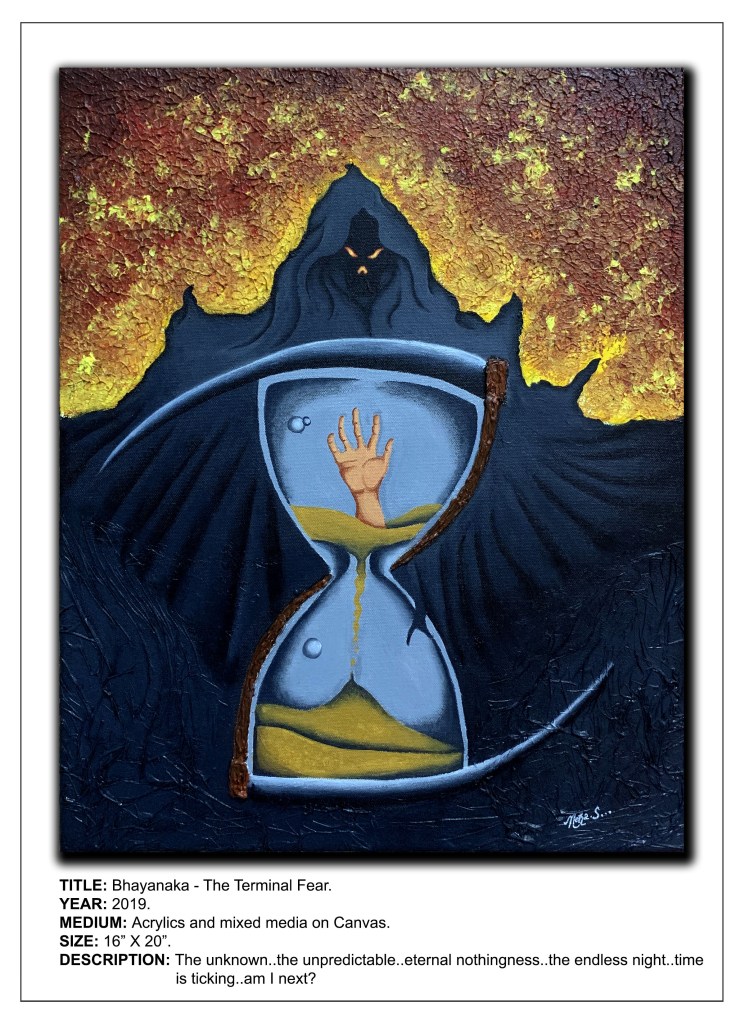
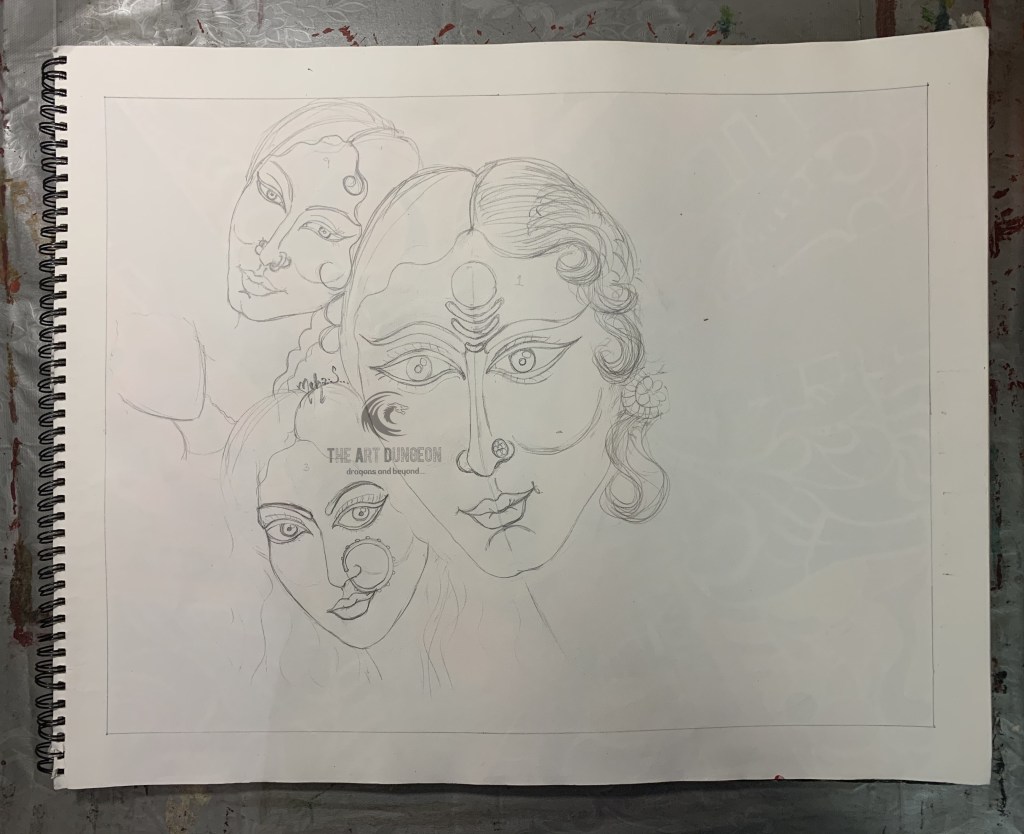
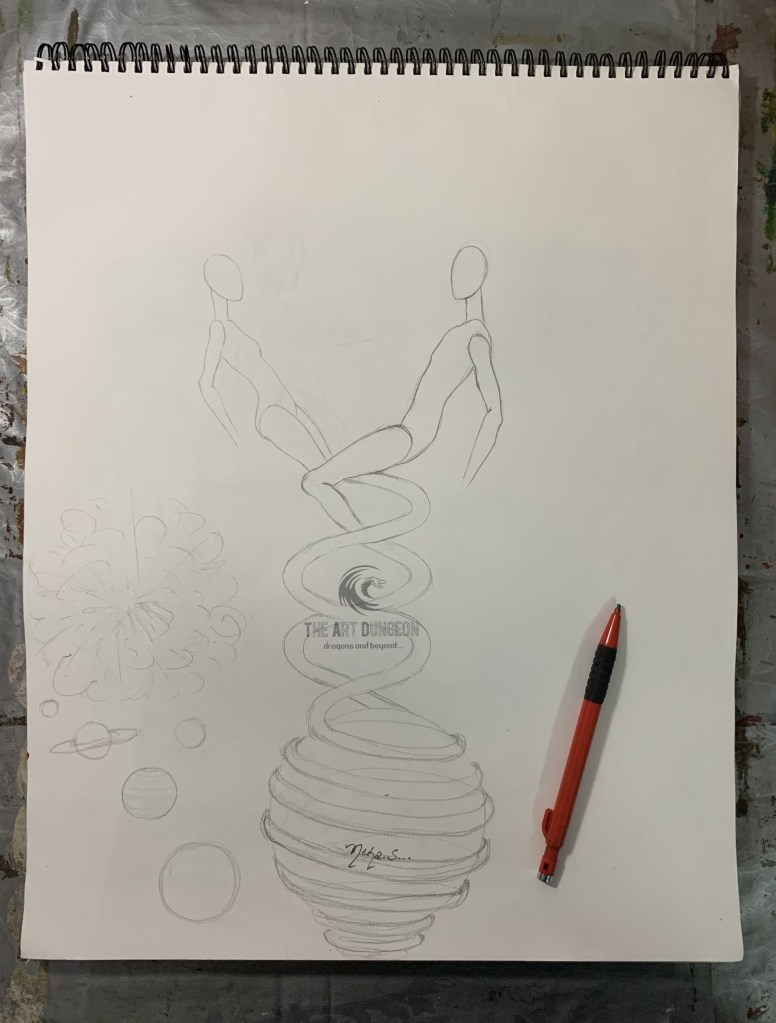
So now it will be my constant endeavor to document my ideas first and foremost in my precious sketchbook before I execute them onto the canvas or the final surface. I may even go one step ahead and explore new techniques and mediums within the sketchbook itself. Even though my sketchbook is still work in progress and my personal space, I wouldn’t mind giving you all a peek into it. So here are a few glimpses of some scribblings and doodles from the past. Hope you enjoy them!

My First Mind Map

Last week I had published a post about mind mapping. This one is an extension of that, wherein I have delved into the intriguing world of mind maps and attempted to organize the whirlwind of ideas storming my brain into something meaningful.

The mind map displayed in this post is a precursor to my next painting which is part of my long pending Navrasa Series covering the 9 basic human emotions (refer to previous posts to view the series). The emotion I will be depicting next is called “Adbhuta Rasa” which in simpler terms means “wonder” and “amazement.” This one has been a huge challenge for me as it’s not easy depicting an emotion as profound as wonder. It is something that we feel and express on a daily basis and it knows no bounds. Anything and everything can become a cause of wonder for the human mind. So the question I asked myself while working this one out was what is the greatest wonder for the human race?

Without going too much into detail about the concept behind this artwork, here’s a draft of my thoughts and ideas that I have plotted graphically using an online mind mapping app called Ayoa (https://app.ayoa.com/).  So let my mind map do the talking! (Click on the link below the image to view the map in detail)

My mind map for “Adbhuta Rasa” (Wonder)Click on link below to view in detail

Mind Mapping for Art

Having trouble organizing your artistic thoughts and ideas? Have your creative musings become a tangled mess? Want to harmonize your aesthetic reflections and transform them into your artistic expressions?  

Artist and inventor, Leonardo da Vinci, said, “Everything is connected to everything else.”

Most artists commence their creative process by brainstorming possible concepts or themes for their artworks. Sometimes ideas pop up inside our heads one after the other so rapidly, that it becomes almost impossible to keep track or to retain them in our memories. At times like these, when our thoughts are in a clutter, we need to document them in a systematic and organized manner so that we can see clearly through the chaos.

When our multi-dimensional thinking triggers a tsunami of ideas and listing these down in a sequence becomes a daunting task, a Mind Map can help by rounding up, organizing and recording them graphically as well as visually. 

What is a mind map?

Mind map creator Tony Buzan coined the term ‘mind map’ to refer to a diagram that has a branch or root-like structure radiating from a central image on the page, and which uses lines and colour to show relationships, groupings and connections between words, ideas and images. A mind map helps one to think out of box by ensuring that a wide range of possibilities are considered, thereby bringing clarity of thought.

mind map is nothing but a graphic organizer that uses a diagram to visually organize ideas and concepts. The main idea or concept is placed in the center of the diagram, and then related ideas are added to it in a radial fashion.   It is a visual thinking tool that structures information, helping you to better analyze, comprehend, synthesize, recall and generate new ideas. Just as in every great idea, its power lies in its simplicity.

How to make a mind map

Tony Buzan has set official guidelines for drawing a mind map on the ThinkBuzan website. These include:

  • Using a landscape format.
  • Starting with a central image in the middle of your page to represent your main concept or theme.
  • Using curving lines to add branches to the centre that represent secondary ideas with respect to the main concept and then connecting these to smaller branches representing topics describing and extending these ideas in detail; use single words and images.
  • Adding colours doodles and symbols for aesthetic and organizational purposes as well as making the mind map more effective.
  • Using short topic and sub topic headings. A single word or better yet, a picture or image will work best.
  • Varying text size, color and alignment. Vary the thickness and length of the lines to provide as many visual cues as you can to emphasize important points. Every little bit helps in engaging your brain and unlocking its creative potential.

A mind map can have different formats such as a tree diagram, spider diagram – or even just a flurry of thoughts on paper, as long as it displays the possibilities for a central concept.

Some Creative Mind Map Ideas

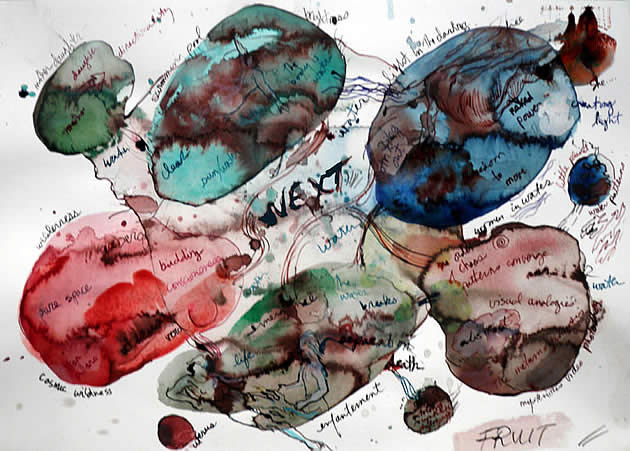
Here are some interesting and innovative minds maps created by artists(click on thumbnails to view full image) :

Advantages of Mind Mapping

Mind mapping increases creativity and productivity by helping you come up with more unique ideas in lesser time and also improves your brain’s cognitive powers. It opens your mind while brainstorming and gets rid of hurdles posed by linear thinking. It’s a great way to sort out and link up the ideas you have brainstormed on a single page as all the data is visually available at a glance. It can even lead to the triumphant discovery of relationships between seemingly unrelated topics.

Disadvantages of Mind Mapping

Inspite of all the benefits, mind mapping has some disadvantages too. If you are a left brained or logical person, radial thinking is predominant. While brainstorming you need to be intuitive so as to allow ideas to flow freely. This is tough as logic tells them it’s not possible. Moreover, mind maps can become too complicated if not structured well, making them difficult to understand. Another setback with a mind map is that in order to comprehend it completely, active participation is required as it involves a step by step process while structuring it so it might be a little difficult for people who did not go through the process themselves to make sense of the mind map. But the good news is all these problems can be fixed!

Mind mapping is such an extensive concept that this post just about covers the tip of the iceberg. I personally find the entire idea of mind mapping extremely intriguing and would love to give it a shot for my future artworks. Hope you all are also inspired to try it out as well!

DISCLAIMER – All the information, data and imagery in this blog post is for informational and educational purpose only. While there may be copyrighted material the use of which has not always been specifically authorized by the copyright owner, I have only made it available with the sole effort to stimulate creative progress and artistic enrichment. Some images may have been taken from the links included below and I give full credit to these websites/pages, thereby in no way claiming them to be my own. I have also used these links for reference purposes and collection of data; therefore I give full credit to the respective web pages. Most of the data in this post is based on my personal experiences and opinions and I am not responsible for any material that is found in the links at the end of this post.

Sources and Photo Credits –

https://www.studentartguide.com/articles/how-to-make-a-mindmap-creative-ideas

https://litemind.com/what-is-mind-mapping/

Let’s get Digital!

The 21st century is the age of digital advancement where technology has completely revolutionalized the world. This digital revolution has also penetrated the world of art and transformed the way artists think, create and innovate. The art world is no longer confined within the four walls of galleries and museums, but is chartering new territories of its own into the cyber world. Digital technology has not just opened up new avenues for artists, it has also changed the entire outlook towards art. The impact of digital technology has greatly altered activities such as painting, drawing and even sculpture. From digital painting, to illustration and even photography, it has affected how art is created as well as presented.

But what is digital art?  It is the practice of creating works of art that are computer generated, scanned or drawn using a tablet or mouse. This includes digitally manipulated videos as well as photographs.

Digital illustration or computer illustration is the use of digital tools to produce images, usually through a pointing device such as a mouse. A mouse may not be very precise for drawing, so a graphics tablet is a better tool for a digital illustrator, because it allows the user to make marks that look more like the natural lines made by the human hand. Moreover, the pressure-sensitive surface, allows for faint to bold and thin to broad marks. These variations mimic traditional wet and dry media.

There are two main types of tools used for digital illustration: bitmapped (or “raster”) and vector applications. Bitmap applications are commonly called “painting” programs, such as Adobe Photoshop, while vector applications like Adobe Illustrator are called “drawing” programs.

Digital painting is an art form in which traditional painting techniques such as watercolor, oils, impasto, etc. are applied using digital tools (software) on a computer or a graphics tablet using a mouse or stylus respectively. All digital painting programs have digital brushes for traditional styles like oils, acrylics, pastels, charcoal, pen and even airbrushing.

Digital painting software such as Corel Painter, Adobe Photoshop, ArtRage, GIMP, Krita and OpenCanvas give artists a similar environment to a physical painter – a canvas, painting tools, mixing palettes, and a multitude of color options. There are various types of digital painting, including impressionism, realism, and watercolor.

Advantages of Digital Art

  • More efficient – Easier to get started and work quickly.
  • More forgiving – Nothing is permanent when you have the undo button.
  • More exploration – Unlimited experimental possibilities.
  • Easier duplication – Ideal for working with clients.
  • Equipment/Materials – Ease of working in an organized, mess-free environment
  • Instant Sharability – Because digital art is already stored on a digital device, it is easier for artists to share their work in its highest form either on websites or through social media instantly.

There are some drawbacks also of digital painting. Some argue there will always be more control for an artist holding a physical brush in their hand. Others believe the character that is unique to physically made art is missing from digital painting.

Here are some of the best drawing apps:

  • Adobe Illustrator Draw.
  • Adobe Photoshop Sketch.
  • ArtFlow.
  • MediBang Paint.
  • Infinite Painter.
  • Autodesk SketchBook.
  • PaperColor.
  • DotPict.
  • Procreate.

The world of digital art is like a virtual simulation of the real art world. Digital art has changed not just how artists can express their creativity, but also how the audiences experience art. It is ever changing so is still in its nascent stage, but with time it will surely grow and mature into a fully developed art form. The day is not far away when the seemingly unorganized and random digital art world paves a definitive path for itself. The future holds the defining moments for digital art.

Here are a couple of my own explorations with digital art. Still getting a hang of it but I am loving it!!

Art for Art’s Sake

Heard of the phrase “Art for Art’s Sake?” It is a simple expression for the philosophy that “true” art is divorced from any didactic, moral, or utilitarian function. The basic idea is that art is by definition aesthetical and thus can have no other purpose. In addition, art’s role is not to educate or to enlighten someone. It exists just for itself.

Oscar Wilde is considered the father of aesthetics. The phrase l’art pour l’art (“art for art’s sake”) was coined by the philosopher Victor Cousin, in 1818. According to him and several other philosophers of the century, social and political themes are irrelevant and should not be used in art making unless they render the final product “beautiful”.

This approach to art was elucidated in the 19th century by the Aesthetic Movement that promoted pure beauty and aesthetic values by accentuating visual and sensual qualities of art rather than practical, socio-political, moral or narrative considerations. So art from this movement didn’t give emphasis to deeper meaning.

History and Origin

The aesthetic movement flourished in Britain in the 1870s and 1880s. In painting it was exemplified by J.M. WhistlerAlbert Moore and certain works by Frederic, Lord Leighton. Japanese art and culture was an important influence, especially on Whistler and aesthetic design. Aestheticism shared certain affinities with the French Symbolist movement, fostered the Arts and Crafts Movement, and sponsored Art Nouveau. From 1875 the ideals of aestheticism were commercialized by the Liberty store in London, which later also popularized Art Nouveau.

The movement began in reaction to prevailing utilitarian social philosophies and to what was perceived as the ugliness and philistinism of the industrial age. In England, the artists of the Pre-Raphaelite Brotherhood, from 1848, had sown the seeds of Aestheticism, and the work of Dante Gabriel Rossetti, Edward Burne-Jones, and Algernon Charles Swinburne exhibited it and expressed a yearning for ideal beauty through conscious medievalism. The painter James McNeill Whistler raised the movement’s ideal of the cultivation of refined sensibility to perhaps its highest point.

The roots of Aestheticism can be traced back to the 1860’s; however, it was not until the 1880’s that the movement gained noticeable popularity. The Aesthetic movement is often associated with the French term fin de siècle,” or the “end of the century,” which refers to the closing of an existing era and implies the beginning of a new one. It is often used to describe late 19th century Britain, a time when the ideals of the Victorian Age were losing precedence and being replaced by Aesthetic values. The Aesthetic movement denounced the sober morality and middle-class values that characterized the Victorian Age and embraced beauty as the chief pursuit of both art and life.

The Aesthetic Movement provided a challenge to the Victorian public when it declared that art was divorced from any moral or narrative content. In an era when art was supposed to tell a story, the idea that a simple expression of mood or something merely beautiful to look at could be considered a work of art was radical. In its assertion that a work of art can be divorced from narrative, the ideas of the Aesthetic Movement paved the road towards Modern Art. The movement is often considered to have ended with Oscar Wilde’s trials, which began in 1895.

Modern Day Aestheticism

Although aestheticism emerged more than 150 years ago, it’s still active today and very powerful too. Every time an art movement rejects pure aesthetical approach towards art, supporters of aestheticism raise their voices, questioning the quality of such art. So, aestheticism is not some art movement that existed in history and disappeared into oblivion – it’s still alive.

There are no specific names from the world of contemporary art today that would fit into the genre of aestheticism because artists usually tend to distance themselves from this movement. Apparently majority of contemporary artists reject basic principles and ideas of aestheticism.

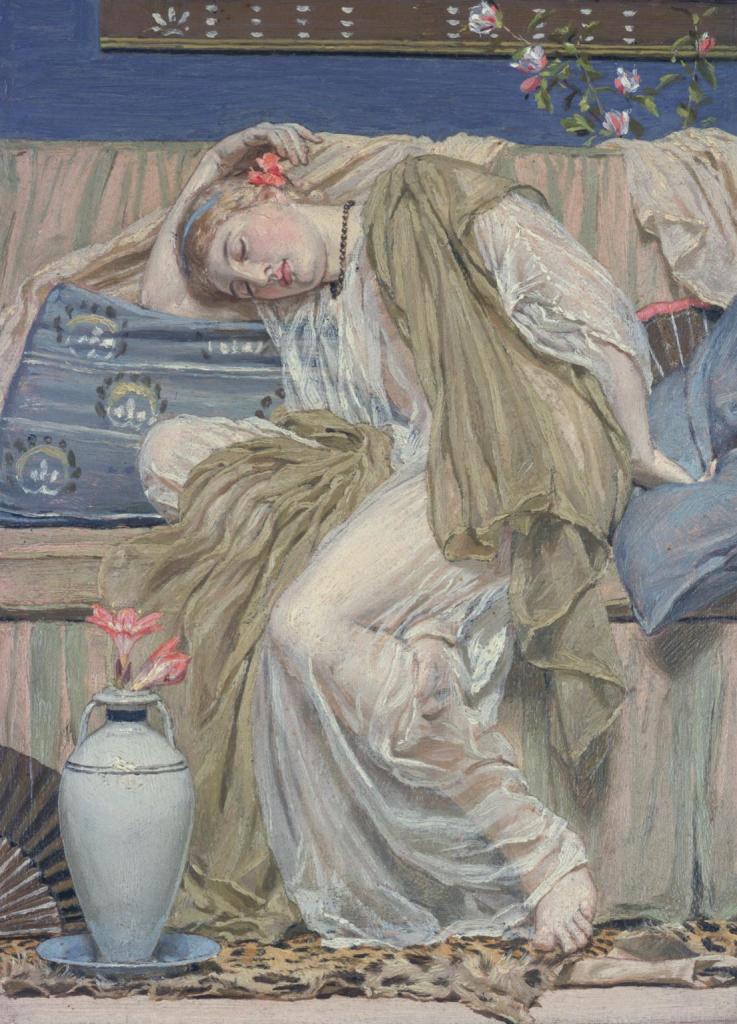
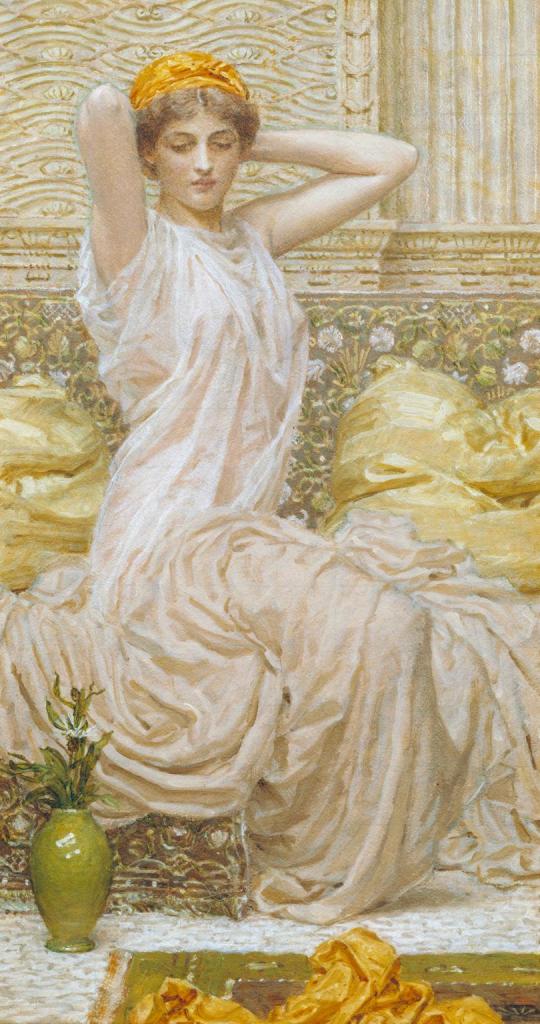
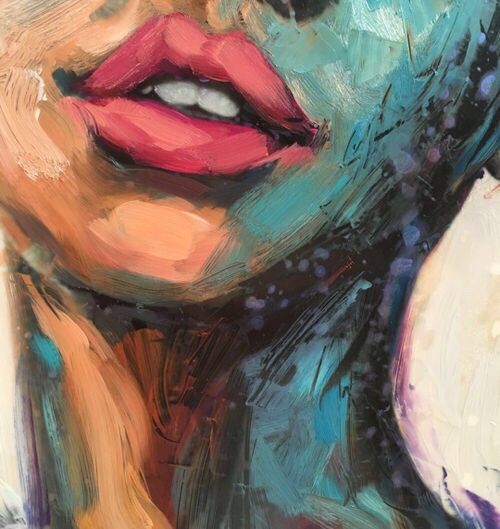
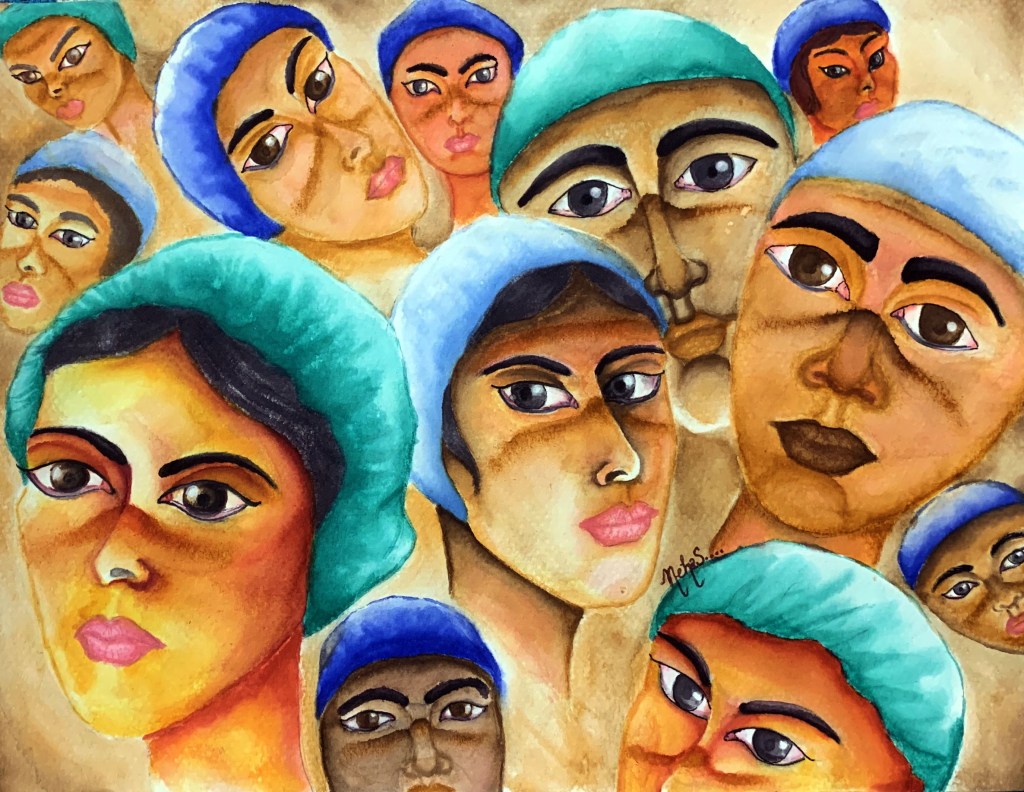
Still, the movement is quite vivid, particularly its intellectual side. If we take a look at the contemporary art scene, we will see that the vast majority of pieces that are popular could not be labeled as products of aestheticism. In my personal opinion there are enough artists who create art with the sole purpose of making something beautiful without any deeper meaning behind it. Here are a few of my favorite art pieces which I feel fit the bill of aesthetic art. I hope you all will appreciate them for their sheer beauty as much as I do!

DISCLAIMER – All the information, data and imagery in this blog post is for informational and educational purpose only. While there may be copyrighted material the use of which has not always been specifically authorized by the copyright owner, I have only made it available with the sole effort to stimulate creative progress and artistic enrichment. Some images may have been taken from the links included below and I give full credit to these websites/pages, thereby in no way claiming them to be my own. I have also used these links for reference purposes and collection of data; therefore I give full credit to the respective web pages. Most of the data in this post is based on my personal experiences and opinions and I am not responsible for any material that is found in the links at the end of this post.

Sources and Photo Credits –

https://www.tate.org.uk/art/art-terms/a/aesthetic-movement

https://www.britannica.com/art/Aestheticism

https://www.khanacademy.org/humanities/becoming-modern/victorian-art-architecture/pre-raphaelites/a/the-aesthetic-movement

https://www.widewalls.ch/magazine/abstract-illusionism

Pros and Cons of Watermarks

Posting artworks online is an economical as well as appealing way for artists to spread their art far and wide. But is it safe? By putting it out there, are you not offering it to anyone and everyone to claim as their own? There have been umpteen stories about artists’ works being copied or claimed by others as their own. Copyright infringement is a reality.

But the big question is do they still own the copyright to the images once they have posted them online? The answer is yes. You own the copyright to your work as soon as you have created it. So what can you do to protect your copyright? Should you post thumbnail images only? Should you paste watermarks over them so nobody can reproduce or copy your work? Or should you attach copyright notices with each and every image? Today’s post is my attempt to answer all these questions and many more, but be warned, these are my personal inputs so if in doubt, seek legal advice.

To Watermark or Not?

Adding a small watermark to your images is a good way of sending the message that they are not up for grabs. It reminds people of the fact that they cannot use your images without your permission. When they come across your work on the internet, a watermark will point out the fact that it is not theirs. On the flipside, a watermark can have its cons too. If it’s too big or overpowering, it can ruin your work of art or at the least distract from it. So tread with caution.

What should a Watermark look like?  

A watermark can be your company’s name, your personal name, or your logo. It should be as subtle as possible. A good watermark is one that doesn’t distract from your image. If it is too big, it will cover your artwork and your friends and patrons will not be able to see it. Standard practice is to keep it fairly small, place it in the bottom right corner and keep the opacity at 50% or less.  That way it is semi transparent yet visible and doesn’t distract from the image.

What should be the Size of your Images?

It is generally recommended to post small images online to prevent theft as these will become blurred when enlarged hence making it impossible to copy or reproduce. However, too small an image will not do justice to your work. At the same time, large image files also slow down your website. So the best option is to optimize your file as well as image size.

Do Watermarks really protect?

A simple watermark placed in a corner can easily be cropped out of your image by thieves so it is not a good enough protection against piracy. However, a full image watermark, the kind that stock photography companies use to protect images can serve as protection as it subtly covers the entire image and cannot be removed without wrecking the picture itself. But this comes with a cost as it takes away from your image.

My Watermark

While I don’t watermark my images in the literal sense, I have devised a tactic that serves as a watermark in its own unique way. Since my objective was to watermark my images in my personalized style at the same time serve as a subtle reminder of my copyright and prevent theft, I thought what better option than my signature itself!  So here’s what I do. I just sign my painting strategically and discreetly in such a way that my signature is placed somewhere in the middle of the artwork and not in a corner. This way, my signature serves as my watermark but since it kind of blends into the composition it is difficult to remove without spoiling the image itself. Killing two birds with one stone don’t you think? Here are images of some of my paintings with my signature as my watermark.

Whether you decide to watermark your images or not is totally your choice. Where and what kind of watermark you wish to plaster on your work is also your decision. Just keep in mind that it doesn’t spoil the images but lets people know that you own them.  If you decide not to use watermarks, a copyright notice in the footer can also serve the purpose. More importantly, let your fans enjoy your work.

A Symphony of Light and Ice

Ever seen a flaming halo of colors splashed across the bright blue sky? This extremely rare yet enthralling phenomenon, commonly known as a “Fire Rainbow” is neither myth nor fantasy but a marvel of nature in reality. It is an alluring arch of vibrant colors draped around a select few clouds floating around in the wild blue yonder.

But the term fire rainbow is actually a misnomer, for this luminous crown of colors adorning the pristine white tufts in the sky is not a rainbow at all. It is an optical anomaly, scientifically and more accurately termed as a Circumhorizontal Arc and is formed by the refraction of sunlight (or moonlight) on ice crystals in cirrus and cirrostratus clouds. Simply put, it’s caused by sunlight shining through tiny ice crystals suspended in the atmosphere.

Fire rainbows are formed when the sun rises above 58 degrees in the sky and shines through the right type of cloud at a certain angle lighting up the sky with a riot of colors. When light enters the cloud’s hexagonal ice crystals vertically and leaves them horizontally, the 90 degrees change causes it to separate into the rainbow spectrum. But light needs to come through very specific crystals at a very specific angle, and that’s why this event is pretty rare.

How often a circumhorizontal arc is seen, depends on the location and the latitude of the observer. You’ll never see one at latitude greater than 55 degrees north or south – because at those latitudes, the sun simply isn’t high enough. At other latitudes the solar circumhorizontal arc is visible, for a greater or lesser time, around the summer solstice.

Today’s artwork, titled “A Symphony of Light and Ice” is inspired by this marriage between scientific rarity and artistic sensibility. This is my soft pastel rendering of the extraordinary yet exceptional marvel of nature.  

My soft pastel rendering of a fire rainbow

Humans work so hard to bring beauty into this world. We can pen down epic verses and classic tales, compose melodic symphonies and paint memorable masterpieces, but none of these can ever match the beauty and splendor of the cosmos. Perhaps it’s the rarity of this optical phenomenon that makes it so beautiful. Hope you enjoyed my artwork!

Out of Stock?!

In the current unprecedented times of quarantine and isolation, artists all over the world are practicing art voraciously. People who would have never imagined putting a brush to paper have also taken advantage of lockdown and resorted to artistic endeavors in order to lift their spirits. Art is proving to be the silver lining to the dark, gloomy corona virus cloud. 

But what do you do when you are running out of canvas and paper during the lockdown? How do you replenish them when all but essential shopping has been forbidden? Many of us may be finding ourselves skimming through our dwindling art supplies, frantically hunting for ways and means to keep our art practice going, but little do we realize that what we need to engage with our creativity is probably tucked away somewhere in our home itself. 

I’m sure many of us are sailing in the same boat so here’s a quick guide that can perhaps help replace that rapidly depleting stock of art supplies and keep the creative process going. I have compiled some tips and tricks, mostly conceived by fellow artists who deserve a special mention in this post. Thank you all for your innovative inspirations! So go ahead, browse through, pick your favorite options and innovate!!  

  1. Paints – If you think you are the only ones running out of oil or watercolor paints, join the gang! Don’t sweat….your regular house paints can serve as a good option. But don’t forget to check whether they’re oil or water based before using them.
  2. Drawing material – Take stock of all your pencils, pens, markers, pastels, color pencils and other dry mediums that may be lying around in a state of neglect in your house. Every small bit of charcoal and chalk counts.
  3. Paper and Canvas – If you are anticipating a shortage of drawing and painting surfaces, make do with whatever is available at that time. It doesn’t matter if it’s small pieces of paper, a tiny sketch book or discarded canvases. Expressing your creative instincts is of prime importance.

Here are some options that some of my fellow artists have come up with to nourish and nurture their creative faculties:

  • Unsold or discarded paintings that are nothing but dead stock can be gessoed over and reused to create brand new artworks.
  • Different types of ornately printed paper, gift wrapping paper or even wall paper have great potential for collage and mixed media effects.
  • Newspaper and magazine pages are an awesome replacement for plain old boring paper. The fine print can add an extra element of interest to the subject sketched or painted on top if it complements the theme of the artwork. Picasso used to add his own characters on magazine photos.
  • Don’t get rid of all those grocery bills, corrugated packing sheets, brown paper, crinkled craft sheets, etc. They can prove to be valuable drawing and painting surfaces.
Aditi’s artwork on brown paper
  • Leftover pieces and planks of wood from your carpentry projects for home improvement can serve as a good replacement for canvas.
Swati’s ingenious recycling of a waste plank of wood
  • Dried leaves when painted on with acrylic paints can be transformed into beautiful works of art.

Stones and pebbles can be used as miniature canvases and painted over with acrylic paints or markers.

A word of caution…sometimes the materials you choose may not live up to your expectations and you may not achieve the desired results. Don’t fret too much at this point. It’s all about trial and error. After all, art is an enriching and learning experience and every mistake can become a precursor to a great masterpiece.  All you need to do is work your way around it and try something else. Another upside to using leftover material is that it can help open up new channels of creativity.

The key to innovative progress right now is to carefully consider what you have at the present moment and how it can be put to good use. Now’s the time to tests the limits of your creativity. Who knows? Maybe you’ll come up with something stunning with all those scraps of paper lying around in your house!

Acknowledgements and Credits –

As I had mentioned earlier, several of these ideas are the creative genius of my fellow artists. All the images featured in this post belong to these immensely talented “innovators” and I do not claim any of them as mine in any way. They deserve to be applauded for their resourcefulness and brilliance. I hereby acknowledge their skills and give them full credit for their contributions towards the enrichment of art. Thanks a ton Sheetal, Anannya, Swati and Aditi for your innovative improvisations. Cheers to your ingenuity!

Lockdown Art – Labyrinth

The global COVID-19 pandemic has pushed the pause button for humanity and stopped the world in its tracks. It has brought all of us down on our knees, but as we struggle to cope with it, we are also slowly learning to live with it. Even though all over the world lockdowns and restrictions are being eased out progressively, it doesn’t mean that the virus is gone. Our respective governments may have granted us some relaxations, but COVID-19 hasn’t. This is a long-drawn battle and we should continue to be on the vigil and fight on till we defeat the enemy and emerge victorious.

Today I present to you “Labyrinth,” the last artwork of my Corona Series, as we embrace the “new world order” of a dangerous world in the midst of a perilous virus. This one is inspired by the most brilliant yet dangerous military formation in Indian mythology, the mythical “Chakravyuha.”

Labyrinth

To give a brief account of the Chakravyuha, it is a multi-tiered defensive formation chronicled in the Hindu epic, Mahabharata. It is believed that it was a seven-layered circular maze where each of the layers is rotating in the same or opposite direction, with strategically placed weak and strong soldiers. The warriors at each interleaving position would be in an increasingly tough position to fight.  Each of the layers are presented with possible openings which are closely guarded by one of the main highly ranked warriors and his personal troops.

It is this brutal form of assault that I have adapted in my artwork as an attempt to depict all the strategies and tactics that are being implemented by us in order to keep the virus at bay. The Chakravyuha was not just an allegory or a physical labyrinthine disc, but a representation of a ferocious form of defense. This ring formation could hover across the battlefield and consume opponent soldiers from within, like a tornado or typhoon moving unhindered and destroying everything in its path.

Just like the Chakravyuha rotates on its axis as well as revolves in its trajectory, thus making it a great defensive as well as offensive mechanism, we too have devised a labyrinth of preventive and counter attacking measures that can be as impenetrable as the deadly Chakravyuha itself if implemented effectively. Each layer of this maze is our defense against the virus and their potency keeps becoming stronger as you move inwards. The innermost layer represents our ultimate defense against the virus – a vaccine. Even though we are still working on this aspect, I am sure the day is not far away when we will succeed in completing this layer of defense.

I have depicted the other six layers as our current lines of defense, namely, personal hygiene measures like washing hands, sanitization, etc., personal protective gear like gloves and masks, healthy eating to build up immunity, social distancing, quarantine/isolation and medical treatment for the infected. Together all these layers need to be set into motion, in unison, moving continuously across the COVID-19 warzone.

This spinning spiral of death can also be put into action as an offensive tactic to attack the seemingly invincible Corona virus from all sides. If we manage to enforce and carry out this plan incessantly, we stand a chance at defeating the fatal virus and ending the pandemic. All it requires is a collective effort from one and all so let us all stand together, for all of us are soldiers in this global war.