And the Award Goes to….

Art competitions can provide some great opportunities to artists irrespective of whether they win or not. Not only do they give exposure and present a chance to showcase your work at exhibitions, but also prove to be an excellent morale booster for your art career. This in turn will increase your self-confidence as well as help you evolve and grow as an artist. 

Generally, the selected or shortlisted artists receive recognition, sizeable rewards and some great opportunities to exhibit, promote and/or sell their work. Several competitions often double up as art exhibits where artworks are up for sale, thereby providing artists with a shot at earning money in addition to possibly winning a prize.

The jury in an art competition is usually composed of prominent and well-known personalities from the art world, with considerable amount of experience and a good sense of the current market. This makes art competitions a great means of networking. Prizes are appropriately chosen so as to benefit artists, be it in the form of an opportunity to participate in an exhibition, a cash prize or promotional opportunities.

Winning an art competition is a great achievement as it is another feather that artists can add in their cap and therefore their CV. However, just entering the competition is big in itself as it provides you with recognition as well as a platform to prove yourself and your skill as an artist.

Moreover, entering art competitions can help in proving to yourself that you can be serious about your art. It shows that you are willing to put effort into it, and you think that your art deserves to be recognized more widely.

I consider art competitions integral to my artistic journey, as they help me get the much needed exposure and recognition, which are more important to me than the monetary gains which come in the form of rewards or prizes. It is one such art competition which I entered recently that has given me the much required boost in confidence. The competition was organized by Art Chitrakala, an organization registered with the Government of India. It provides a platform to artists from all over India to showcase, promote as well as sell their art. They organize monthly contests at “All India National Level” wherein the selected winners get an opportunity to get featured on their page and sell their work.

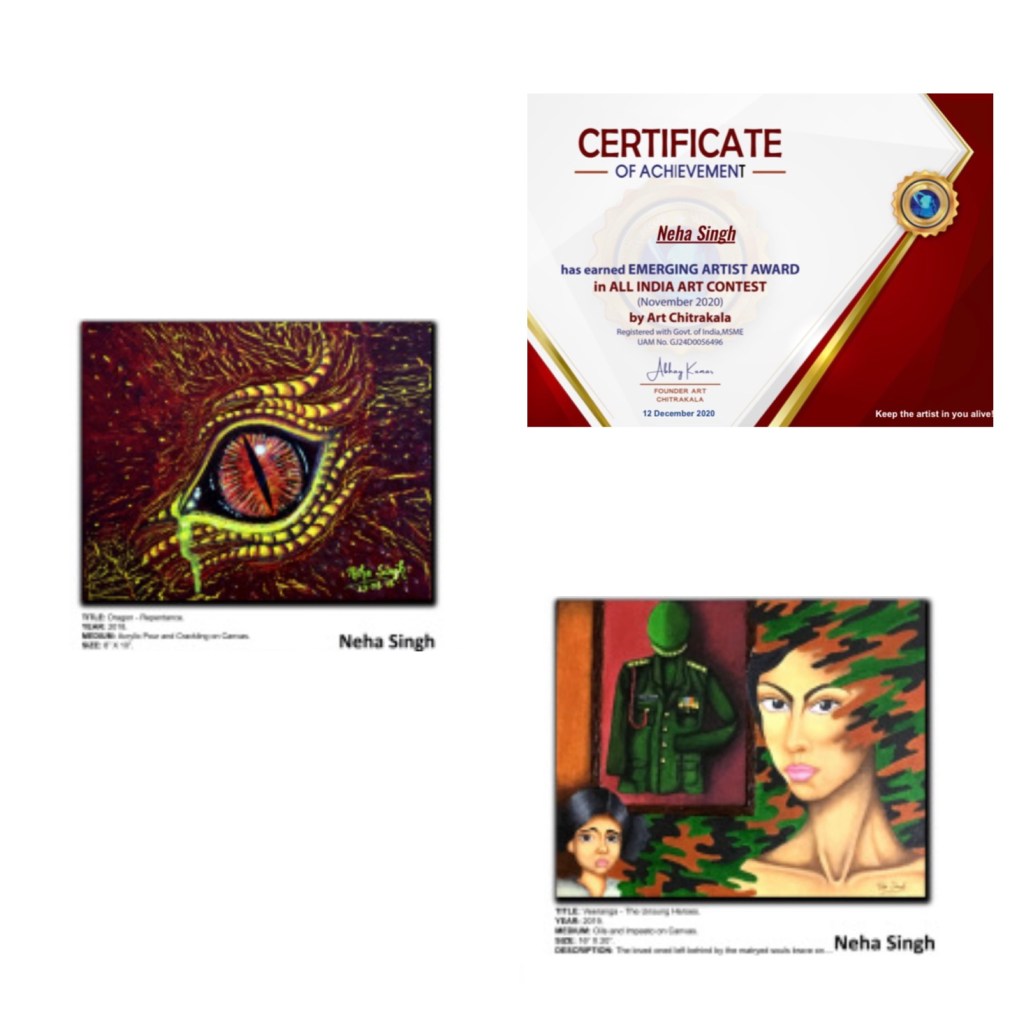
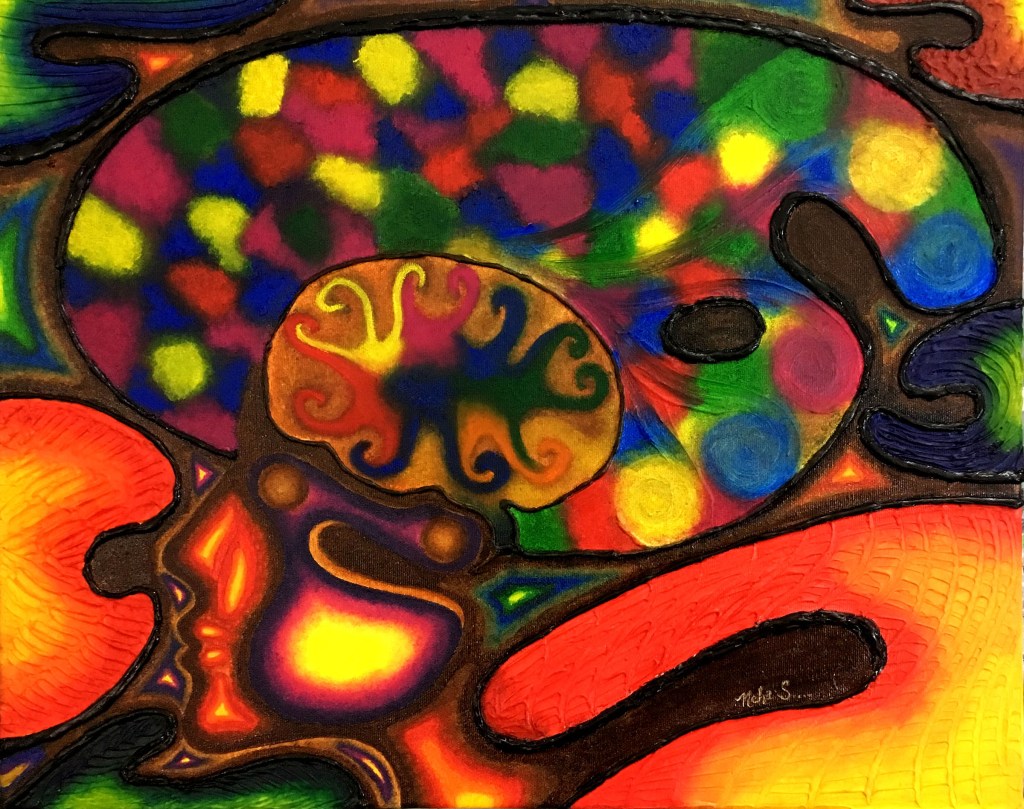
It was an honor and a privilege for me to be able to send my entries for the November 2020 art contest organized by Art Chitrakala, wherein a minimum of 1 and a maximum of 5 artworks had to be sent. I am absolutely thrilled to share with you all that one out the five pieces that I had entered, one was selected for a Consolation Prize! I was also greatly honored to receive the Emerging Artist Award, being one among the 250 winners from all over the country. Here are snapshots of the shortlisted artworks and the respective certificates:

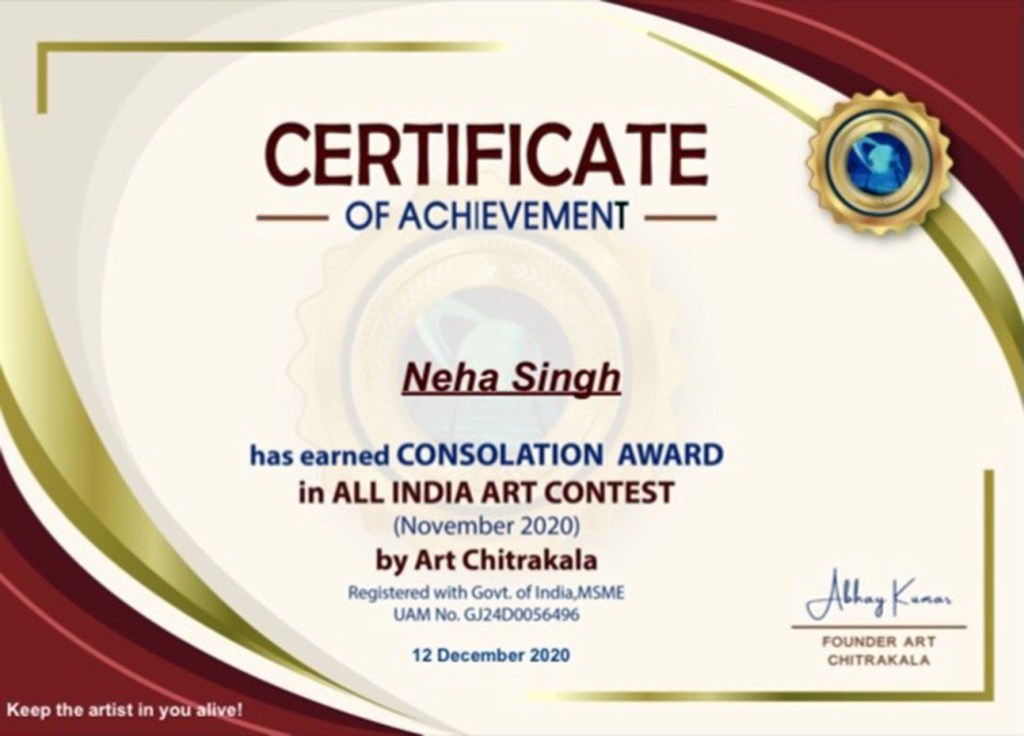
It has been an extremely overwhelming and humbling experience for me to be bestowed upon with these rewards, being my very first. To see my work displayed on the pages of The Art Chitrakala website has helped endorse my faith in myself as an artist. I have been making art for just about ten years now and this has invoked mixed emotions of satisfaction, joy, accomplishment, and personal honor.

 More than the cash prize and the awards, it is the recognition that counts, making the entire experience ever so memorable. This one will always hold a special place in my heart and I’m thankful to Art Chitrakala for providing me with this platform. Winning in this competition has fueled my passion further and inspired me to work harder.

What Kind of Art Sells?

What themes and subjects sell the most in art? Which mediums and genres sell best? What sizes of paintings sell more – smaller or larger ones? These are some important questions that every artist should be asking when he decides to put his work up for sale.

I like to be sure of what will sell in the art market, even though my personal favorites are conceptual paintings which are a mix of realism as well as abstract art. For me, the true meaning behind what I paint takes precedence over the monetary gains I can obtain from it. However, when it comes to the cash inflow, I make sure I brush up my knowledge about the current art trends.

Today’s post is my endeavor to share with you all my own little nuggets regarding what needs to be considered when selling art. This information is based on my personal experiences hence should not be considered as a benchmark for improving sales.

What are the Best-selling Themes and Subjects in Art?


If your favorite subject happens to be among the popular ones, you’re in for luck. Keep in mind that you will sell more if you focus on your strengths rather than painting mediocre versions of something that’s not really your cup of tea. Even though one may not be making art solely to sell it, it may end up happening that way. For instance, an artist located in a tourist set up may find himself painting local scenery and landscapes as they will sell easily, thereby helping him pay his bills.  But this doesn’t stop him from painting what he likes to, in his signature style. Here is a list of some popular themes and subjects that do well commercially in the art market:

  1. Local scenes, landscapes and seascapes (modern, impressionistic or semi-abstract) – Landscape painting is the most popular and common subject for art owing to its versatile nature. Not only do people love looking at a picturesque and scenic panorama, but also like to invest in the visual representation of one, so as to keep reliving its spectacular beauty. Moreover a landscape works well in any type of decor or ambience. So what types of landscapes sell best? Many artists like to depict their local scenery in the form of landmarks, historical events or heritage sites that are exclusively characteristic of their area. Seascapes, harbors, and beach scenes all sell particularly well, probably because of their association with holidays, vacations, and relaxation.
  • Abstract paintings –Most people buy art with the aim to match it with their décor. Abstract art fulfils this requirement hence sells well. An abstract painting can simply be interpreted as a colour, texture, or shape, which helps maintain a certain level of uniformity with the home decoration. Besides this, abstraction has a nonrepresentational or symbolic approach, so its interpretation becomes subject to each individual viewer, thus making it easier to sell.
  • Paintings of dogs, cats and wildlife – People love owning paintings of dogs as much as they love their dogs as a painting of a dog invokes feelings of intimacy and affection, while paintings of wildlife suggest untamed, uninhibited nature. Perhaps for these reasons such paintings do well in the art market.
  • Figure studies and nudes – Whether it is abstract or impressionistic portraits or figure studies, people enjoy looking at images of humans. Although the trend is shifting towards attired rather than bare bodies, there will probably always be a market for nudes.

What sells better – Original Art or Prints?

It has been noticed that prints usually sell better than original works, probably because they are less expensive. And of course many prints are sold as decorative items, as they can be mixed and matched with different colour schemes. Limited-edition prints are more popular than open-edition ones as art buyers somehow seem to find the idea of a controlled supply quite appealing. When an artist put a limit on how many prints he or she will make, it attracts buyers as they feel they are killing two birds with one stone – investing in something that is almost original but less expensive than the original, yet “exclusive” and not entirely mass-produced.

What Medium of Art Sells Best?

Ideally, the following 7 mediums of art sell better than others:

  1. Offset-litho prints (original as well as limited-edition).
  2. Giclée prints (original as well as limited-edition).
  3. Oil and acrylic paintings.
  4. Watercolors.
  5. Artists’ original prints (e.g. etchings and engravings).


What Size Painting Sells the Best?


The general consensus among most artists is that it is commercially more viable to work on smaller canvases than larger ones as the former are generally priced lower than the latter, so not only do they appeal to buyers for monetary reasons, but also because they take up less space and demand less of an aesthetic instinct. Having said that, it is equally important to take into consideration that the earnings from a large number of smaller paintings might be equal to those obtained from a fewer larger paintings. Hence, most commercially successful artists work with a range of sizes to appeal to a wider audience.

Some artists purposefully create a range of small paintings with a common theme or style as they feel it will encourage buyers to pick up the entire series. Another advantage of working on a smaller scale is that the paintings require less storage space and are easier for the artist to accommodate even if they don’t sell right away.

What is your Target Market?

Target market is a very important factor to be considered when selling art. In order to successfully target a particular buying community, artists need to focus on marketing as well to certain extent. Here are some points to consider depending on the type of buyer you are targeting:

  • If you are selling through a gallery, your art needs to cater to the likes and requirements of its patrons. Highly priced works are best suited for galleries and least for museums and private collectors.
  • Private and commercial buyers usually use art as décor for offices etc, whereas interior decorators and designers will have specific artistic requirements.
  • The pricing of your work will depend on the disposable income as well as the budget of the buyer in question.
  • Home décor primarily depends on low priced copies or prints of originals and thus constitutes the largest market for art.
  • Art can be propagated through product development in various formats like, mugs, postcards, calendars, etc., which is a pretty lucrative market in itself.


My Experiences with Sales

I have realized that I can generate better sales for my art when it is displayed in a physical space like a gallery rather than an online virtual space.  The reason behind this could be that my viewers get to experience my work at close quarters, hence are able to appreciate it much more for various elements, especially colors and textures. Moreover, they get a better understanding of the medium, technique and the surface I have used to create the artwork. Most of my paintings are texture-laden and this aspect comes through best when viewed in person.  So if you want to emphasize and highlight the USP of your work, an art show or gallery display would be the best option.

I have also realized that keeping myself abreast with the latest art trends goes a long way as it keeps me updated with what is selling currently in the art market, thereby giving me better returns for my work. When it comes to selling my art, I take the practical approach and paint what’s in demand. But that doesn’t stop me from painting what I like so both go hand and hand for me. The trick is to strike equilibrium between both. In conclusion, I would like to say that success in any commercially aimed artistic undertaking can depend on a combination of all these factors. After all, selling art is no less than any business endeavor , so if you want to make money, treat it like one!

When your Artwork makes it as a Magazine Cover Page….

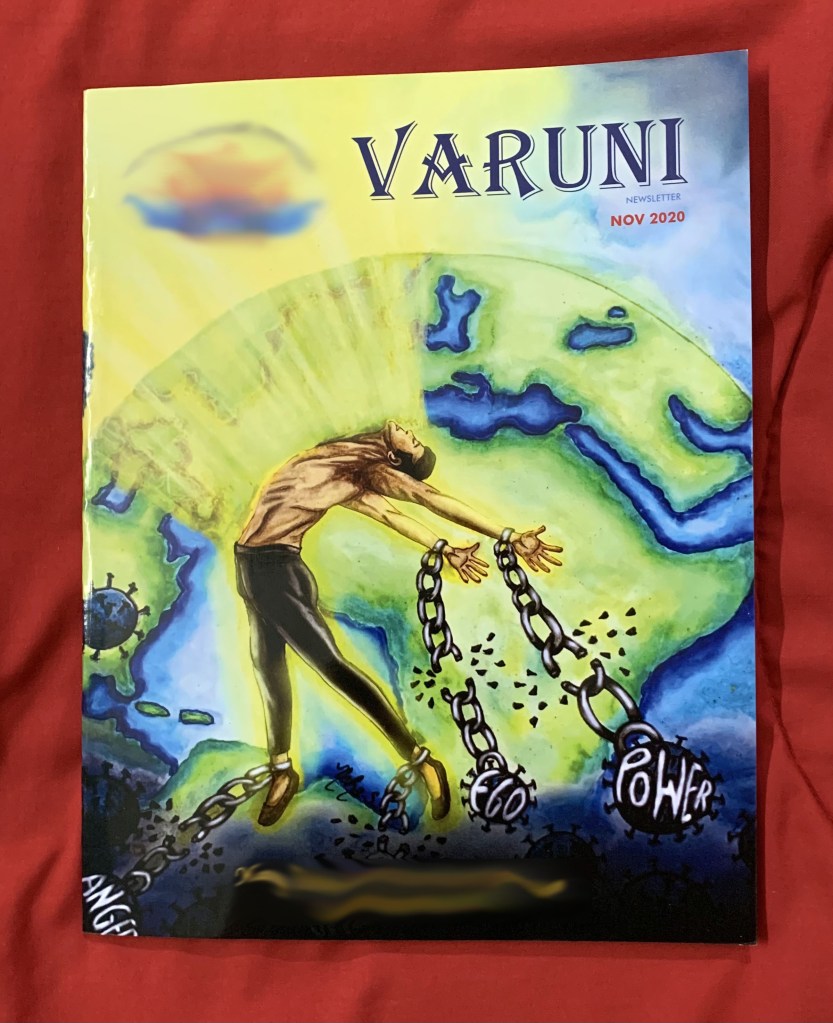
Greetings to all Art Dungeon followers! I have great news!! It gives me great pleasure to share with you all that my artwork titled “et ressurectionis”, that I had shared in one of the earlier posts (https://theartdungeon.blog/2020/10/04/et-ressurectionis/ ), has made it to the cover page of a magazine! How cool is that!!

Here are a few snapshots of the magazine’s with the artwork that extends from the front cover to the back cover as one continuous piece. Also including the original painting and a small write up explaining it that was published in the magazine.

The front and back of the magazine
The front cover
The write up
The original artwork

Do click on the link above to know more about the concept, medium and techniques behind the artwork!

All done with the Work of Art in Progress!

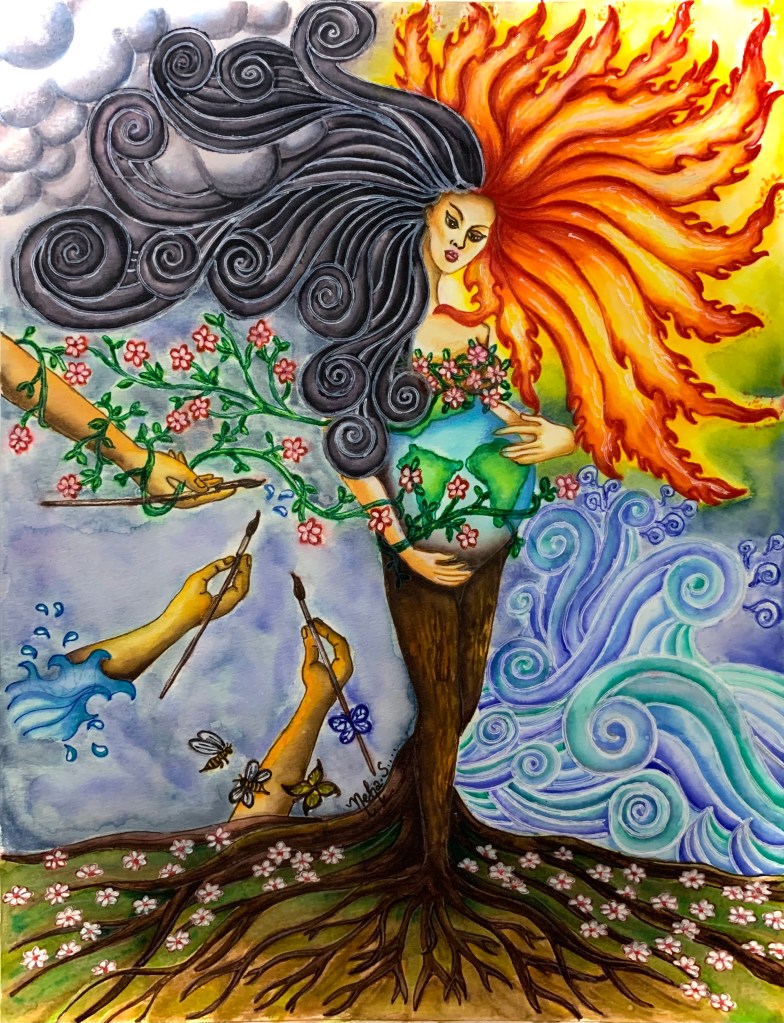
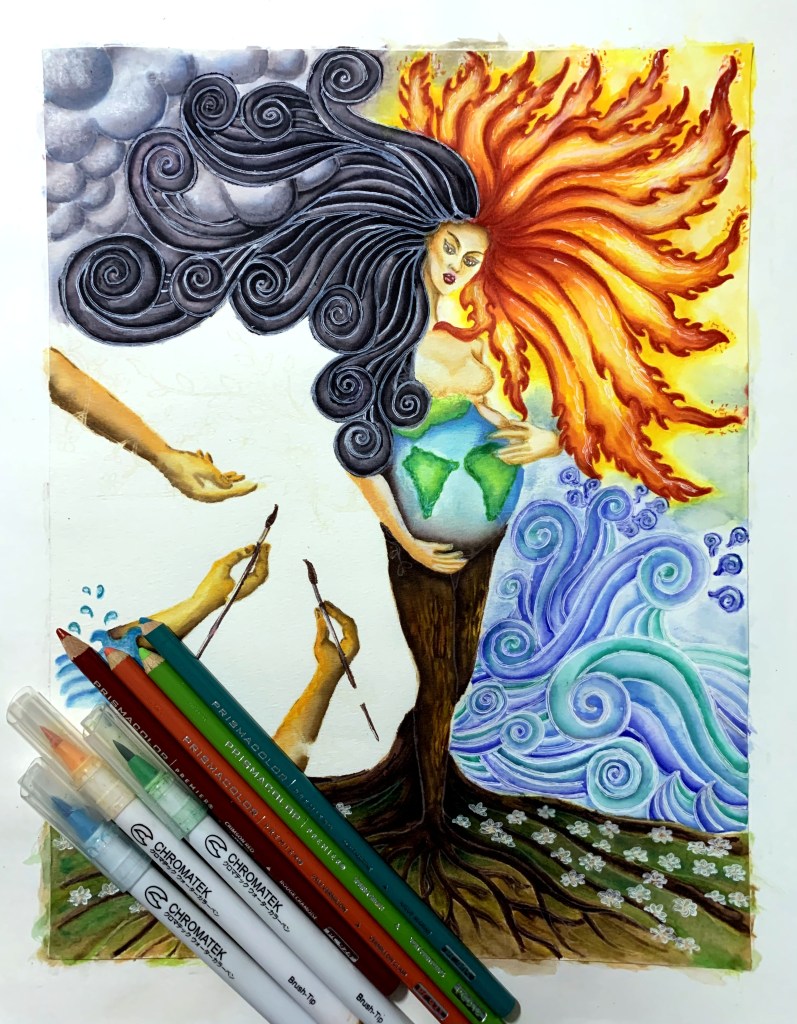
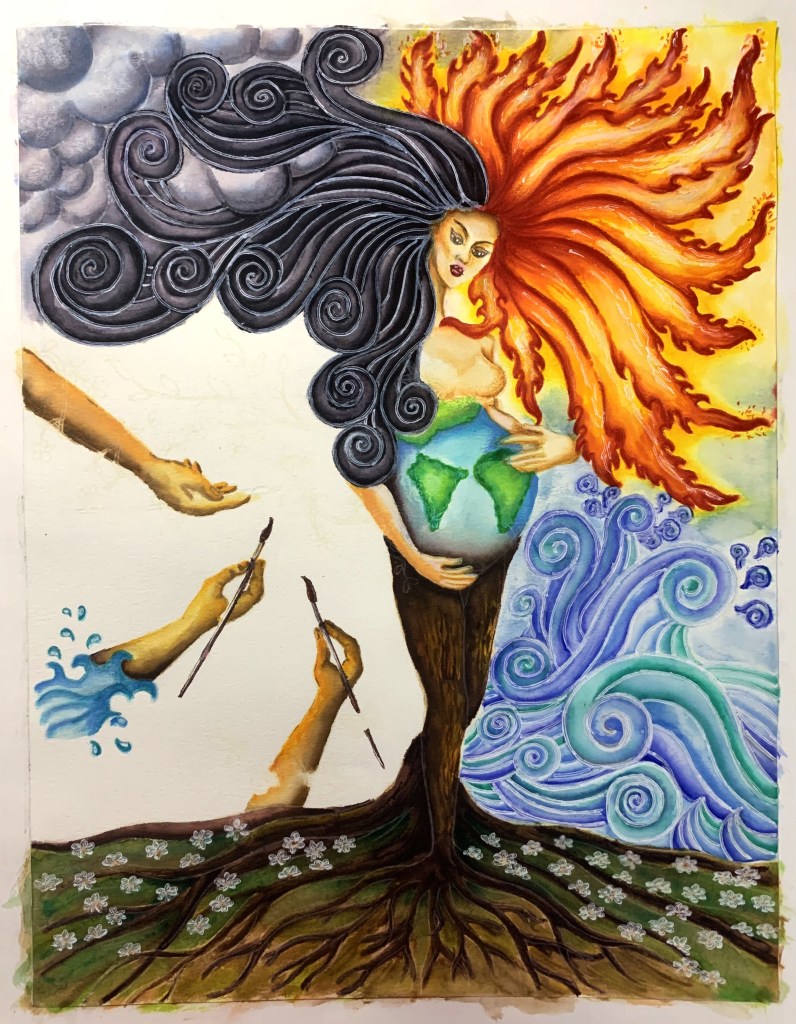
Hey folks! In continuation with last week’s post titled Work of Art in Progress (https://theartdungeon.blog/2020/10/18/work-of-art-in-progress/), today I will be sharing with you all the completed artwork. I have titled this piece “Painting Nature in its True Colors”.

I have already covered the thought process behind the artwork in detail last week, but just to recap, this painting is based on the theme “Nurturing Nature for a Better Future” and is intended to be the cover page of a magazine. It is my attempt to depict how Mother Nature, like all mothers, keeps showering us and our planet earth with her blessings in abundance and nourishes us unconditionally. But if we don’t look after her, she will eventually get drained out and will have very little or almost nothing to offer to our future generations as well as our planet. Hence, we need to nurture and heal her by painting her with a colorful palette of clean, green lands, water and air, for the future of her child that is, planet earth, depends on it. To delve deeper into the concept behind the artwork, please click on the link above.

The finished artwork titled “Painting Nature in its True Colors

In today’s post, I am going to talk about the technicalities of this artwork. Let’s start with the medium. I have used watercolors, specifically watercolor brush pens for the entire piece, along with a bit of prismacolor pencils here and there, just to enhance those highlights and shadows. I have also made use of a white gel pen to accentuate the lines of the hair locks of Mother Nature that symbolize the wind as well the waves of the sea. The blossoms scattered on the mossy green landscape have also been rendered using the same while gel pen. Apart from this the fiery flame-like locks representing fire too have a touch of white in the form of highlights.

Coming to the technique, I have employed the classic watercolor trick of “wet 0n wet”, wherein the area to be painted is dampened with a wet brush first followed by the application of paint. Most of the painting is done using this technique, but at some places, especially the finer details, I resorted to first applying the color on the dry surface and then going over it with a wet brush.

Hope you like the final product!

Work of Art in Progress

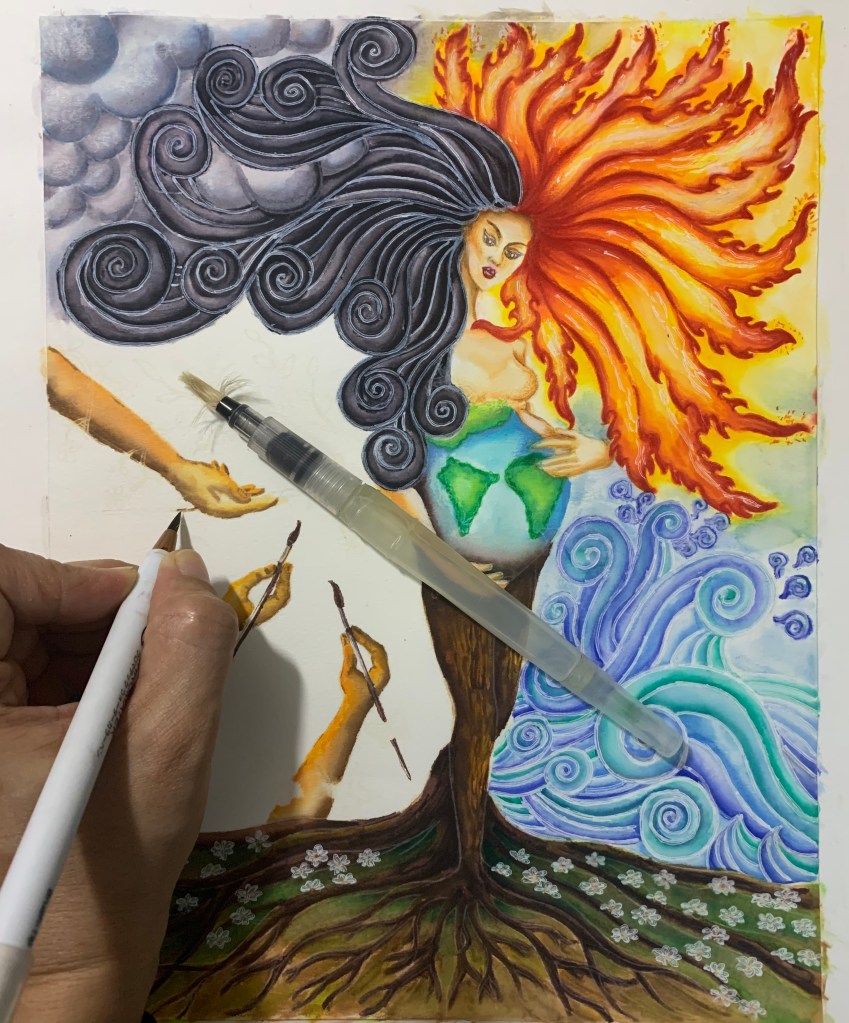
Greetings from The Art Dungeon! I have been toying with the idea of sharing a work in progress for a long time, but procrastination has always got the better of me. So here I am, finally getting down to it and what could be better than the piece I am working on presently?

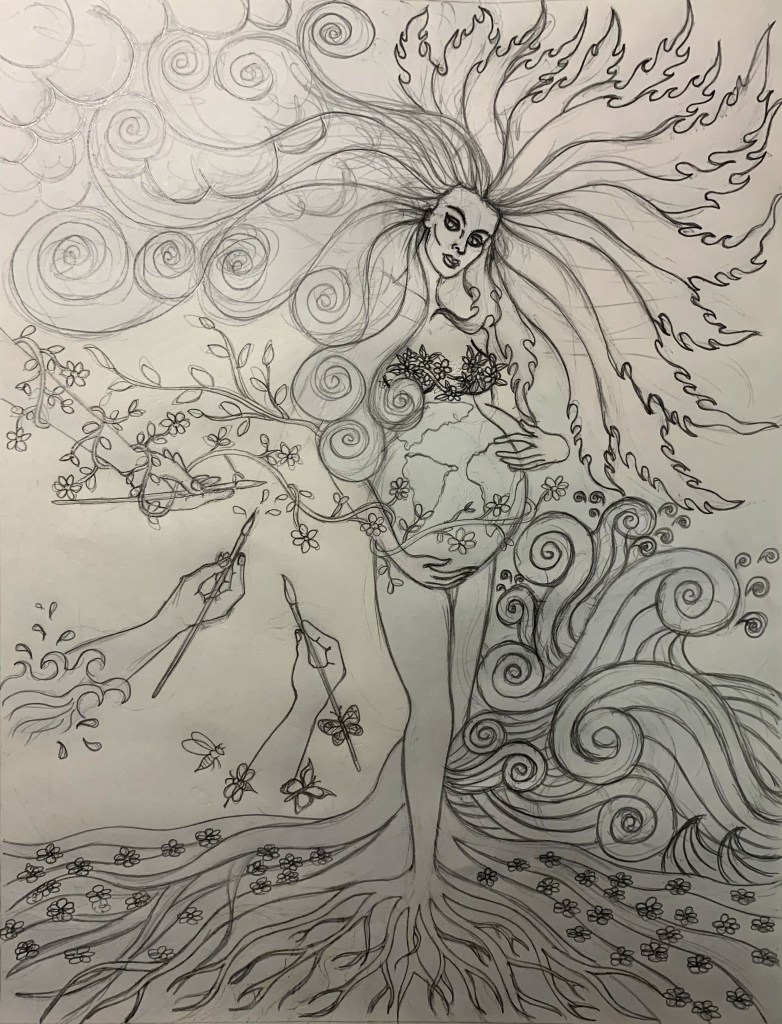
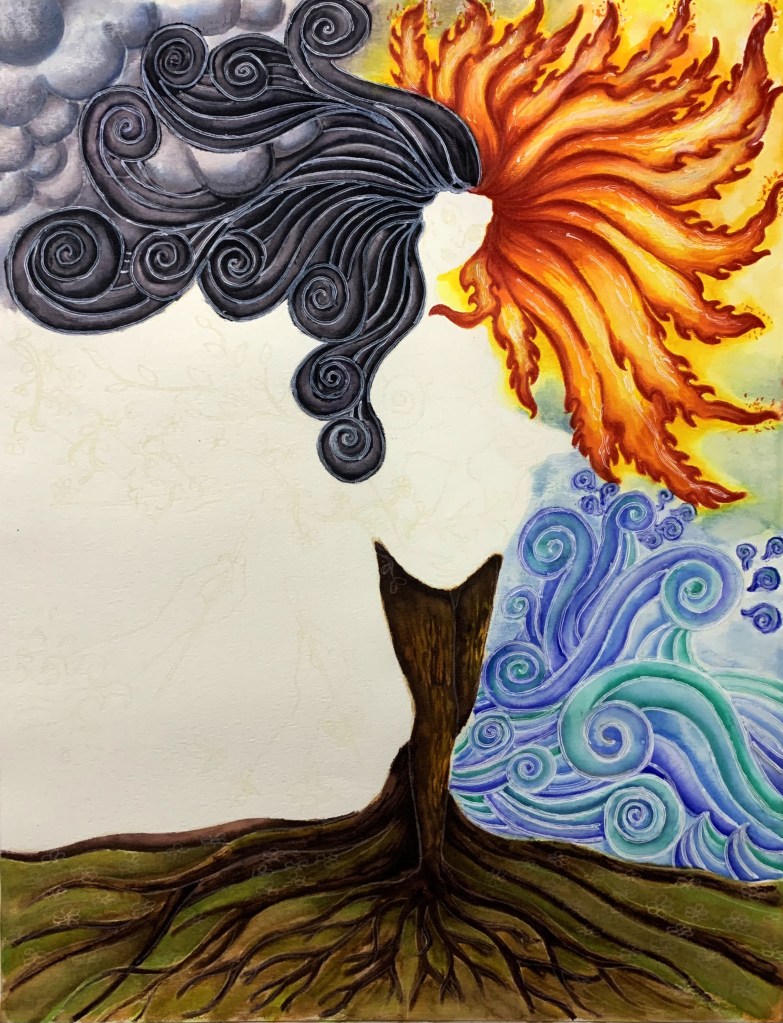
Today, I am going to share with you all, the evolutionary process of the artwork I am working on currently. As mentioned earlier, it’s work in progress so bear in mind that I am yet to finish this piece. I believe that the journey is as important as the destination hence it becomes imperative that I give you all a sneak peek into my process. So let’s dive right into it!

This artwork, which is still untitled, is meant to be the cover page of a magazine with the underlying theme, “Nurturing Nature for a Better Future.” I have depicted a personified version of Mother Nature, endowed with all of her classical elements – air (or wind), fire, water, earth and aether (or space) which also explain the complexity of life all around us. These elements are essential for the survival of all living beings and therefore should be respected and protected from any abuse.

Here’s a slide show of images showing my creative process:

I have represented air and fire in the form of the flowing locks of the female form of Mother Nature. The tree bark-like hind limbs, its roots and the vegetation adorning the figure symbolize the earth or land. Water is represented by the surging waves of the sea next to the land and the backdrop of the artwork forms aether or space.

These elements, which form the basis of all living life and matter, are blessings that Mother Nature bestows upon the one and only habitable place we have in the universe – planet earth, depicted in my artwork as the offspring in her womb.  Not only does she nourish and nurture our planet, she cares for us as well, thus making us all her children.

The earth in the womb of Mother Nature symbolizes our future and only if we take care of the mother, can we have a healthy and happy future. Nature is like a refillable prescription that keeps providing to us in abundance and adequacy, just like a mother does to her child. But if we don’t look after her, she will eventually get drained out, consequently affecting our future generations as well as the future of our planet. Hence, we need to nurture and heal her with all that we can for a better tomorrow.

So how do we do it? All we need to do is replenish our planet with greenery, crystal clear waters and clean air. I have depicted this in the form of three human hands representing vegetation, water and wildlife respectively. It is with our very own hands that we can paint our beloved planet with these colors of Mother Nature and make it a better place to live in. For it is air that moves us, fire that transforms us and water that shapes us. Let’s nurture nature for a better future.

Like I said before, this artwork is still in the making and this post is meant to be an insight into the creative process behind it. My next post will hopefully feature the finished piece where I will delve into the technique and medium I have used. Should also have a title for the artwork by then but am open to suggestions, so do share your ideas in the comments sections below! Cheers and watch out for more!!   

“et ressurectionis”

Hey folks! After a hiatus of two weeks, I am resurfacing with a new post! Finally got a chance to get back to the drawing board after a long long time, so the artwork I am sharing in today’s post not only serves as a comeback to my blog but also to my art!

“et ressurectionis”

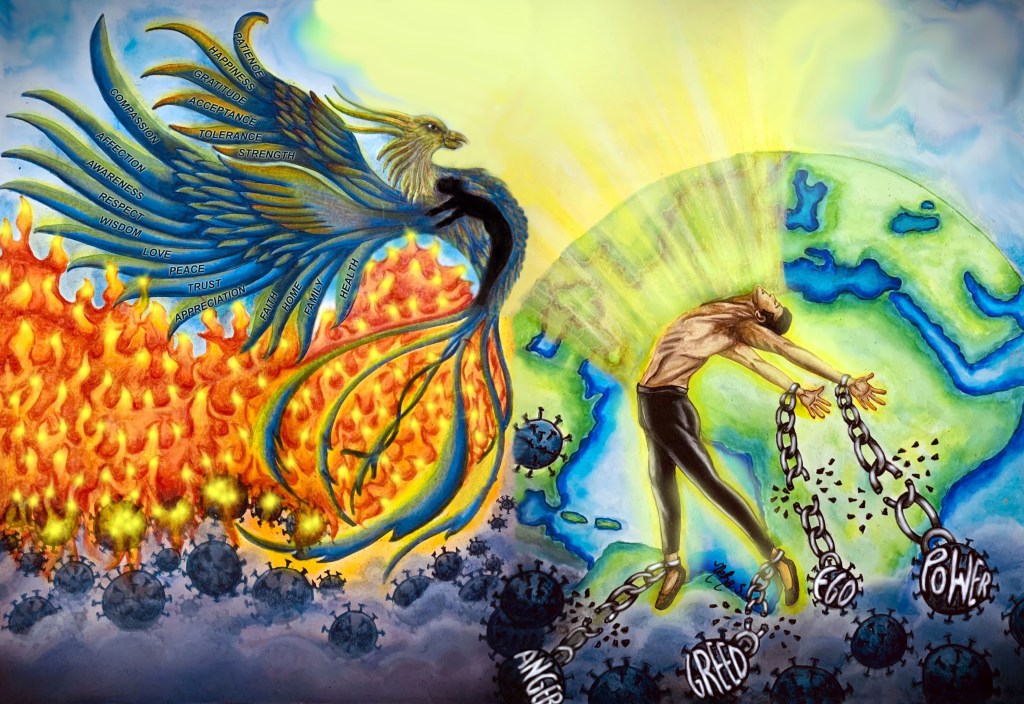
I call this one “et ressurectionis”, which is Latin for resurrection. This artwork is once again inspired by the present Covid-ridden scenario that our world is relentlessly fighting day and night. It has been almost a year since we have been in the clutches of this dreaded virus. While we continue our attempts at understanding this miniscule yet powerful entity, it in turn has taught us a lot of valuable lessons, not just physical ones, but also on a spiritual level.

Thanks to the corona virus, mankind has been restrained to the confines of his four-walled dwellings like never before. This alone time, or “Me time” as I like to call it, has given him the opportunity to contemplate and retrospect on what he was, what he has become and what he should actually be. It has given him a chance to delve into the depths of his psyche and confront the real pandemic that has been plaguing mankind for centuries – his own vices, namely anger, violence, greed and his lust for power as well as wealth. Not only is he fighting a deadly biological contagion, but also an intangible one, that is far bigger a threat to the existence of the human race that the organic pathogen itself.

This artwork is a representation of man working towards his long impending goal – to break free from the shackles of his own vices and emerge renewed and victorious not just from the pandemic, but also himself. The blue phoenix in this painting is a personification of mankind reborn after it succeeds in purging the pathosis that’s decomposing his humanity along with the physiological affliction that’s wearing him out physically, for a blue phoenix  is a symbol of rebirth, a return to being, and a new spiritual path.

The phoenix teaches us not just to let go of our old self and our limiting self concepts, but also inspires us to embrace and accept the new us that is abound with all the goodness in the form of virtues that have been listed on the feathers of the phoenix in this artwork.

In times of doubt and confusion, the blue phoenix symbolizes strength, transformation and renewal. For only from the ashes of who we were, can we rise up to become who we are to be. That is how we are rediscovering ourselves as we get past COVID-19.

Art and Faith

The marriage between religion and art has always been one full of turmoil. There are several instances from the past as well as the present when the most artistic imagery depicting religion has been considered disrespectful or derogatory to the faith in question or has managed to create a scandal. Many artists indulging in religious art are grossly misunderstood when all they want to do is express themselves.  

This compels me to ask the inevitable question – should artists mix art and religion and if they do, should they be left uninhibited, free to explore the realms of religion through their art or should they be sensitive towards matters of faith?

Art has the capability to illustrate and express religious beliefs, customs and values through iconography and body postures. Religious paintings are personal expressions of an artist about religious themes and principles as seen through his eyes. Moreover, aided by their aesthetic skill, artists have improved our understanding of religion. They have succeeded in bringing history to life with their clever manipulation of colors, textures and styles thereby expanding our horizon about past events. Until recently, religion and art were symbiotic, with aspects of the former making up the subject matter of the latter. 

Religious art serves decorative as well as reflective purposes and its main objective is to assert a moral message of the religion it represents.   Not only does it tell the story of a religion as told in its holy scriptures, but also provides an insight into the varying lifestyles of different religious groups.  It helps in keeping religious traditions alive and visualizing religious events from the past. Religious paintings can idealize and glorify a religion and possess the power to make believers out of non believers. 

In my understanding, the harmony between art and religion ceases to exist if it is communalized. When religious art becomes a vehicle for propaganda and serves the selfish motives of fundamentalists and right wing zealots, it loses its aesthetic appeal, leading to criticism and subsequent demand for curbs on artistic expression. The line between expression of and regard for religious beliefs is an extremely thin one.  An artist needs to take care that his portrayal of religion through his work doesn’t hurt anyone’s religious faith and ideology. In order to do so, every artist needs to be open-minded and think beyond religion and politics so that his art spreads positivity.

I am also of the firm belief that if the artist is expected to revere and respect the religious sentiments of people, they in turn too need to view his art with an unprejudiced mind. If art is to achieve its purpose, mutual understanding between its creator and viewer is the key. While trying to be sensitive towards the religious sentiments of his audience, the artist shouldn’t end up curbing his artistic expression for it is he who gives visual narrative to religion and god. 

In my opinion, one must first appreciate religious art solely for its creative genius before cross analyzing its objective. While each viewer will have his or her own perspective and draw his or her own inferences from it, they must also make an attempt to see it through the artist’s eyes, without being judgmental. Religious art is the external expression of the artist’s personal vision. What the artist depicts is a rendition of his own belief and faith and a projection of the world around him from his point of view, without any intention of offending others. I believe he deserves to be appreciated for his shear artistic genius, regardless of the subject matter.

I am convinced that as an artist, while I should have the liberty to portray religion through my work, I also need to practice self constraint to some extent so that my work doesn’t hurt anybody’s religious sentiments.

What’s do you think? Do you think artists should be given the luxury to explore religion as they wish? Or should they restrain from mixing the two? I leave this post open to you all and would love to hear your point of view so do share your opinion in the comments sections below. If I get enough feedback, my next post will hopefully be a compilation of all the views I get. So fire away!!

Where did Your Art Supplies Come From?

Since time in memoriam, art has been mankind’s favorite creative activity and we have indulged in it with the help of innumerable tools, techniques, and mediums. Most of the basic art supplies we use today have revolutionized the art world to such an extent that it’s impossible to fathom what art would be like without them. But have you ever wondered how and when they came into existence??  Here’s a history of art materials that I consider to be the backbone of the art world.

Pencil

This basic tool that makes it possible for us to give form and shape to our creative thoughts came into being due to the discovery of an unusually pure deposit of graphiteinEnglandin1564. It’s this graphite that makes up the writing part of a pencil which is commonly referred to as the “lead”. The name graphite originates from the Greek word graphein, which means “to write.” Artists’ pencils come in a wide range of hardness, depending on how much clay is used to bind the graphite.

Easel

Easels are believed to have existed as early as ancient Egypt. The first written record of an easel was by Pliny the Elder in the 1st century. In the 13th century easel painting became more popular than wall painting.

Pen

The earliest versions of pens were the brush pens used by the Chinese for writing (1st millennium BC), reed pens used by the Egyptians (circa 300 BC) and quill pensor pens made of bird feathers(7th century or earlier). Then came the metallic pens and ones with metallic nibs in the mid-19th century which didn’t have a reservoir of ink in them, and had to be dipped in inkwells. Thereafter, fountain pens, which don’t have to be dipped in ink constantly, were developed in 1884. Ballpoint pens were invented in the 1930s or 40s, and soft-tipped pens became commercially available only by the 1960s. Most pen-and-ink drawings done before the 20th century were produced with reeds or quills. Some famous artists that favored pens were Pablo Picasso, Henri Matisse, Rembrandt, and Vincent van Gogh.

Paintbrush

Paintbrushes are one of the earliest art supplies known to have been used as early as the Paleolithic Period. Evidence of this can be seen in caves in Spain and France and in early Egyptian tombs. Paintbrushes have been made of animal fibers such as hog bristles or horsehair, and more modern brushes are made of nylon fibers, polyethylene, or even wire.

Oil paints

Until quite recently it was believed that oil painting had originated in Europe in the 11th century. In 2008 it was discovered that oil paints extracted from natural sources were used in cave paintings in Afghanistan in the7th century (around 650AD). But it was also discovered and popularized by painters in 15th century Netherlands.By the end of the 16th century oil paints replaced tempera and become the medium of choice for several artists in Europe, especially Italy. Some of the world’s most famous paintings like the Mona Lisa have been created using oil paints.

Crayon

The basic components of a crayon—wax with pigment—can be traced back thousands of years to Ancient Egypt and Greecebut the earliest forms of crayons, i.e., chalk and pastels were known as early as the 16th century. Wax-based crayons were probably developed sometime in the 19th century. The good old Crayolas used in school were invented in 1902.

The Paint Palette

In the early medieval times, artists would put their pigments into several bowls, eventually ending up mixing paints and having lots of dishes to wash. This led to the development of the artist’s palette.

One of the oldest known depictions of the palette—a small wooden disc with blotches of paint on top, appears in De Mulieribus Claris, a 1374 collection of famous women’s biographies by Italian scholar Giovanni Boccaccio. One of them is a palette in the shape of a nine-pointed star held by a female painter as she works on a Madonna and Child composition.

By the 16th century, the kidney bean-shaped palette with a hole for the thumb emerged, as seen in an engraved portrait of Flemish painterHans Bol. Rectangular palettes were also used among Flemish painters such as Dirck Jacobsz, who included one in a 1550 portrait, as did Dutch Mannerist painter Joachim Wtewael in a self-portrait from 1601.
It eventually reached other parts of Europe by the mid-17th century as is evident fromArtemisia Gentileschi’s
Self-Portrait as the Allegory of Painting from the 1630s and Diego Velázquez’sseminal 1656-group portraitLas Meninas. Little has changed about the classic artist’s palette since, other than the introduction of materials like plastic, acrylic, and safety glass in place of wood.

Canvas

Canvas was originally introduced in 14th-century Italy as a more affordable alternative to wood panel. However, it took centuries to catch on because most Renaissance art was made for and funded by wealthy families who preferred lavish panel paintings. Works on canvas were considered less significant and reserved for secular paintings to be hung in private summer properties. By the 16th century, Italian artists and their patrons started to realize that wood is prone to decay, and canvas became the ideal surface for painting. The best quality canvases came from Venice and eventually spread to Northern Europe, where they slowly overtook the panel tradition. Staunch panelistPeter Paul Rubens’ first experiment on canvas, Wolf and Fox Hunt(c. 1616), helped popularize it in his native Flanders, and by the 18th century it became the de facto surface for painting.

The Paint Tube

American portrait painter John Goffe Rand single-handedly revolutionized art with his invention of the paint tube.
Rand was frustrated with the shelf life of his oil paints, often finding them dried up before they were even used. At that time, there were only two options available for storing paint – in fragile glass jars or syringes, which were dangerous to carry around, or in pig bladders, which artists would fill with pigments and seal with a string. To access the colours, artists had to poke a hole in the bladder and scrape out as much paint as possible. Since the hole couldn’t be re-sealed, whatever paint they didn’t gather went to waste.


In 1841, Rand had an epiphany: Small metal tubes would make storing paints simpler, cleaner, and handier, while increasing their longevity and portability. By March 6th, he had taken out patents on these “metallic collapsible tubes,” and they soon became a hit. In 1904, British chemist William Winsor added a screw able cap to Rand’s tube, allowing painters to save colours for later use. Pigment experts could then produce and sell paints in bulk without fear of them drying out, thereby making the medium cheaper.

DISCLAIMER – All the information, data and imagery in this blog post is for informational and educational purpose only. Some images and data may have been taken from the links included below and I give full credit to these websites/pages, thereby in no way claiming them to be my own. Other data is based on my personal experiences and opinions.

Sources and Credits –

https://www.britannica.com/list/art-history-the-origins-of-7-of-your-favorite-art-supplies

https://www.creativelive.com/blog/inventions-that-made-us-more-creative/

Artist Block

Do you find yourself staring at the blank white canvas perched on your easel, foxed at your inability to make a mark on it? Have you been mulling over your first brush stroke not just for a day, but for weeks, months or even years? Well then, Houston, we have a situation here! Time to sound a Code Red, for what you are experiencing is the Armageddon of the art world – the dreaded artist block. It is the apocalypse that’ll devastate and annihilate your artistic progress.

But relax! No need to panic, for it can be averted. As artists, we all have had those phases in our lives when we feel utterly confused, perplexed and frustratingly stuck. This is the time when innovative ideas seem to run dry and art inspiration is sorely lacking. It’s a common dilemma that can afflict all artists at some time or the other during their artistic journeys.  

What exactly is an artist block?  

Also known as a creative block, it is a period when artists cannot access their creativity and/or they cannot bring themselves to create a new piece of work. They feel like they have run out of things to draw. Simply put, it is a time when artistic drive is missing.

What causes an artist block?

The most common cause is a lack of inspiration or ideas. But inspiration is not the only problem, it’s also inactivity. If you are not practicing your art regularly, you will eventually run out of inspiration. So the key is to keep working and keep the momentum going. On the other hand artist block can also happen if you are mentally or physically exhausted. So do take care of yourself and take a break when you feel like you are burning out. Sometimes just looking at the world around you and enjoying it sights and sounds can help you grow as an artist!

How do you get rid of artist block?

Whether you’re uninspired, worried your work isn’t good enough or just can’t think of anything to sketch, the creative block is for real. But you must not let it get to you. Life gives us enough inspiration to be creative at all times. It’s up to us to find it and put it to good use. There are numerous ways to come out of this dry spell of creativity. Here’s how:

1. Create something on the canvas even if it’s just a simple sketch or a splash of colors. It is these marks and textures that will inspire you.

2. Travel or just go out for a stroll to the park or beach and look at everything afresh. The little subtleties of nature will appear to you in a totally new light.

3. Visit an art museum, gallery or online art websites that showcases art genre of your interest to draw inspiration from the old masters.

4. Enter an art competition to give you a goal to work towards and spark your creativity. Moreover, if you are selected and get to attend the art show, the works of other contestants will serve as a source of inspiration.

5. Read inspirational art quotes by the great masters of painting. It will not only inspire you but also motivate you once you get to know how they succeeding in combating their own lull periods.

6. Read art books if you are stuck with common issues like how to start a painting, what medium to use or how to fine tune your style.

7. Take a break if you feel you are experiencing artist burnout. It’ll give you time to contemplate on your status as well as progress as an artist. If you are just stuck on a particular painting, start a new one and toggle between them to keep the creative juices flowing.

8. Use creative exercises like drawing or painting your favorite subject for a month, making ten spontaneous paintings within a time limit, or recreating a series of an old painting in new ways each time.

9. Attend an art workshop where you can explore new techniques or media. You can also ask a friend or mentor to give you a creative challenge to work on.

10. Find a muse that inspires you andtake photos of this muse. Then go through the images and sketch or paint specific aspects of the subject in detail.

11. Clean up and revamp your studio or work space. A cluttered work area hampers creativity and kills inspiration.  

12. Take a timeout from email and technology and just focus on your creative practice.

13. Visit a library or bookstore and explore a topic or subject you’ve been wanting to paint.

14. Take care of your physical, emotional and spiritual needs with a good workout, a solid meal, good sleep and some meditation.

15. Maintain a journal, scrapbook or notebook of your doodling and random musings that you can refer to later for inspiration.
Check out my blog post titled A Tour of My Sketchbook

16. Socialize and unwind with friends and acquaintances. It will clear your head and rejuvenate the creative center of your brain.

17. Take inspiration from other genres of art like literature, music, dance and even culinary arts for new ideas. 

18. Create a Pinterest board with images that inspire you and make note of specific characteristics that appeal to you about each artwork as well as how you can incorporate these features in your own work in your own unique style. 
Check out my Pinterest inspiration board here.

My Secret Tool

As an artist, I’ve come up with my very own fool proof solution to overcome my creative slump that seems to have worked for me each and every time, at least till now! I come up with my most creative concepts just before I hit the sack. As weird as it may sound, it’s when I close my eyes and shut my brain off to the outside world that I am able dive into the deep, dark abyss of my mind and conjure magical innovations. I also keep the notes app on my iPhone handy when I’m out on a long leisurely stroll. My best ideas come when I’m surrounded by nature because my mind is free to soar and explore new horizons.  Besides these two trump cards, my trusted sketchbook and Pinterest board have always got my back, so plan B is also in place!

I consider these a form of “therapy” when I find myself in the shackles of a creative rut. You are most welcome to try them out if you are in one too. This is my troubleshooting mechanism, maybe it can be yours as well!

DISCLAIMER – All the information, data and imagery in this blog post is for informational and educational purpose only. Some images and data may have been taken from the links included below and I give full credit to these websites/pages, thereby in no way claiming them to be my own. Other data is based on my personal experiences and opinions.

Sources and Credits –

https://www.wikihow.com/Overcome-Artist%27s-Block

Inspiration for Artist Block & How to Break Through Creative Slumps

The Healing Power of Art

Our world is currently in the grip of a nerve-racking pandemic, COVID – 19. Stress and anxiety have always affected people but with the uncontainable proliferation of this global contagion, more people than ever before seem to be falling prey to these demons.  People are now not only suffering from stress related to money and work but also having to deal with the adverse effects of anxiety caused by this deadly microbe.

So how does one handle these nerves? Here’s how I do it….I use the healing power of art. For me, art is therapeutic. It helps me tide over all those anxious moments that are eating away into my mental and emotional well being. Art therapy can prove to be profoundly helpful in dealing with not just the present day stressful environment of the pandemic ridden world, but also help relieve workplace anxiety.

What is Art Therapy?

Art therapy is a form of therapy based on the belief that artistic expression has the power to heal our self-esteem and help us relax. Unlike other forms of therapy that rely on language as the foremost mode of communication, art requires something different, something unspoken.

How does it work?

Intensively focusing on an activity like creating art can relieve stress by distracting and refocusing the mind elsewhere. Art therapy can enable you to express what you feel without putting it into words and releases the anger, unhappiness or any other emotion within. You don’t necessarily need to be an artist to experience the therapeutic effects of art therapy. You can reap the emotional benefits of your artistic endeavors without having to worry about the aesthetic outcome. The mere satisfaction of creating something with your own hands will lift your spirits. Once you are done with your creation, you can look back at it and get an insight into the cause of your stress and figure out ways to avoid it.

What are the techniques involved?

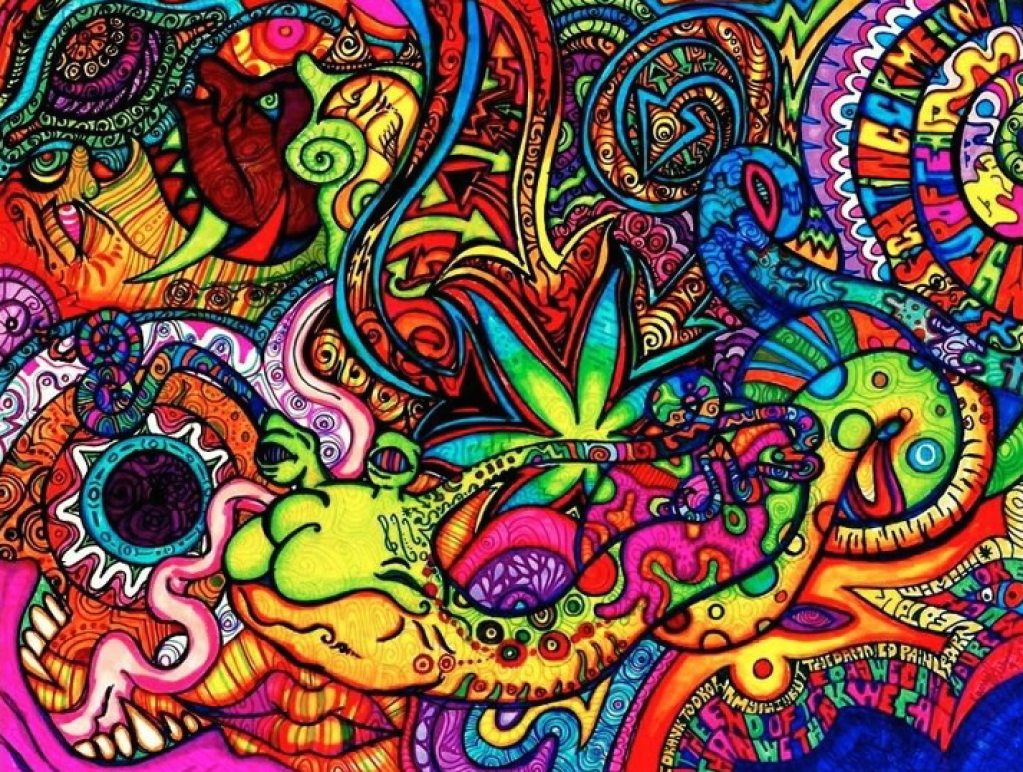
Here are some suggestions that I personally found useful and interesting. Ideally, art therapy is best practiced under the guidance and support of an art therapist, so do consult one if my ideas don’t seem to help. Some of the images here are my own creations that have proved therapeutic for me in way or another. Others are purely for reference purposes.

  • Display your emotions on canvas

One technique is to segregate your negative emotions from the positive ones by drawing and painting them onto a canvas. All you need to do is divide a canvas into two, in one section draw and paint your negative feelings and on the other half paint and draw feelings that make you happy. This exercise will help you replace your negative sentiments with positive thoughts, thereby releasing any stress or apprehensions.

A display of my emotions on canvas
  • Digital Mediums

Another means of practicing art therapy is through digital mediums. All you need is an iPad or tablet, a stylus and any good drawing app like Adobe Photoshop Sketch or Autodesk Sketchbook. The best part about digital art therapy is that it’s easy to erase and start over! Another benefit of using digital medium is it increases concentration, focus as well as self-esteem, especially for children with autism.

A therapeutic digital creation of mine

·        Design a postcard you don’t intend to send

Sometimes illustrating all those pent up feelings about something or someone in the form of a postcard can helps deflate the problem. Designing the postcard allows you to activate different parts of your brain and helps it to relax. Once all the negativity is out on the card, you’ll find that it has lost its power to some extent.

Therapy through postcards (Reference image)

·        Cut and paste a painting to create a collage

Recreate a new artwork form a previously done painting by cutting it up and re-sticking it together in the form of a collage. This activity will motivate you to take risks and push yourself not just creatively but also in life.

Therapy through collage making (Reference image)

·        Create art in the dark

Creating art in total darkness frees you from that judgmental mind of yours that compels you to self critic your work. This in turn will also relieve the stress that comes with the judgment and criticism you have to face in other aspects of your life. You will be pleasantly surprised to see sides of yourself you never thought existed when you turn the lights on!

  • Try Mandala and Zentangle art

Zentangle and Mandala Art can prove to be extremely relaxing and therapeutic owing to their meditative qualities.  Both encourage deliberate, ritual creation and allow room for human error as no erasing is allowed. The entire process can be done in about 15 minutes and can be practiced whenever you want to.

·        Color therapy

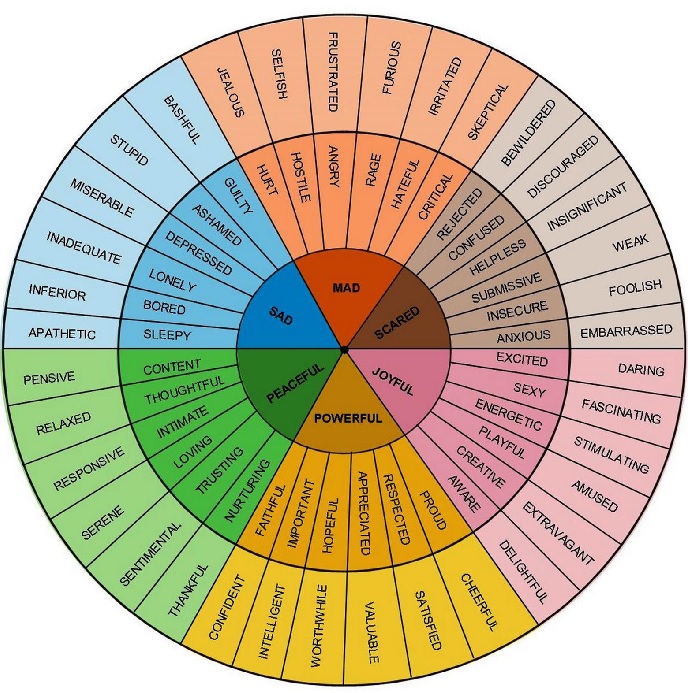
Color has the ability to affect our moods and can be used to transform our state of mind. Colors can also provide an insight into your emotional state. By cutting and pasting images with colors that symbolize your current mood (for example red or orange if you are angry) can help you figure out why you’re feeling that way and work your way out of the mood.

Color therapy (Reference image)

·        Doodling

Doodling can be a very effective form of therapy as it allows your feelings and sentiments to flow out uninhibited. The possibilities are endless and ever interconnected line, mark or shape adds on to your story. It’s like you are pouring your heart out onto the paper which will eventually make you feel lighter and calmer.

·        Make a self portrait

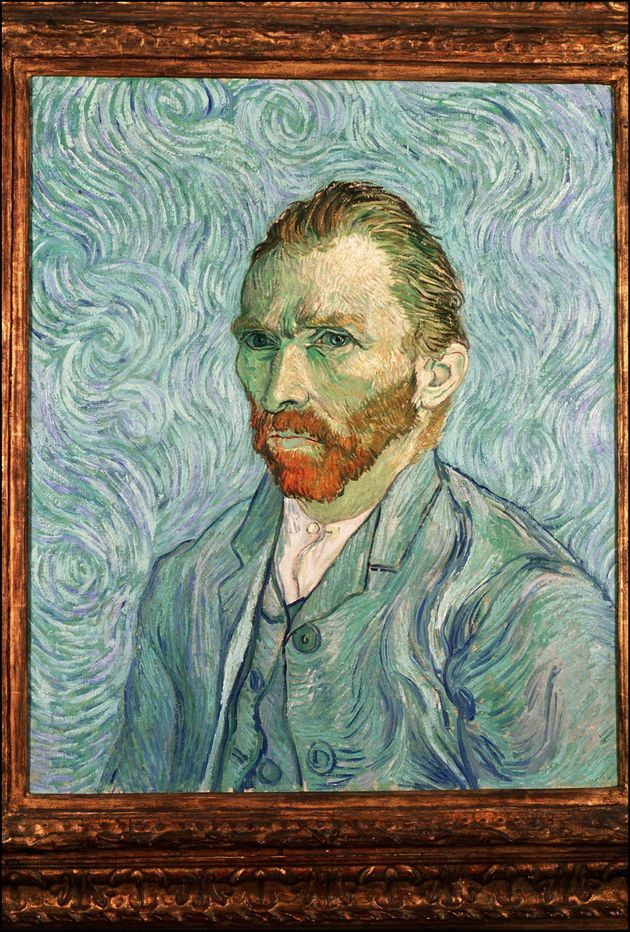
Creating a self portrait of yourself from your past memories helps you recall the person you were and how you have transformed and grown with time. It makes you reminisce on your good as well as bad sides and shows you that you can change for the better.

Therapy through elf portraits (Reference image)

The best part of art therapy is that you can express yourself and vent out your sentiments without uttering a word. It can help you transform your negative energy into something positive – a piece of art. That’s why I love art. Not only is it expressive, it also heals.

DISCLAIMER – All the information, data and imagery in this blog post is for informational and educational purpose only. I have only made it available with the sole effort to stimulate creative progress and artistic enrichment. Some images and data may have been taken from the links included below and I give full credit to these websites/pages, thereby in no way claiming them to be my own. Some data is based on my personal experiences and opinions. As mentioned earlier on in the post, I am not a professional art therapist and the techniques I have shared below are merely suggestions. Do consult and practice art therapy under the guidance and support of a qualified art therapist.

Sources and Credits –

https://www.huffingtonpost.in/entry/art-therapy-techniques_n_56562017e4b072e9d1c19f9b?ri18n=true

https://www.artitout.com/single-post/2014/12/04/Using-the-Feelings-Wheel