Featured

Where did Your Art Supplies Come From?

Since time in memoriam, art has been mankind’s favorite creative activity and we have indulged in it with the help of innumerable tools, techniques, and mediums. Most of the basic art supplies we use today have revolutionized the art world to such an extent that it’s impossible to fathom what art would be like without them. But have you ever wondered how and when they came into existence??  Here’s a history of art materials that I consider to be the backbone of the art world.

Pencil

This basic tool that makes it possible for us to give form and shape to our creative thoughts came into being due to the discovery of an unusually pure deposit of graphiteinEnglandin1564. It’s this graphite that makes up the writing part of a pencil which is commonly referred to as the “lead”. The name graphite originates from the Greek word graphein, which means “to write.” Artists’ pencils come in a wide range of hardness, depending on how much clay is used to bind the graphite.

Easel

Easels are believed to have existed as early as ancient Egypt. The first written record of an easel was by Pliny the Elder in the 1st century. In the 13th century easel painting became more popular than wall painting.

Pen

The earliest versions of pens were the brush pens used by the Chinese for writing (1st millennium BC), reed pens used by the Egyptians (circa 300 BC) and quill pensor pens made of bird feathers(7th century or earlier). Then came the metallic pens and ones with metallic nibs in the mid-19th century which didn’t have a reservoir of ink in them, and had to be dipped in inkwells. Thereafter, fountain pens, which don’t have to be dipped in ink constantly, were developed in 1884. Ballpoint pens were invented in the 1930s or 40s, and soft-tipped pens became commercially available only by the 1960s. Most pen-and-ink drawings done before the 20th century were produced with reeds or quills. Some famous artists that favored pens were Pablo Picasso, Henri Matisse, Rembrandt, and Vincent van Gogh.

Paintbrush

Paintbrushes are one of the earliest art supplies known to have been used as early as the Paleolithic Period. Evidence of this can be seen in caves in Spain and France and in early Egyptian tombs. Paintbrushes have been made of animal fibers such as hog bristles or horsehair, and more modern brushes are made of nylon fibers, polyethylene, or even wire.

Oil paints

Until quite recently it was believed that oil painting had originated in Europe in the 11th century. In 2008 it was discovered that oil paints extracted from natural sources were used in cave paintings in Afghanistan in the7th century (around 650AD). But it was also discovered and popularized by painters in 15th century Netherlands.By the end of the 16th century oil paints replaced tempera and become the medium of choice for several artists in Europe, especially Italy. Some of the world’s most famous paintings like the Mona Lisa have been created using oil paints.

Crayon

The basic components of a crayon—wax with pigment—can be traced back thousands of years to Ancient Egypt and Greecebut the earliest forms of crayons, i.e., chalk and pastels were known as early as the 16th century. Wax-based crayons were probably developed sometime in the 19th century. The good old Crayolas used in school were invented in 1902.

The Paint Palette

In the early medieval times, artists would put their pigments into several bowls, eventually ending up mixing paints and having lots of dishes to wash. This led to the development of the artist’s palette.

One of the oldest known depictions of the palette—a small wooden disc with blotches of paint on top, appears in De Mulieribus Claris, a 1374 collection of famous women’s biographies by Italian scholar Giovanni Boccaccio. One of them is a palette in the shape of a nine-pointed star held by a female painter as she works on a Madonna and Child composition.

By the 16th century, the kidney bean-shaped palette with a hole for the thumb emerged, as seen in an engraved portrait of Flemish painterHans Bol. Rectangular palettes were also used among Flemish painters such as Dirck Jacobsz, who included one in a 1550 portrait, as did Dutch Mannerist painter Joachim Wtewael in a self-portrait from 1601.
It eventually reached other parts of Europe by the mid-17th century as is evident fromArtemisia Gentileschi’s
Self-Portrait as the Allegory of Painting from the 1630s and Diego Velázquez’sseminal 1656-group portraitLas Meninas. Little has changed about the classic artist’s palette since, other than the introduction of materials like plastic, acrylic, and safety glass in place of wood.

Canvas

Canvas was originally introduced in 14th-century Italy as a more affordable alternative to wood panel. However, it took centuries to catch on because most Renaissance art was made for and funded by wealthy families who preferred lavish panel paintings. Works on canvas were considered less significant and reserved for secular paintings to be hung in private summer properties. By the 16th century, Italian artists and their patrons started to realize that wood is prone to decay, and canvas became the ideal surface for painting. The best quality canvases came from Venice and eventually spread to Northern Europe, where they slowly overtook the panel tradition. Staunch panelistPeter Paul Rubens’ first experiment on canvas, Wolf and Fox Hunt(c. 1616), helped popularize it in his native Flanders, and by the 18th century it became the de facto surface for painting.

The Paint Tube

American portrait painter John Goffe Rand single-handedly revolutionized art with his invention of the paint tube.
Rand was frustrated with the shelf life of his oil paints, often finding them dried up before they were even used. At that time, there were only two options available for storing paint – in fragile glass jars or syringes, which were dangerous to carry around, or in pig bladders, which artists would fill with pigments and seal with a string. To access the colours, artists had to poke a hole in the bladder and scrape out as much paint as possible. Since the hole couldn’t be re-sealed, whatever paint they didn’t gather went to waste.


In 1841, Rand had an epiphany: Small metal tubes would make storing paints simpler, cleaner, and handier, while increasing their longevity and portability. By March 6th, he had taken out patents on these “metallic collapsible tubes,” and they soon became a hit. In 1904, British chemist William Winsor added a screw able cap to Rand’s tube, allowing painters to save colours for later use. Pigment experts could then produce and sell paints in bulk without fear of them drying out, thereby making the medium cheaper.

DISCLAIMER – All the information, data and imagery in this blog post is for informational and educational purpose only. Some images and data may have been taken from the links included below and I give full credit to these websites/pages, thereby in no way claiming them to be my own. Other data is based on my personal experiences and opinions.

Sources and Credits –

https://www.britannica.com/list/art-history-the-origins-of-7-of-your-favorite-art-supplies

https://www.creativelive.com/blog/inventions-that-made-us-more-creative/
Artist Block

Featured

Do you find yourself staring at the blank white canvas perched on your easel, foxed at your inability to make a mark on it? Have you been mulling over your first brush stroke not just for a day, but for weeks, months or even years? Well then, Houston, we have a situation here! Time to sound a Code Red, for what you are experiencing is the Armageddon of the art world – the dreaded artist block. It is the apocalypse that’ll devastate and annihilate your artistic progress.

But relax! No need to panic, for it can be averted. As artists, we all have had those phases in our lives when we feel utterly confused, perplexed and frustratingly stuck. This is the time when innovative ideas seem to run dry and art inspiration is sorely lacking. It’s a common dilemma that can afflict all artists at some time or the other during their artistic journeys.  

What exactly is an artist block?  

Also known as a creative block, it is a period when artists cannot access their creativity and/or they cannot bring themselves to create a new piece of work. They feel like they have run out of things to draw. Simply put, it is a time when artistic drive is missing.

What causes an artist block?

The most common cause is a lack of inspiration or ideas. But inspiration is not the only problem, it’s also inactivity. If you are not practicing your art regularly, you will eventually run out of inspiration. So the key is to keep working and keep the momentum going. On the other hand artist block can also happen if you are mentally or physically exhausted. So do take care of yourself and take a break when you feel like you are burning out. Sometimes just looking at the world around you and enjoying it sights and sounds can help you grow as an artist!

How do you get rid of artist block?

Whether you’re uninspired, worried your work isn’t good enough or just can’t think of anything to sketch, the creative block is for real. But you must not let it get to you. Life gives us enough inspiration to be creative at all times. It’s up to us to find it and put it to good use. There are numerous ways to come out of this dry spell of creativity. Here’s how:

1. Create something on the canvas even if it’s just a simple sketch or a splash of colors. It is these marks and textures that will inspire you.

2. Travel or just go out for a stroll to the park or beach and look at everything afresh. The little subtleties of nature will appear to you in a totally new light.

3. Visit an art museum, gallery or online art websites that showcases art genre of your interest to draw inspiration from the old masters.

4. Enter an art competition to give you a goal to work towards and spark your creativity. Moreover, if you are selected and get to attend the art show, the works of other contestants will serve as a source of inspiration.

5. Read inspirational art quotes by the great masters of painting. It will not only inspire you but also motivate you once you get to know how they succeeding in combating their own lull periods.

6. Read art books if you are stuck with common issues like how to start a painting, what medium to use or how to fine tune your style.

7. Take a break if you feel you are experiencing artist burnout. It’ll give you time to contemplate on your status as well as progress as an artist. If you are just stuck on a particular painting, start a new one and toggle between them to keep the creative juices flowing.

8. Use creative exercises like drawing or painting your favorite subject for a month, making ten spontaneous paintings within a time limit, or recreating a series of an old painting in new ways each time.

9. Attend an art workshop where you can explore new techniques or media. You can also ask a friend or mentor to give you a creative challenge to work on.

10. Find a muse that inspires you andtake photos of this muse. Then go through the images and sketch or paint specific aspects of the subject in detail.

11. Clean up and revamp your studio or work space. A cluttered work area hampers creativity and kills inspiration.  

12. Take a timeout from email and technology and just focus on your creative practice.

13. Visit a library or bookstore and explore a topic or subject you’ve been wanting to paint.

14. Take care of your physical, emotional and spiritual needs with a good workout, a solid meal, good sleep and some meditation.

15. Maintain a journal, scrapbook or notebook of your doodling and random musings that you can refer to later for inspiration.
Check out my blog post titled A Tour of My Sketchbook

16. Socialize and unwind with friends and acquaintances. It will clear your head and rejuvenate the creative center of your brain.

17. Take inspiration from other genres of art like literature, music, dance and even culinary arts for new ideas. 

18. Create a Pinterest board with images that inspire you and make note of specific characteristics that appeal to you about each artwork as well as how you can incorporate these features in your own work in your own unique style. 
Check out my Pinterest inspiration board here.

My Secret Tool

As an artist, I’ve come up with my very own fool proof solution to overcome my creative slump that seems to have worked for me each and every time, at least till now! I come up with my most creative concepts just before I hit the sack. As weird as it may sound, it’s when I close my eyes and shut my brain off to the outside world that I am able dive into the deep, dark abyss of my mind and conjure magical innovations. I also keep the notes app on my iPhone handy when I’m out on a long leisurely stroll. My best ideas come when I’m surrounded by nature because my mind is free to soar and explore new horizons.  Besides these two trump cards, my trusted sketchbook and Pinterest board have always got my back, so plan B is also in place!

I consider these a form of “therapy” when I find myself in the shackles of a creative rut. You are most welcome to try them out if you are in one too. This is my troubleshooting mechanism, maybe it can be yours as well!

DISCLAIMER – All the information, data and imagery in this blog post is for informational and educational purpose only. Some images and data may have been taken from the links included below and I give full credit to these websites/pages, thereby in no way claiming them to be my own. Other data is based on my personal experiences and opinions.

Sources and Credits –

https://www.wikihow.com/Overcome-Artist%27s-Block

Inspiration for Artist Block & How to Break Through Creative Slumps

Featured

Capturing Your Art with Your Smartphone

After toiling for countless hours on a painting and finally completing it, we are so eager to share it with the world that we often rush through the most important part of the process – photography. Like framing, photographing your artwork is an important aspect that determines how successful you will be in getting it exhibited in galleries or selling it.

But this is easier said than done. One option is to hire a professional photographer, but what do you do if you can’t afford one? Well, why not give it a shot yourself? Bear in mind though that the photos of your work should be as high quality and professional as the artwork itself. 

We often invest in a wide range of photography equipment, from simple cameras to expensive DSLRs but not all of us are skilled at photography. Most of us struggle with common issues like uneven lighting, incorrect colors, and glares and shadows. If you are still a novice at photography, a smart phone will work just as well enabling you to take professional images of your art. I myself am not a professional photographer so I make regular use of my iPhone to document my work. Here are a few tips and tricks that I use to get the best out of my phone and help me get some great shots.

Preparing for photography

  • Make sure your smart phone is fully charged. You will need it to take multiple shots before you get the perfect one!
  • If you are clicking indoors, turn off artificial lights and open the curtains to let in natural light. If you are outdoors, select a shaded area to avoid glare. A cloudy day would be ideal.
  • Clear any clutter in the room and around the painting to enable you to take clean and tidy photos from various angles or distances.
  • Set up your smart phone on a tripod (if you have one). This will avoid all those blurred clicks.
  • Set up your artwork on an easel, wall or flat on the floor as you deem appropriate.
  • Use clear tape to tape your artwork to a wall if it’s on paper.
  • Keep a grey cloth handy to serve as a backdrop if there’s no bare wall.

How to take a shot

  • Taking shots in natural light will bring out the true colors of your painting accurately. You can hang your canvas on a wall outside away from direct sunlight to avoid any reflection and take a shot holding your phone vertically. Alternately, you can place it on the floor next to an open door and stand directly over it to click. This way the light outside the door will be your natural source.
  • If you own a tripod, now is the time to use it. If not, just stand or sit still with your elbows against your body and take the picture. You can also try propping the camera on something solid. This will prevent your shots from getting blurred. Take several shots as some will be out of focus or blurry.
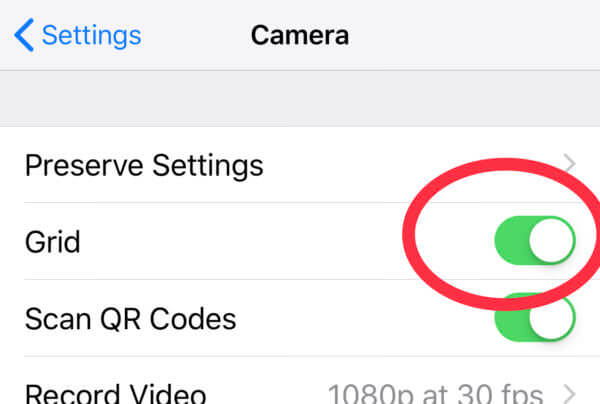
  • Ensure that the camera is vertical, i.e., the lens should line up with the artwork and not tilted. The key is making sure the angle of your painting and the angle of your phone are the same otherwise you will get a distorted perspective of your painting. Most phones, especially the iPhone provide the grid function in their camera settings that can help align your phone to the object being photographed. You can use it for shooting an artwork on the wall as well as one placed on the floor.

How to avoid glare with Smartphone

I always make it a point to photograph my work before it’s framed. That way, I can avoid reflections formed on the glass or Plexiglas on top. Even so, sometimes the natural sheen of the artworks, especially in case of oil paintings can lead to reflections. If for some reason you have to photograph your work after framing, here are a couple of options:  

  • Use polarizer filters, specifically the linear and circular ones. They are especially helpful in taking photos of a framed artwork as they reduce the light reflected on top. They also make the colors more vibrant. Just pick up the right ones for your smart phone lens.
  • Being a novice at photography, I have no clue about filters so the next best option for me is to take my shots from different angles. This requires repeated adjustments and tons of patience as I have to keep moving to different positions until the glare is no longer visible.
  • Another reason for a glare or a reflection is the flash of your camera which is reflected straight back into the lens resulting in a glare so it’s best to turn off the flash.

The best time to take photos outside is when it’s overcast as the cloud cover acts like a giant diffuser — like the umbrellas photographers use — so that the light is uniformly distributed and the artwork is evenly lit. If it’s not cloudy outside or you can’t find the perfect shaded spot, you can get two lights of the same power and color and place them halfway between the camera and the canvas at a 45-degree angle pointing toward the artwork (this will help eliminate shadows and reflections on the painting). This is what it should look like:

  • You can also use a translucent plastic bag or a white sheet as a cheap diffuser by hanging it over the light making it softer and less direct. Just make sure you don’t do this on hot lights!

Editing your photos

Most phones come with basic photo editing options but for editing finer details, you can download a photo editing app on your phone or on your computer. Some commonly used ones are Adobe Lightroom, Snapseed, Moment app, Picsart etc. While Photoshop is still the most popular, Photoshop Elements or Gimp allow basic functions such as color correction, cropping, and other minor adjustments. Here are the features that you need to correct in your image:

  • Correct the colors in your image if you feel they don’t match the ones in your original artwork. This can be done using “color correction,” “color balance,” “temperature,” or “tint” options on your phone. You can also adjust the brightness, contrast and saturation of your colors.
  • Crop the image so that your artwork fills the image and is devoid of anything distracting in the background
  • Resize your image if required and save it with the appropriate dimensions and resolution in jpeg format.

There are several other professional tricks that can be practiced to improve your photographs so this is just a starting point.  I hope these shooting tips will be of some help and make photographing your art enjoyable!

DISCLAIMER – All the information, data and imagery in this blog post is for informational and educational purpose only. Some images and data may have been taken from the links included below and I give full credit to these websites/pages, thereby in no way claiming them to be my own. Other data is based on my personal experiences and opinions. I am not a professional photographer so the tips I have shared below are merely suggestions. Please hire a professional photographer for more professional results.

Sources and Credits –

https://www.artworkarchive.com/blog/4-steps-to-photographing-your-art-like-a-professional

https://dgillart.wordpress.com/2017/04/05/photographing-artwork/

Featured

Art for a Cause

“You give but little when you give of possessions. It is when you give of yourself that you truly give.” ~ Kahlil Gibran

Creating art can not only be satisfying, but also makes us ponder and reflect about pressing issues. This is why art created to raise awareness for a cause can work wonders. It can awaken powerful and lasting emotions that consequently lead to positive action. Most artists make use of this power not just to express themselves, but also to make a statement, or contribute towards a cause.

The mere creation of an artwork aimed at creating awareness or towards a charity has a positive impact. It’s always a pleasurable experience to be associated with nonprofit organizations and other charities that are making a difference.

Artists help charities in many ways depending on their personal choices and artistic skills. One doesn’t always need to create foundations, donate big pieces of art. When it comes to painting for a cause, the sky is the limit and no contribution is too big or small. Here are a few ways through which artists can make a difference:

  • Collaborate with charities that share a common belief or work for a common cause. Paint murals for them to create awareness.
  • Create awareness through your art about current issues like environment, health care, poverty, homelessness, animals, women’s issues, peace etc.
  • Conduct workshops in hospitals, libraries, museums, clubs, neighborhood religious and cultural groups.
  • Raise funds for the charities you collaborate with by offering a percentage of proceeds from the sales of your art through an auction or raffle.
  • Volunteer for an art therapy workshop. This will be especially beneficial for those struggling with emotional and stress related issues.

I have personally experienced the contentment and satisfaction that comes with creating art for a cause and contributing it towards the betterment of the society. It gives me great pleasure to share with you that some of the artworks from my recent COVID-19 series are up for exhibit and sale through the online Facebook portal of the art gallery, Nero Art Hub (www.neroarthub.com). A percentage of the sales from this series will go towards charity. Here are the artworks that are on display:

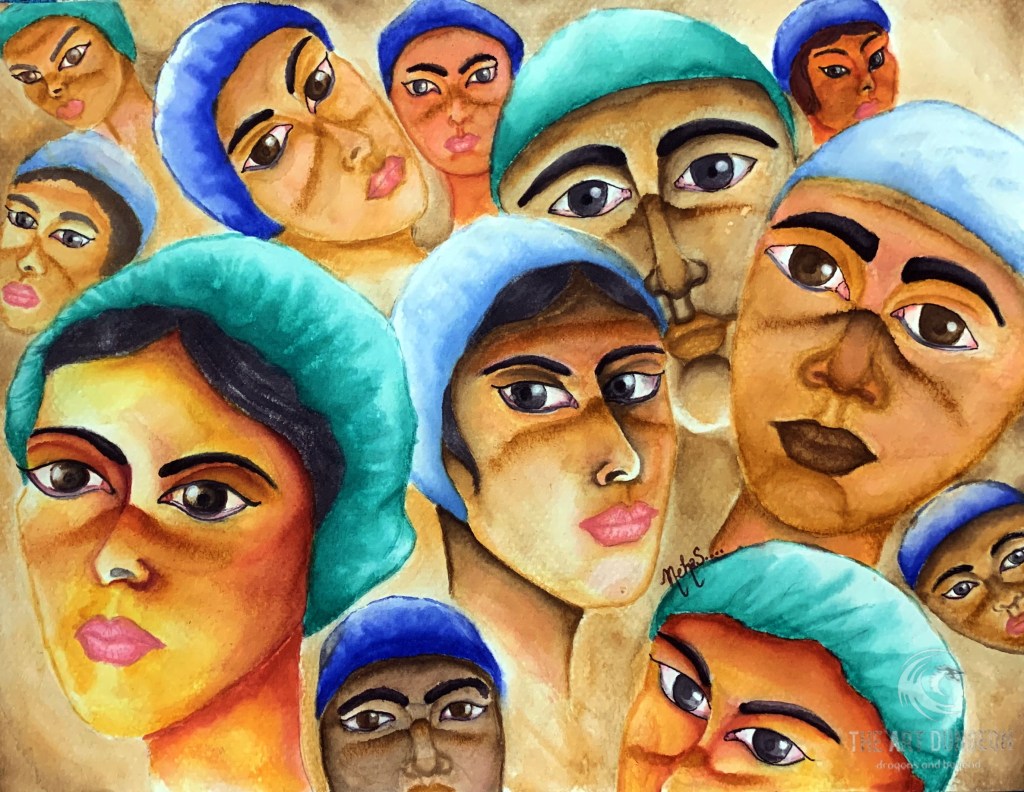
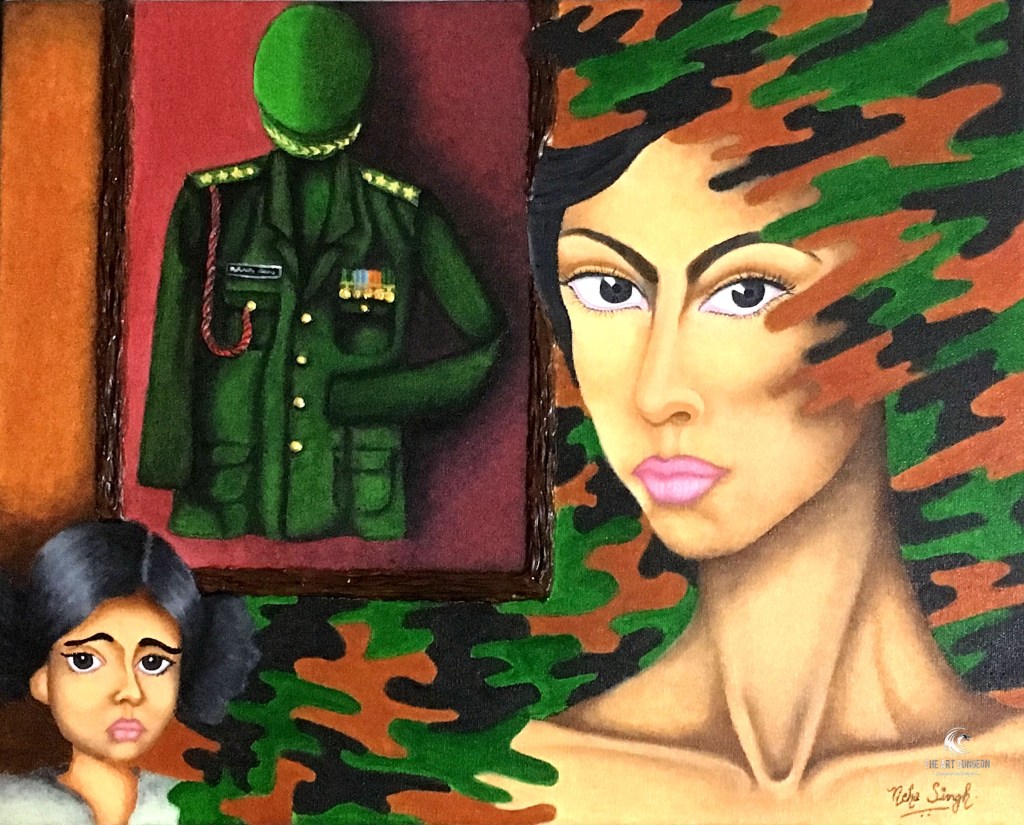
Another contribution of mine is an artwork from my Navrasa series titled Veerangana – The Unsung Heroes. I contributed this towards an online exhibition to commemorate Kargil Vijay Diwas conducted by Youth For Parivarthan, a non-profit organization. The painting is my tribute to not just the fallen soldiers of the Kargil War but also their families, who live on bravely with just their memories to hold on to. Here’s the artwork followed by the links to the exhibition:

(https://www.facebook.com/YouthForParivarthan.Official/photos/pcb.2833925406821188/2833924936821235/?type=3&theater&ifg=1

https://www.instagram.com/p/CDHCBADgnF-/ (scroll through the images to see my artwork).

Many artists have used their talents to help create awareness for a cause or contribute towards charity. You can do it too. All you need to do is find the cause that touches your heart and inspires you enough to create something artistic. In the words of Seth Godin –

“Art is an original gift, a connection that changes the recipient, a human ability to make a difference. Art isn’t a painting or even a poem, it’s something that any of us can do. If you interact with others, you have the platform to create something new — something that changes everything. I call that art.”