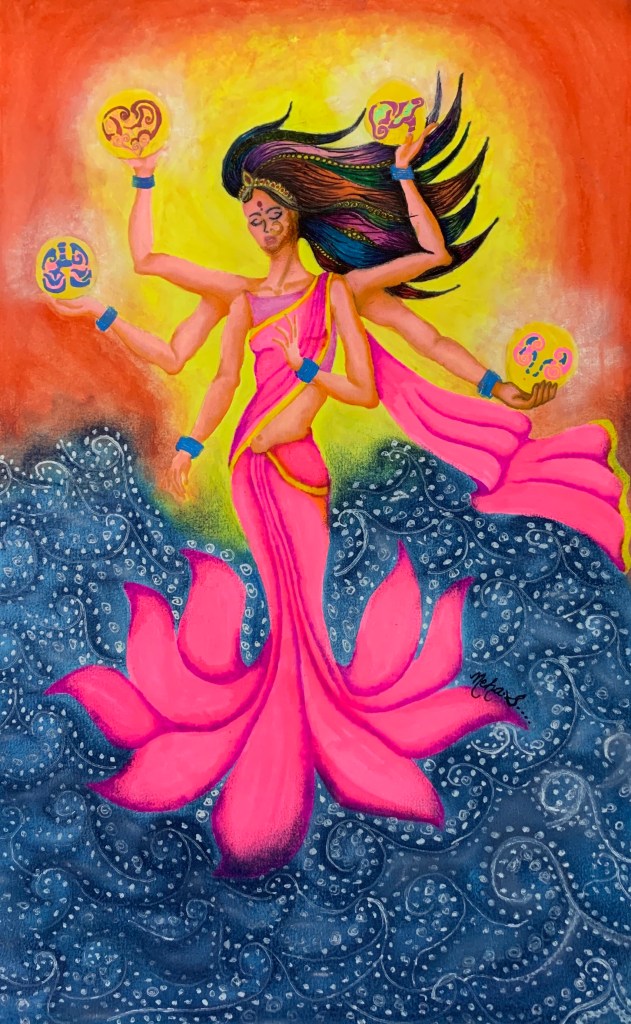
The Name Game

If there is one subject that has always foxed me, it’s what I am going to call a painting once it’s done. What could be that perfect name that would not only make my piece stand out in its full glory but also convey the message behind it in just a few words?

This name that captures the essence of the artwork is what we call its title. It is the artist’s poetic license that allows him or her to communicate the message behind his or her creation.”

I for one give a lot of thought to my titles because I feel they are as important as the artworks themselves. In my opinion, the title of a painting is an extension of the same creative process that goes into making the painting in the first place. I believe that my viewers will be able to extract a much more powerful experience from a piece of art if it has a title that complements it.

A good title is one that gives an insight into the artist’s creative thought process and what inspires him or her. It is the key to the artist’s unique way of thinking and his power of expression. If thought out well, the name of a painting can be extremely evocative and can be resonant of the artist’s personal feelings and interpretation of the subject depicted.

It is for this reason that in most cases, ideas for titles pop up as a result of the artist’s personal reaction to a particular situation or an emotional experience he or she may be going through. But this poses the risk of influencing the viewers and depriving them of their own personal reaction to the art piece, so it’s best to be true to the core concept of the artwork without affecting the viewer’s experience.

A good title also adds an element of mystery to the work and does not completely reveal the artist’s personal feeling about it. This gives viewers the liberty of forming their own opinion about the piece. It should just provide clues to the subject matter and allow the viewer to see the artwork from a perspective that is different from what the artist originally intended. I feel that the title can add this value to a painting.

A title plays a crucial role not only for the viewer, but also for the artists. It is a portal into the creative mind of the artist and also helps in navigating viewers through his thought process by approaching it from his own personal perspective. It is a testimonial, a symbolic representation, a gateway or a metaphor for the subject in question.

Titled Vs “Untitled”

When an artist titles his work, it gives him or her the chance to express in a few words what he or she means to convey through it. However, many artists feel that this can deprive their viewers from building an individual opinion about their art, thereby preventing them from interpreting it independently as per their own personal perspective. They feel that it stops viewers from extracting an intimate experience from the artwork. Hence, they prefer to leave it to the viewers to make their own interpretation by christening the painting with the term “Untitled.”

There are several other reasons why some artists have reservations about titling their work. Many world renowned masters of art have resorted to keeping major pieces of their work untitled. Some want to let a work speak for itself and not impose a label on the image while others don’t want to influence the viewer. Very often, an artwork really doesn’t need a title. This is particularly true for smaller sketches, studies, and preparatory works, many of which are simply intended as teaching aids or have the ability to stand on their own as works of art.

I somehow disagree with the idea of not baptizing a painting, especially if you are trying to sell your art. Not having a name for it kind of puts off your customer.  Most art enthusiasts and collectors look for a name as it will give them a better insight about what they are going to be investing in. Having a title not only imparts an identity to your beautiful creation but also appeals to the interest of your buyer.  And if you’re posting your work on the internet, the term “untitled” will not get you very far when it comes to search engine optimization (SEO). The probability of finding an “Untitled” painting of yours through a search engine is almost next to nil as compared to one that has a name. Moreover, yours is not the only “Untitled” composition that will come up in the search results so it’ll be like looking for a needle in a haystack!

How to title paintings according to the type of art

Your choice of title for your art piece shows what it means to you and gives the viewer some idea about approaching the piece.

If you are struggling with naming your art, a bit of research really helps.  One way to approach naming your painting is to identify what category of art it fit into. Here’s how you can christen your work based on this criteria:

  1. Portraits are usually titled by the subject’s name and sometimes a date, or occupation. 
  2. Still life works are a different kettle of fish and can be pretty tricky to title. A lot of thought needs to go into your composition before you give it a name, for instance, does it have a story to tell? Is it based on a theme or does it symbolize something? More creative your still life setups, more innovative and interesting are the possibilities for titles.  Natural arrangements have a better story to tell than artificial ones which makes for better titles too. Creating a deliberate mood or theme, will be helpful when it comes to choosing a title integrated with the work. For less developed still life works or studies, your title can be simple and descriptive. Consider using time of the day, season, or mood as part of the title. Once you have identified these, it becomes easier to name it. 
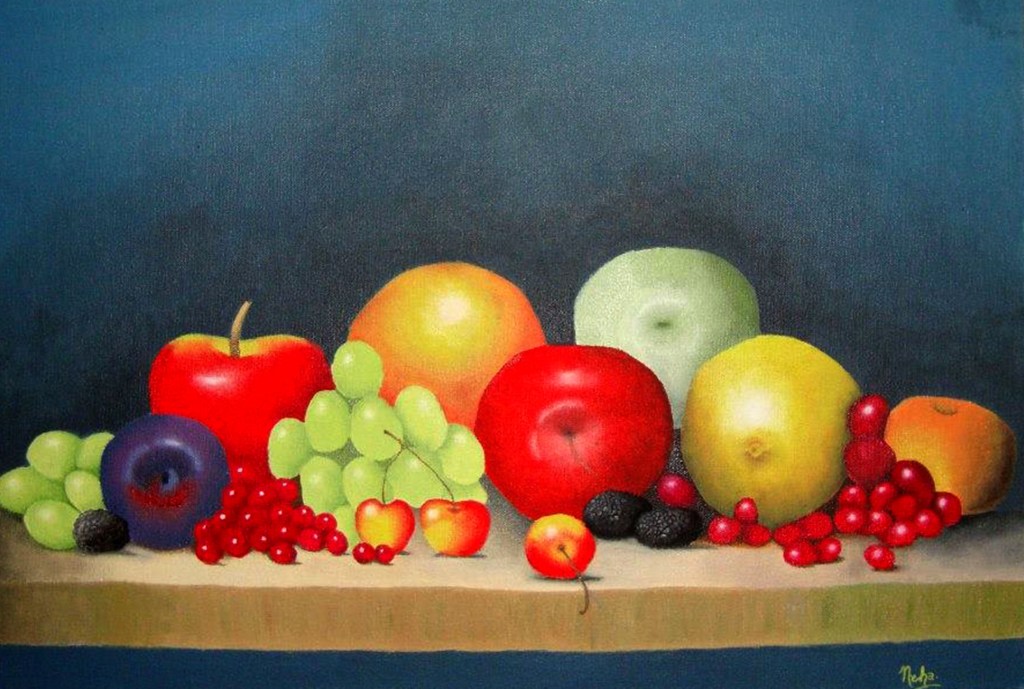
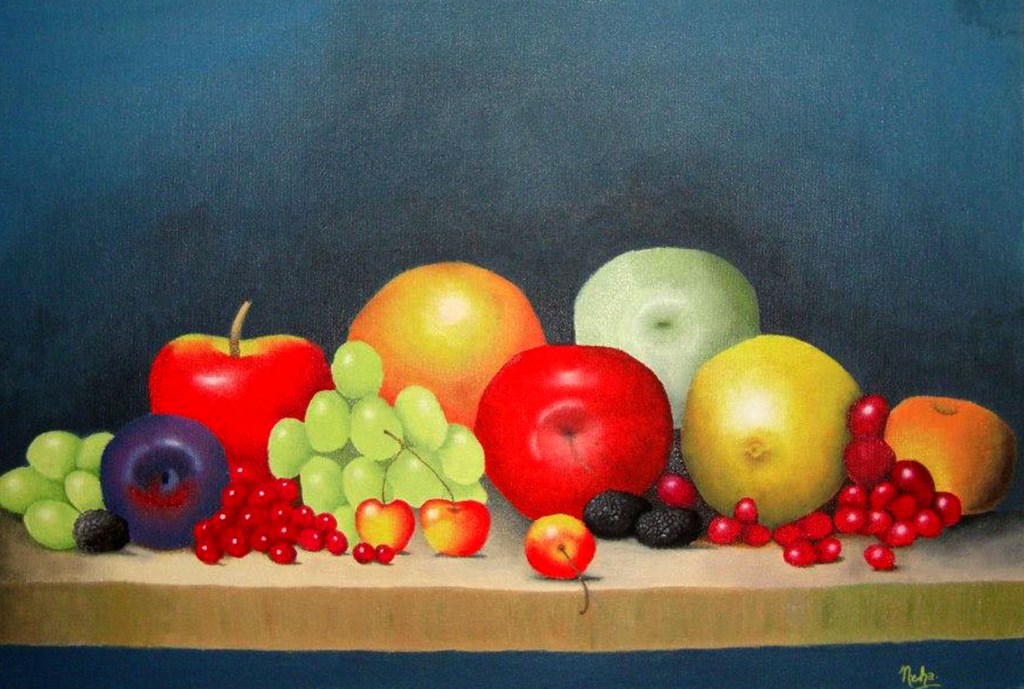
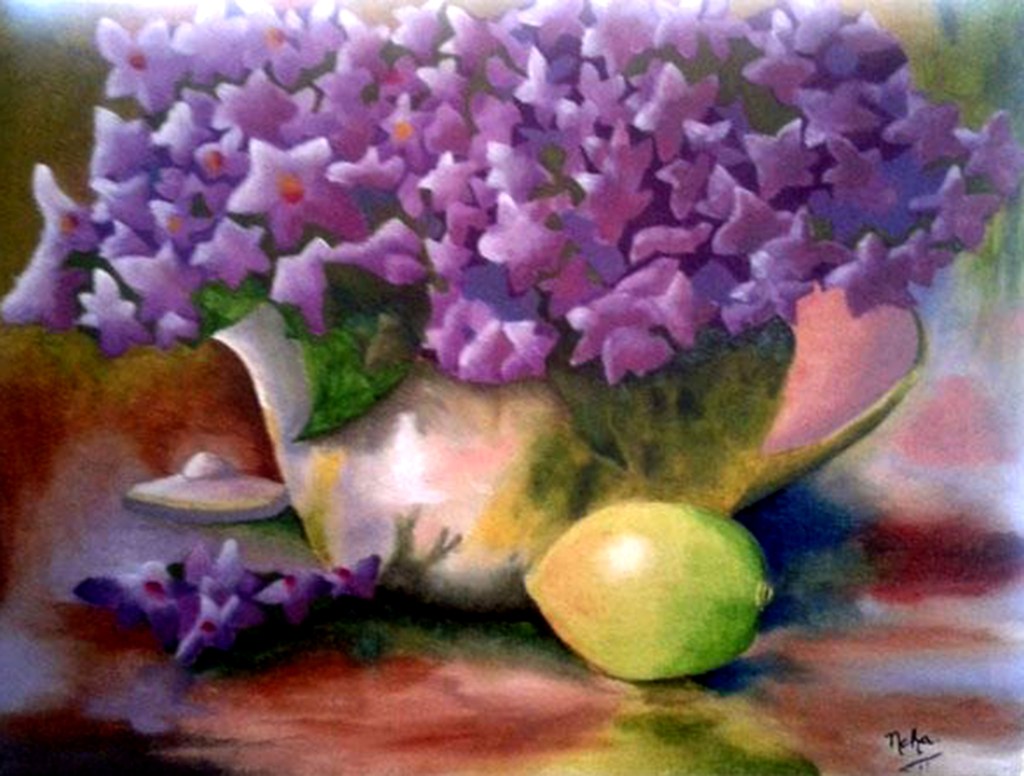
  3. Landscapes can be named according to the location, the time of the day, the season and the mood you wish to project to your viewers. Mentioning the location is very important as not all your viewers may be familiar with the scene. Even the most famous and well known locations in the world may be unfamiliar to natives of your own land or those visiting from other countries. Adding a personal touch or connection along with the location can make the title that much more interesting. For example, doesn’t “Grandma’s favorite Orchids” sound better than just “Orchids?” Often the title can pick up on irony, contrast, or drama in the scene. I wish I had known all this before, otherwise I wouldn’t have simply named my floral still life just “Flora in a Pot” and my composition of fruits just “Fruit Platter!” Sounds boring right? How about “Summer Blooms” and “Fruits of my Labor?” Don’t you think they add an element of interest as well as a bit of drama to these pieces?
  4. Abstracts can be totally non-objective in nature so your title may be the only way to communicate to your viewer what your painting is all about, why you created it, or the concept behind the work. For most abstract pieces, the title is the only key to the art other than the piece itself. However, if your abstract artwork is superficial with no intention to convey any specific message or deeper meaning, make sure your title communicates this to your viewer. For example, Composition II in Red, Blue, and Yellow” by Piet Mondrian conveys to the viewer not to look for any hidden meaning. On the other hand, if your work is based on a specific concept, give the viewer a hint through your title. Titles such as “The Scream” by Edvard Munch help the viewer understand the artist’s perception.

Types of Titles

There are five main kinds of titles: Sentimental, Numerical, Abstract, Factual and Mysterious.

  1. Sentimental titles are an attempt to express the emotional state of either the artist or the subject. Once again, Edvard Munch’s “The Scream” can fit into this category as it aptly brings out his sentiments.
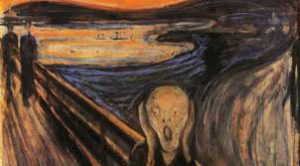
The Scream by Edvard Munch

2. Numerical titles involve the use of numbers, especially if a series of work belonging to a common theme or concept are to be named. Many artists prefer to use numbers. Jackson Pollock gave his pictures conventional titles but changed to numbers. He commented: “…look passively and try to receive what the painting has to offer and not bring a subject matter or preconceived idea of what they are to be looking for.”
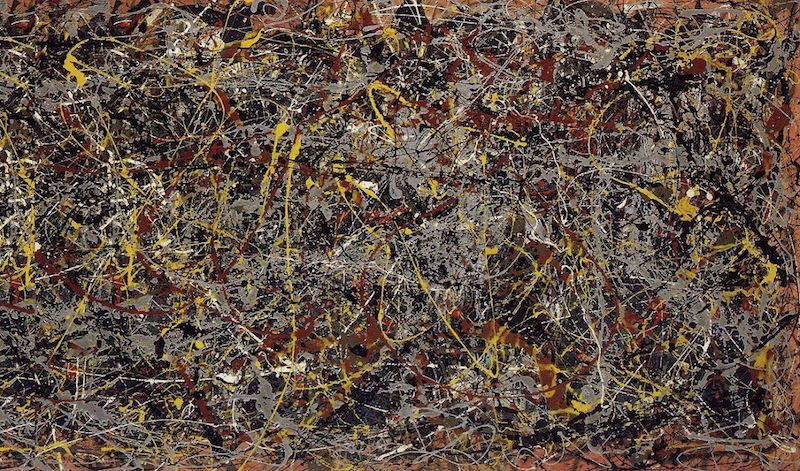
Jackson Pollock’s No. 5, 1948

3. Abstract titles are appropriate if you don’t wish to give away the meaning behind your painting and wish to leave it up to your viewers to make their own interpretations. They can also be used if your piece does not follow any specific theme or concept. They are used to express something that is appreciated in the intellectual and mental sense, an intangible expression concerning or relating to the work.  An example of an abstract title is “Composition II in Red, Blue, and Yellow” by Piet Mondrian.

Composition II in Red, Blue, and Yellow by Piet Mondrian

4. Factual titles are used for naming artworks that depict real life scenes or events. For such titles, the date and location should be at the forefront of your title. You can always add a sentimental or mysterious component to this type of title too. “A Real Allegory of a Seven Year Phase in my Artistic and Moral Life” by Gustave Courbet, 1855 is one such label.

A Real Allegory of a Seven Year Phase in my Artistic and Moral Life by Gustav Courbet

5. Mysterious titles are difficult or possibly even impossible to understand as they impart an element of mystery to the art they are naming. They are deliberately enigmatic and do not explain the artist’s feeling clearly, nor do they identify the concept behind the work. They can be used for art that is obscure and inexplicable. J.M.W. Turner is an example of such an artist who used ironic, compound titles — e.g., The Fighting ‘Temeraire,’ tugged to her last berth to be broken up, 1838.

The Fighting ‘Temeraire,’ tugged to her last berth to be broken up, 1838 by J.M.W.Turner

When to come up with a title

Some artists have no trouble naming their artworks as the title is simply an extension of their creative expression. Several of them don’t think about titles until their artworks are finished and they see what their paintings evoke. Other artists have something clearly in mind as they create, and form titles along that idea. Most artists probably start thinking about a title somewhere in the middle stages of a painting, as their imagery takes shape. As is always true in art, there are no definite rules for titling a painting. 

Most artists paint first and title last. Somewhere down the line, a title just pops out of the blue. A few of them work backwards and come up with a title first, working their piece around it. This latter approach works particularly well for eccentric art. The right title makes a difference as to how a work is seen and understood. There are three ways one can title their art:

  1. Before starting the piece

    Some artists can come up with a title for their work as soon as they’ve seen what they want to paint or an idea pops up in their heads. This helps keep their brain focused on what the piece is about.
  2. While working on the piece

    Many artists get clues about what to call their artwork while working on it. They may not decide for certain until it’s finished but a lot of pieces get a working title at the very least while they are works in progress.
  3. After the piece is done

    For most artists, the point at which people start to thinking about a title is the observation and reflection stage which comes when they have finished
    the artwork.

Should the title be long or short?

In my personal opinion, the length of your title depends on what and how much you want to give away about your painting through its name. Be that as it may, it is advisable to have a title that’s not just one word. A little extra thought in naming your masterpiece will go a long way when it comes to connecting with your viewers! I for one remember artists who tend to use long titles, even though I can never quite remember the titles themselves!

On the contrary, short titles are simple and easier to remember than longer ones.  However, their lack of ingenuity can make them less unique. A little complexity can add individuality and uniqueness to the name.

How to write the name of a painting

The following details need to be taken care of when naming your artwork:

  1. The artist’s name and the title of the painting need to be part of the text.
  2. The title should be in italics. Use title case, capitalizing the first word and all nouns, pronouns, verbs, and adverbs.
  3. The year the painting was completed should be in parentheses.

Some pointers on how to title your painting

Artists generally run through a series of title possibilities for each and every artwork before narrowing down on the perfect one. They carefully consider the ramifications of the probable titles and how they might add to or take away from their artwork. Titles highlight the visual aspect of the painting, provide knowledge and insight about the work as well as provide a glimpse into the artist’s mind-set. Here are a few points to consider while choosing a title:

1. Observe your artwork closely and carefully.  What is the first thing about it that catches your eye? What is that you trying to depict? Is there a deeper meaning behind it? Does it convey a moral message? Is it based on any particular theme or concept? 

2. Make a list of words that describe the piece in terms of colors, shapes, lighting effects, time of the day and season.

 3. What thought or image inspired you to put down this work onto your canvas?  What emotions or feelings did it invoke in you?

4. What exactly is the subject that you have painted? Is it nature, flowers, fruits, blue skies?  List them out.

5. Now look at your painting as the viewer and not the artist and pick out from the list you have made above things that stand out the most and are most relevant to the piece in front of you.  This can be a bit tricky, as those bright red roses in the vase may be your personal favorite, but the vase itself may just stand out a bit more. 

6. Turn to your trusted literary friend, the Thesaurus to look for synonyms for the key words that describe your work best in the list you have made. This may open doors to new levels of creativity. You can even add a mysterious or sentimental element to make the title a wee bit dramatic.

7.  Keep it short and sweet, giving your viewers the freedom and liberty to see the piece from their own perspectives and draw out the rest of its meaning or intent.  This subtle ambiguity will make both the artwork as well as its title a memorable experience for your viewers.

8. Do not try to restate exactly what the painting is already communicating. Think of the title as an additional part of the art that provides something new. Choose a title that is slightly different than your art and offers something new and refreshing.

9. Identify the key feeling you experience through your artwork or want to convey. Then choose words or phrases for a title that conjure up those same feelings in you. Don’t be literal in your description of the artwork.

10. Whether literal or abstract, your title should be as expansive as possible so that your viewers have room for their own interpretation. Allowing them to find their own meaning in your work is not just generous, but also increases the likelihood that someone will connect to it personally and may even end up buying your art!

To summarize –

  1. Avoid stereotypical and cheesy names, unless you intend being paradoxical or satirical. Be original.
  2. Be precise and honest to soul of the piece.
  3. Don’t be pompous and showy.
  4. Provide your viewer only what is required, that is, enough to identify your piece.
  5. Short and sweet is the best. Let your art do the talking.
  6. Appreciate and value your work far more than just naming it “Untitled.”

How I title my work

It has been quite a challenge for me to come up with titles that not only do justice to my art but also elicit the emotional response I want from my viewers. Like most artists, I like to get my viewers emotionally involved in the art experience by just looking at my visual narrative and not getting influenced by the verbal one.

I like to come up with names that convey the power behind my pieces. I generally title my works based on the first thing that comes to my mind when I see them. I use color, shapes, form, textures and movement to resonate with the viewer on the subconscious and emotional level. I try to make my titles as compelling and thought-provoking as the artworks they are meant to name.

My titles usually take shape after the artwork is complete. On a general basis, most of my titles are a spin off from the theme or concept I have based my artwork on or the message or emotion I wish to convey through it. However, some may also arise from the very source that inspired the painting, or from the form the painting ultimately takes.

 I genrally ave my favorite music playing in the background when I’m working with my art so if a song title or lyrics relates to what I’m currently working on, it goes down in my list of probable names for the piece. Why just music? It can be anything – lines from a movie, quotes from a book, poetry, mythology, feelings, emotions, you name it! My list of inspirations is endless!! All I need to do it is adapt it in my own unique way and make it my own! The dictionary and thesaurus have also been my dependable pals for developing titles, and I use them constantly to brainstorm through my lists and come up with the perfect names for my art.

 Based on the above mentioned pointers and cues, here’s how I would classify the titles of my art:

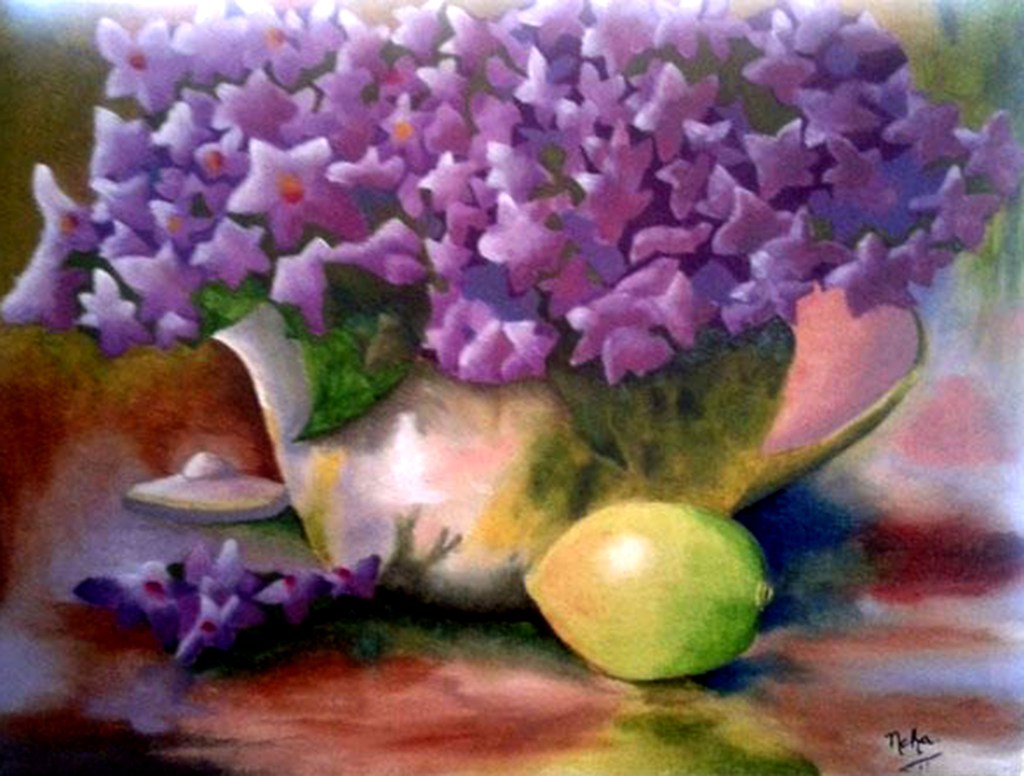
1.Still Life – These include my earlier paintings, namely, “Flora in a Pot” and “Fruit Platter” which are not originals and were done by me as part of my learning process. I had to name them as part of the brief given to me for assignments during my art classes, hence I do not know the name of the original artists or their original titles. As I mentioned earlier in this post, the titles I chose for them were pretty dry and non-poetic and I wish I had thought of something more interesting and attractive.
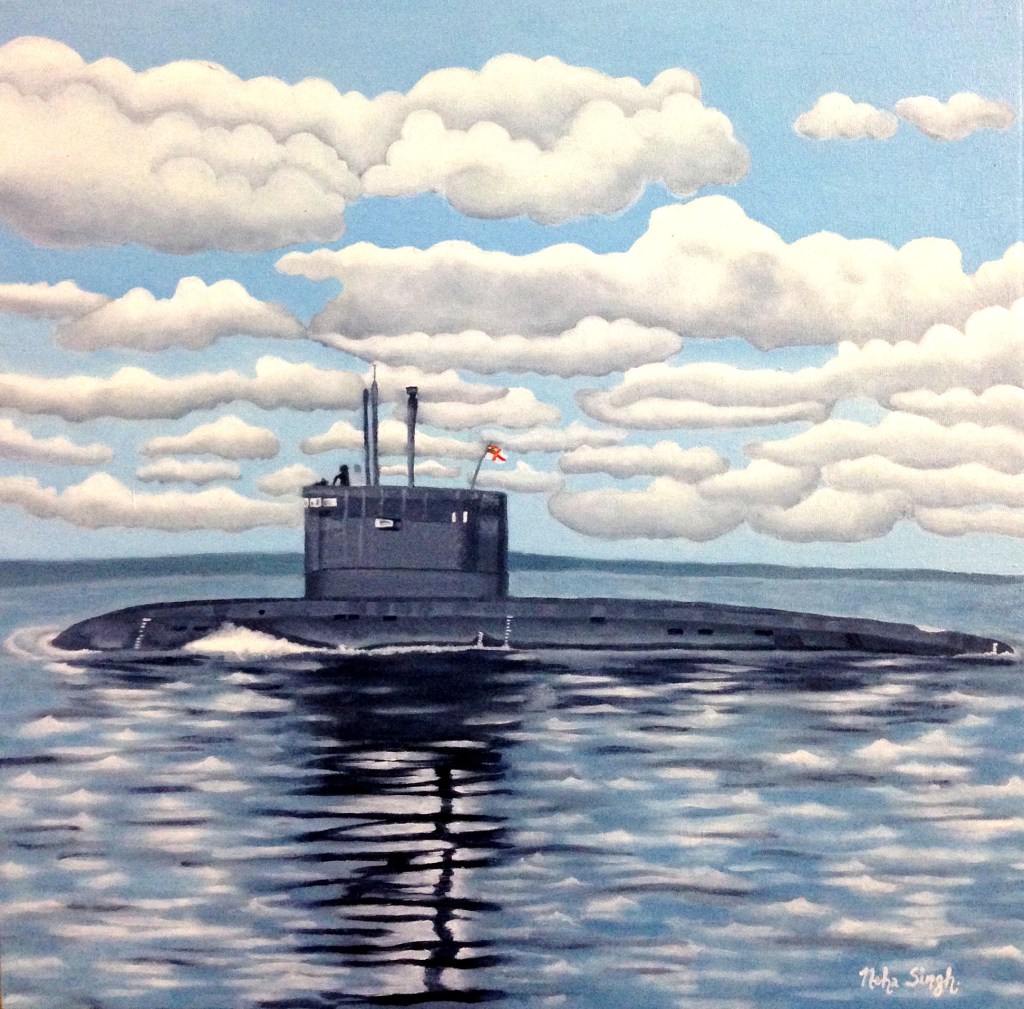
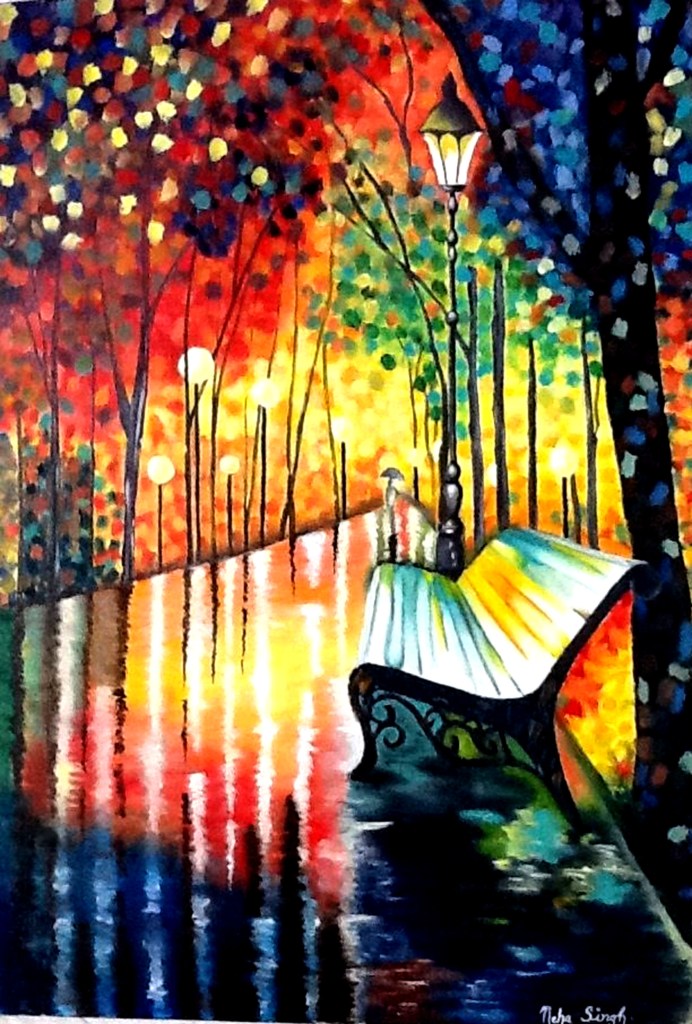
2. Landscapes – My imitations of “She Left” and “Winter Lake by Leonid Afremov fall into this category. Two of my original creations – Deep Sea Dweller and Eavesdropper also come under this category even though they are technically seascapes.
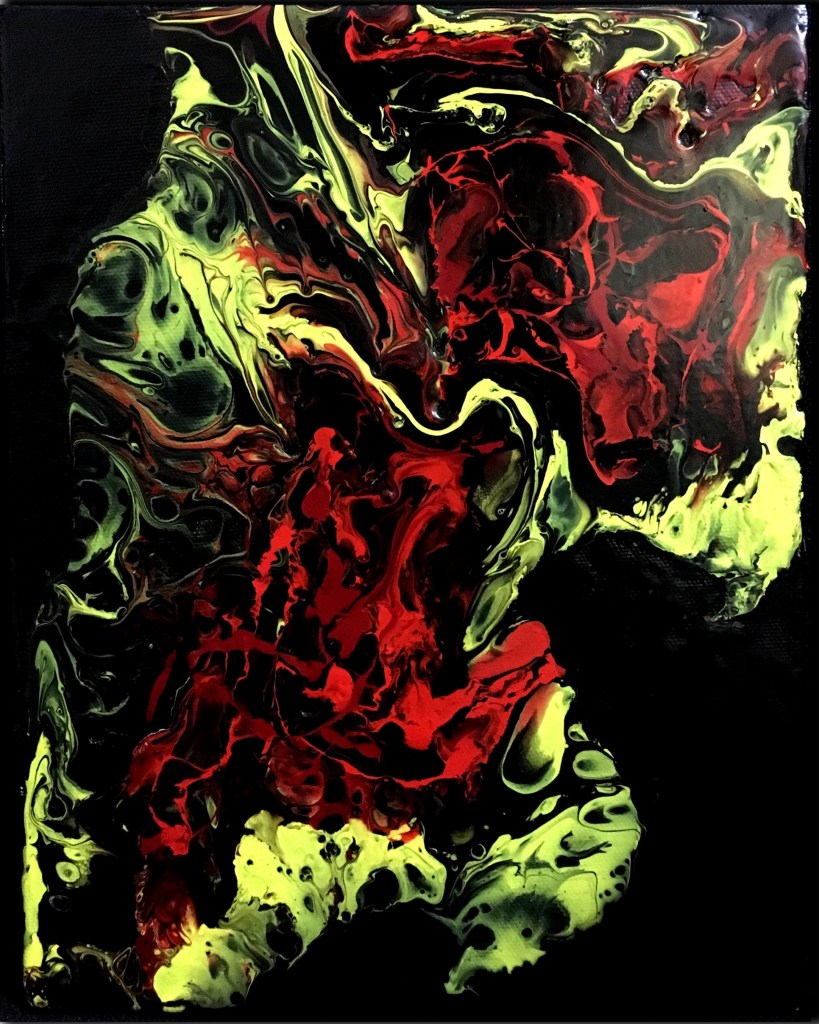
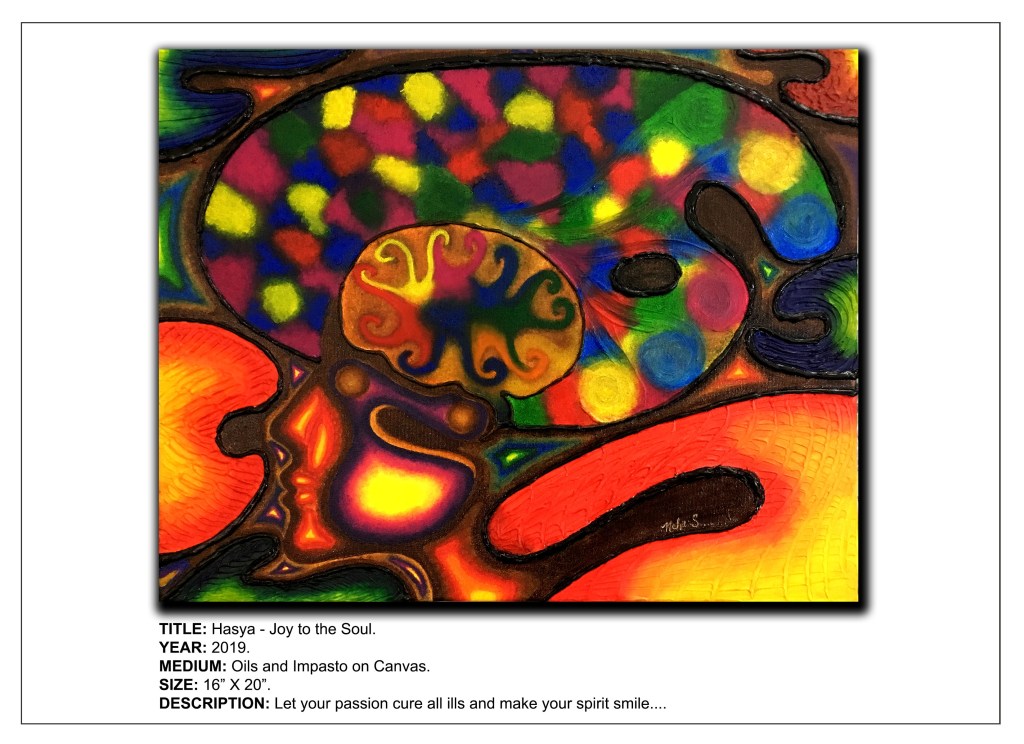
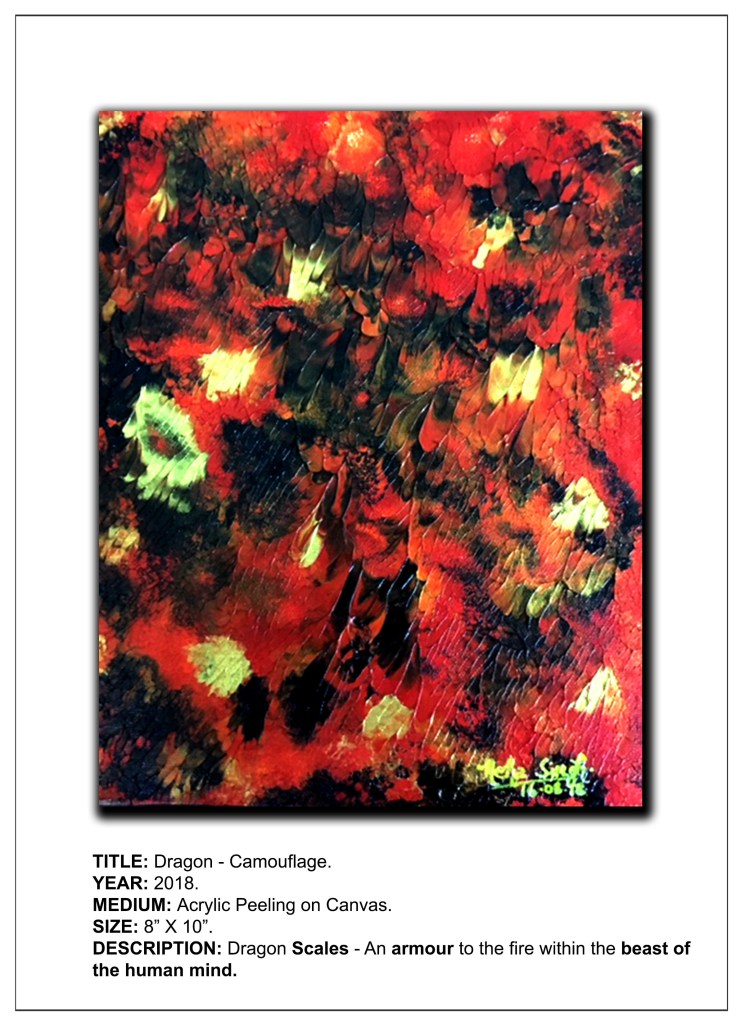
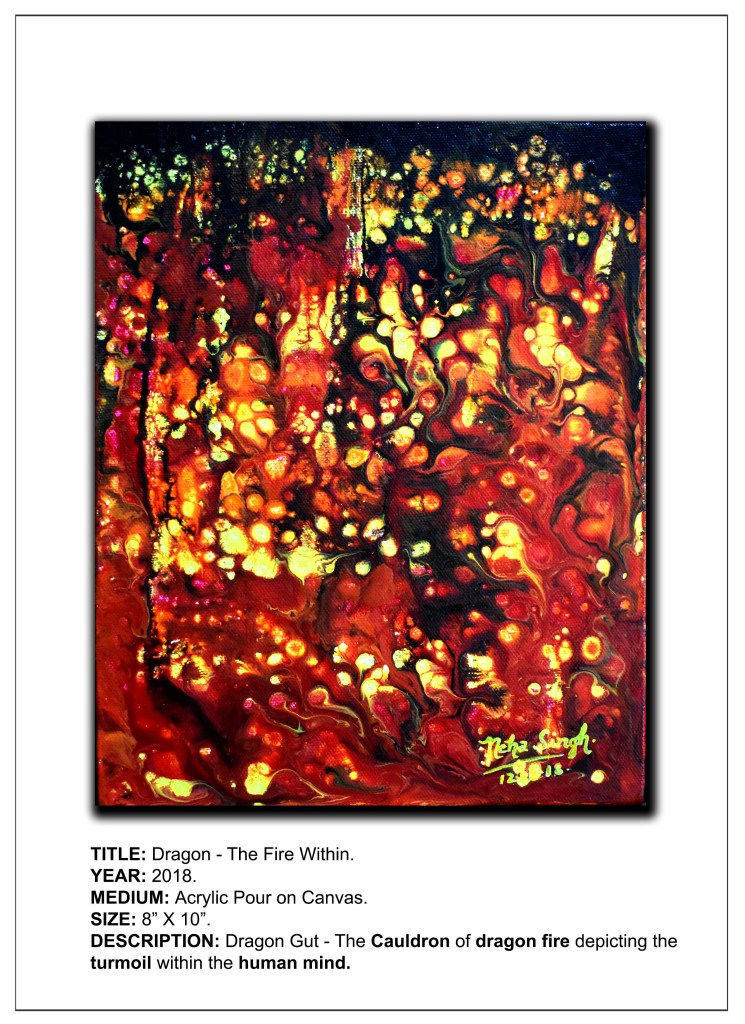
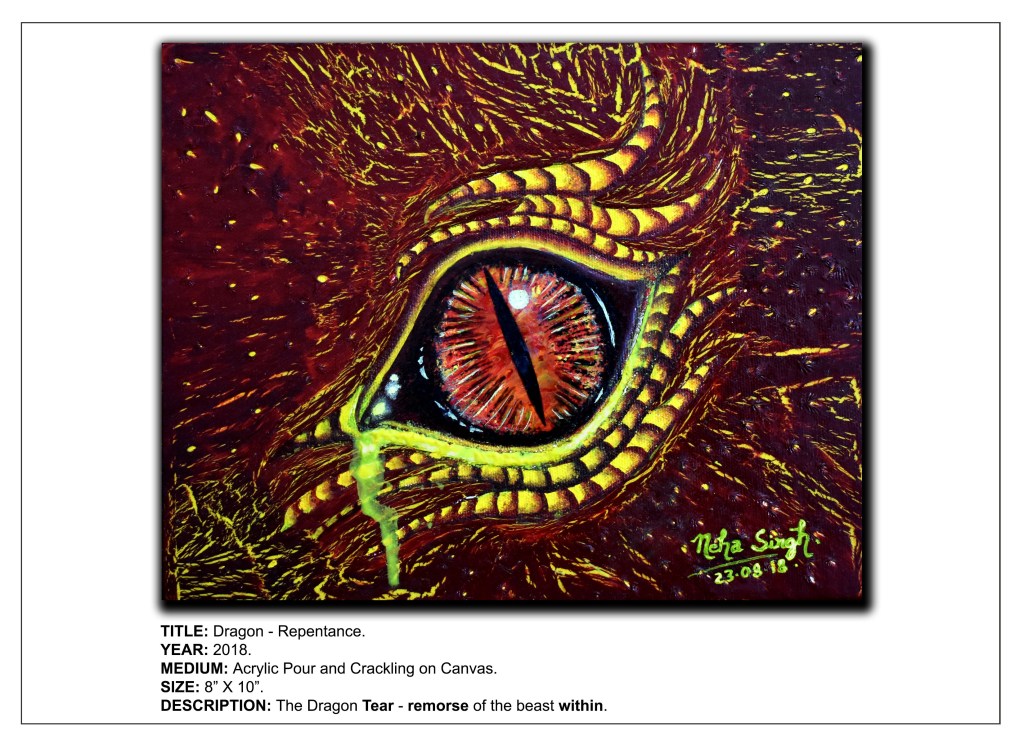
3. Abstracts – I have several abstract works, especially from my Dragon Series (Dragon-Camouflage, Dragon-The Fire Within, Dragon-Wrath, Dragon-Repentance and Dragon-Liberation), that I have tried to name carefully so as to maintain equilibrium between how much I reveal about the piece and how much liberty I give to my viewers in order to make their own interpretations. Another piece that fits here is from the Navrasa Series, namely, Hasya – Joy to the Soul.

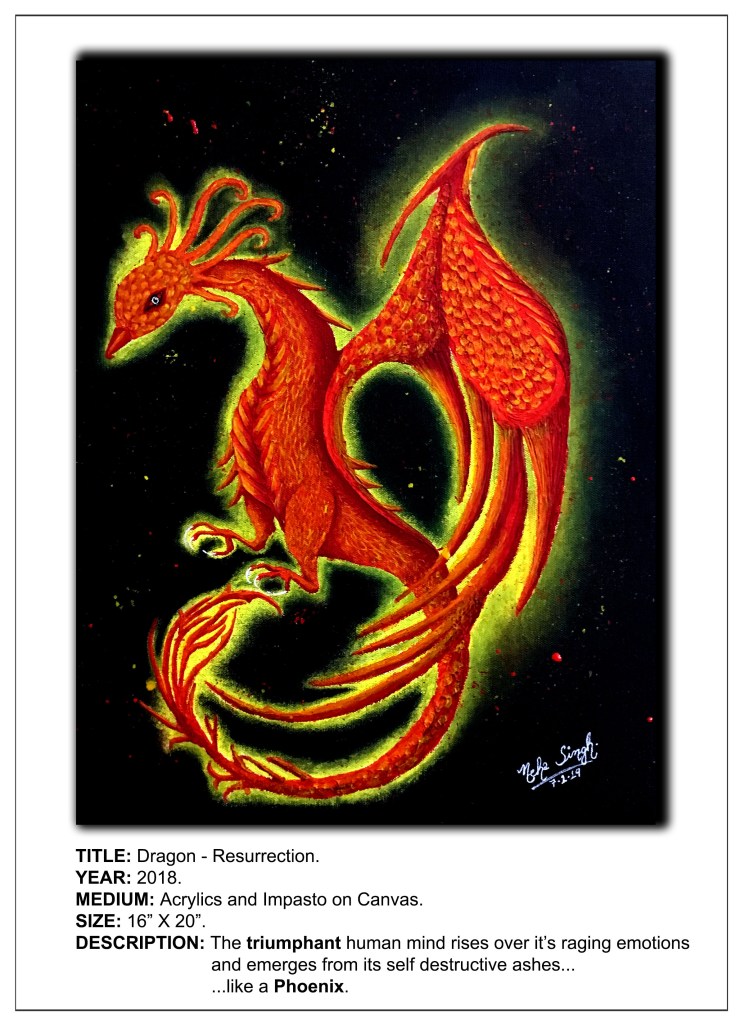
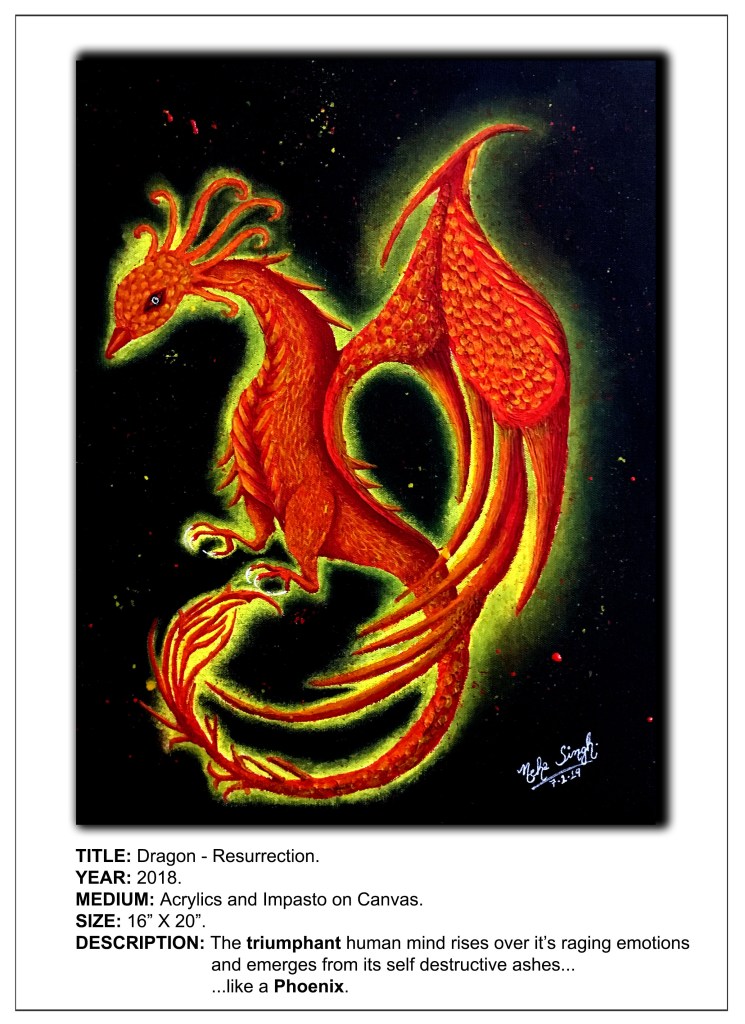
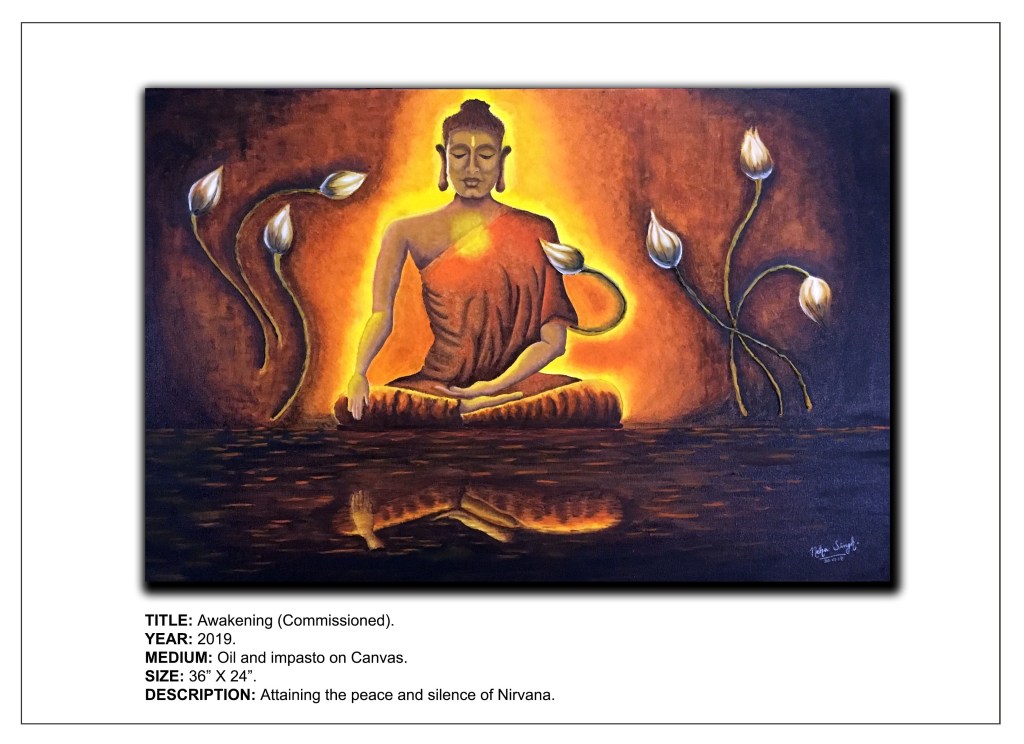
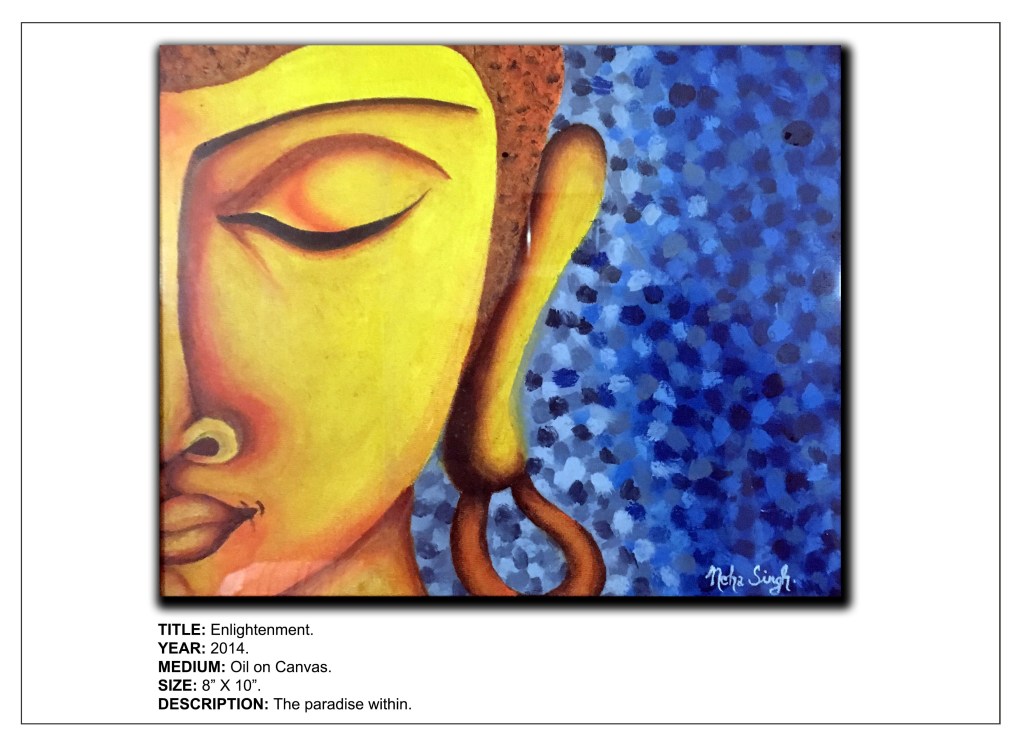
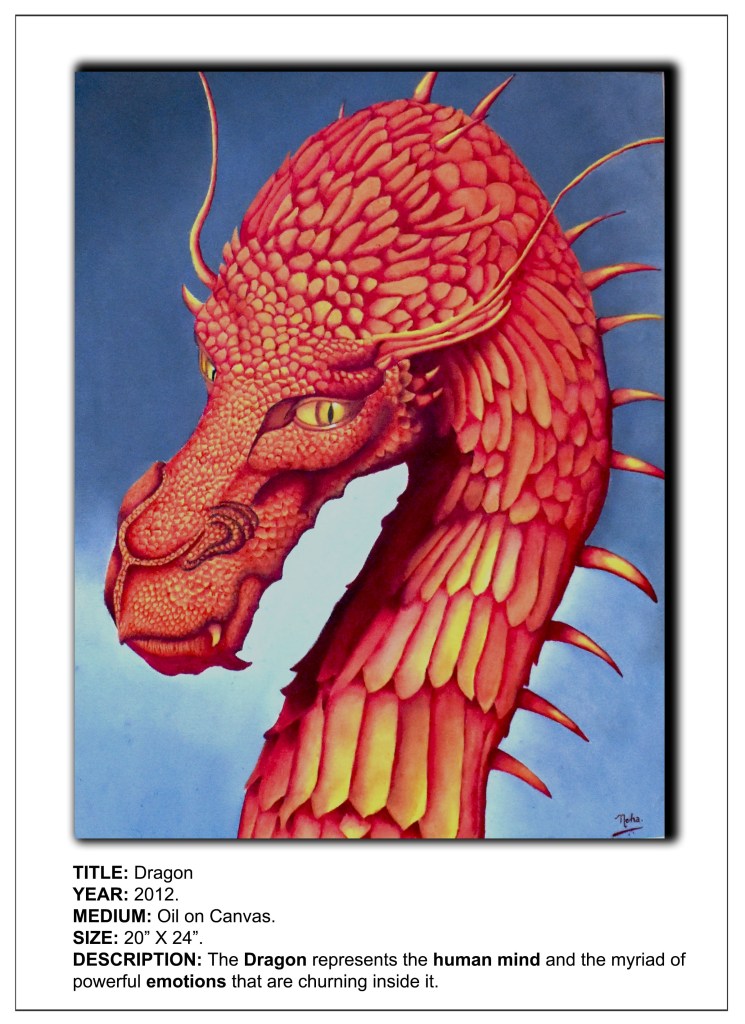
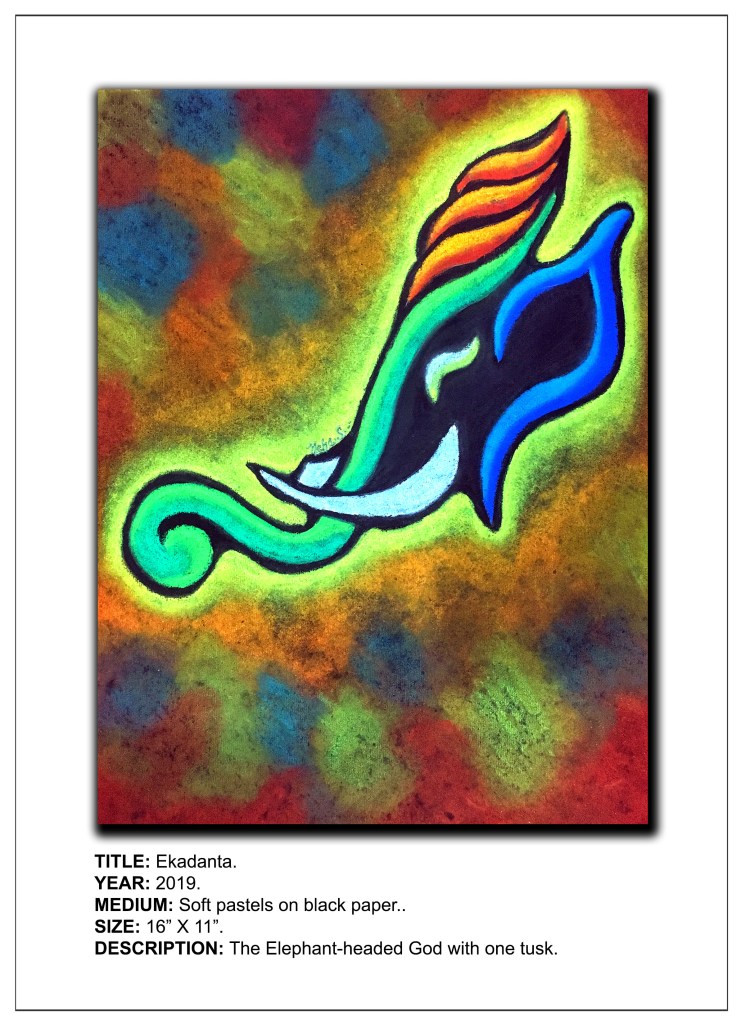
4. Portraits – I have done several portraits, but mostly of dragons, being the dragon lover that I am! I have a couple of renditions of the Buddha as well as of the Hindu deities, Ganesha and Krishna too, which I have named Dragon, Dragon(The Wise), Dragon(The Furious), Dragon(Fury), Dragon – Resurrection, Awakening, Enlightenment, Ekdanta and Mormukutdhari respectively.
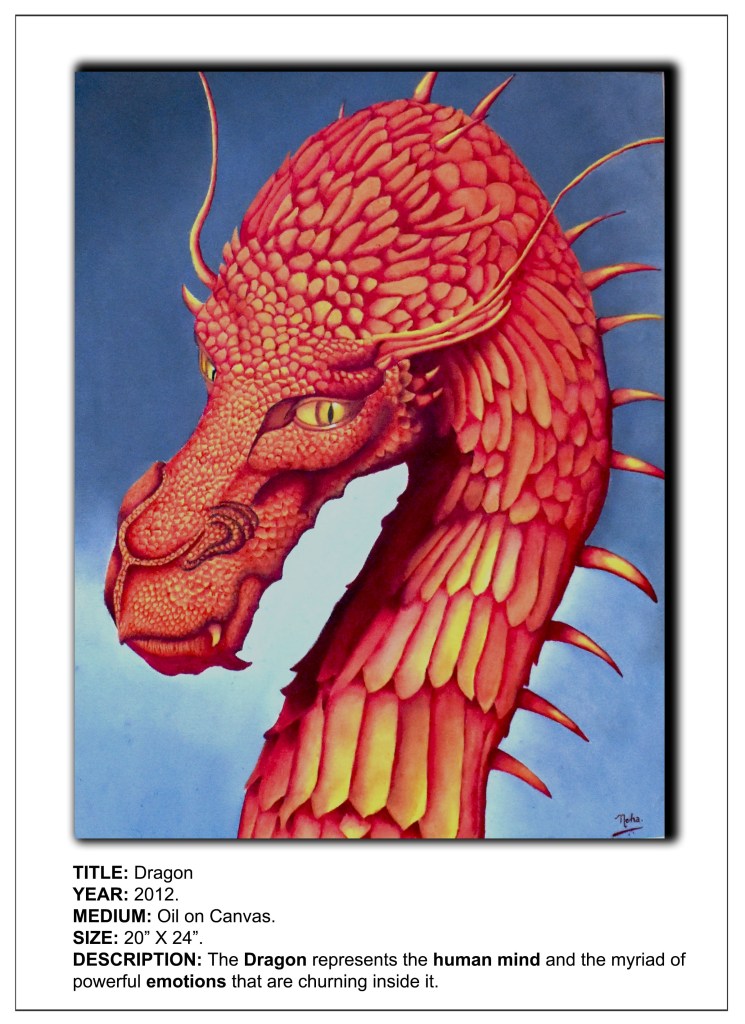
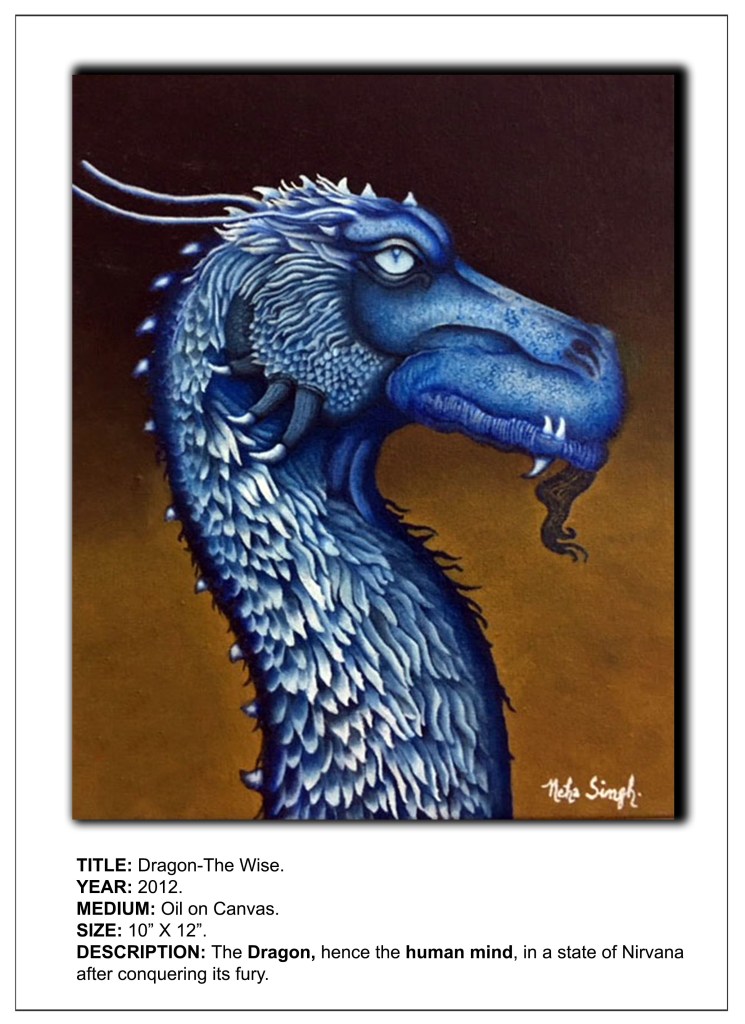
5. Sentimental – My art is a vehicle through which I transfer my sentiments to my audience, so most of my paintings mirror my emotions. I believe that almost all my pieces emote and express what I am feeling myself or attempt to invoke and extract some sentiment from my viewers. So definitely, my entire Dragon Series as well as the Navrasa Series have sentimental titles.

6. Numerical – I am yet to use any numbers as part of the naming process for my art.

7. Factual – Not too sure which titles of mine fit in here. To be very honest, haven’t really tried my hands on this type of art yet, but it’s never too late to start!  

8. Mysterious – I guess I could include Deep Sea Dweller and Eavesdropper here as they carry that mystic element with them.

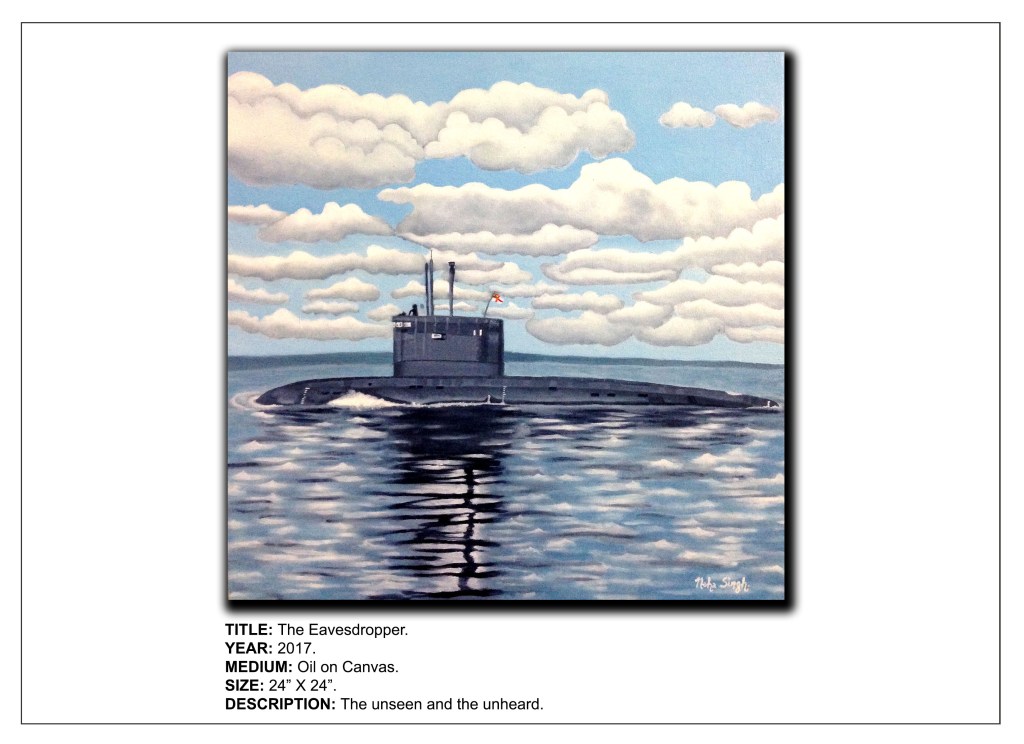
Names can increase the popularity of your art in a big way, so if you think that you have created something magnanimous, then go that extra mile to give it that extraordinary title it truly deserves.  Assigning your art good titles is as much a part of the creative process as creating the art itself.  Many world famous paintings have become masterpieces not just because of the visual, but also the verbal element. As an artist your journey to fame will cross many important milestones, one of them being how you name your art. So choose your titles judiciously, for once you have done so, your artwork will forever be limited within its boundaries and thereafter be defined by it.

Remember, good titles will highlight your work, so brainstorm and let the sparks fly till you ace the “name game!”

DISCLAIMER – All the information, data and imagery in this blog post is for informational and educational purpose only. While there may be copyrighted material the use of which has not always been specifically authorized by the copyright owner, I have only made it available with the sole effort to stimulate creative progress and artistic enrichment. Some images may have been taken from the links included below and I give full credit to these websites/pages, thereby in no way claiming them to be my own. I have also used these links for reference purposes and collection of data; therefore I give full credit to the respective web pages. Most of the data in this post is based on my personal experiences and opinions and I am not responsible for any material that is found in the links at the end of this post.

Sources and Photo Credits –

https://www.easy-oil-painting-techniques.org/title-your-painting.html

https://www.liveabout.com/how-to-title-art-1122628

https://www.ideelart.com/magazine/composition-with-red-blue-and-yellow

Signature Style

Did you know that Albrecht Dürer was one of the first artists to start signing his art? 

An artist’s signature is a very important component of his art as it is his personal declaration that he is done with his creation and that he is contented with it. Any mark or symbol on the canvas (or the surface being painted on) that represents the artists signature becomes an integral part of the artwork itself.

Most professional artists either don’t sign their work at all or don’t do so on the front of the piece as they feel that the signature distracts from the main subject of the work. Traditionally, artists put their signature in the bottom right corner of their painting. This can be done in the left bottom corner as well, although signing in the right bottom corner is more common.

Some artists decide on the placement of their signature depending on the style of work, as they believe that placing it on top of the work can not only distract from the image but also completely spoil a very delicate or minimalistic piece. There have been several instances where group shows/exhibitions have requested artists not to put their signatures on the front as they want the exhibits to be viewed hence bought regardless of whether the artist is well known or not.

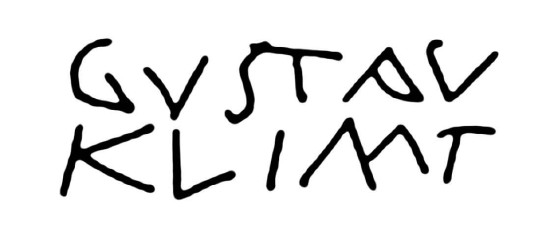
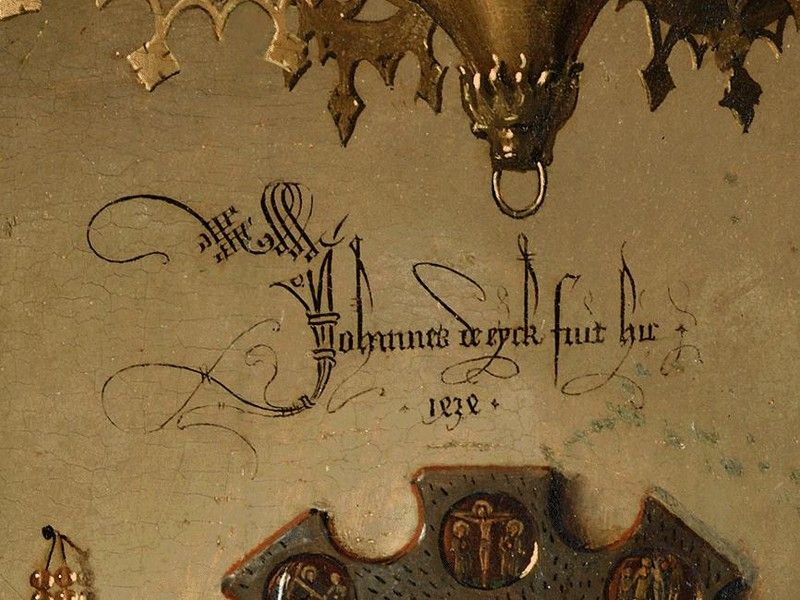
Here are the signatures of some of the greatest masters of art:

Why do artists sign paintings?

During Renaissance, most artists actually did not sign their artwork, partly because they were hired by patrons to create art for their homes, and their names were known well within an art community or among the people hiring them. Thus they didn’t feel the need to put their name on their work.

When Michelangelo created his masterpiece, the sculpture called La Pietà, he overheard people admiring it and giving credit to another artist for it. This made him go back and carve across Mary’s chest his name, Michelangelo, to make sure that everyone knew it was his work. That’s one of the first instances of an artist signing his art. Another Renaissance artist, a Dutch master, Jan van Eyck, was also one of the first people to start signing his art. 

This trend started especially in the Northern Renaissance, as people in the middle class, had now started collecting and buying art. It wasn’t just the super wealthy like the Church or other people in high places of power who wanted art for their homes. Artists created art that was a little smaller and portable. What better way to make sure people knew that you were the artist? In a way, it was the birth of branding.

Many contemporary artists today don’t sign their work on the piece itself. The signature may be concealed behind the work, on the back of the canvas, or the back of the mounting for a photograph. For some conceptual works, the signature can come in the form of a certificate of authenticity.

Here are the reasons why an artist should sign his or her work:

  1. It helps them assert that the work is theirs and in future, wherever the piece ends up, it can be identified as their work.
  2. It honors their work. It helps artists realize how they are currently placed in their artistic journey, and take pride in owning their work.

How does one sign a painting?

While deciding how to sign a painting, an artist needs to take into consideration colour, size, placement and execution of the signature. The general thumb rule is that it should provide the identity of the artist, compliment the painting and not distract from the work.

However, there are several artists who don’t sign their work at all! I somehow can’t imagine leaving a work unsigned!! I find the signing bit not just assertive, but also my finale statement declaring the work as my exclusive creation and that I’m done with it for good. I do not agree with artists who say that the signature distracts from the viewing of the art. This just doesn’t make sense to me. So in order to ensure my original signature is not distracting, I try to place it as strategically as possible so that it blends in with the entire composition without taking away from it in any way.

Another thumb rule about signing art is that the signature should be in the same medium as the artwork (except for prints and graphics, which are generally signed in pencil). For example, sign a watercolor in watercolor paint, an acrylic in acrylic medium, and an oil painting in oil paint. The reason for this is that if the signature is in a different medium, it increases the chances of the artist being questioned whether or not the art was actually done by him or her. While I followed this rule during my initial yeas as an artist, as I evolved, so did my signature as well as my choice of medium. Now I find myself not signing my paintings in the same medium as the art itself. So whether it’s an oil, acrylic or watercolor I sign them all with my favorite signing tool – a gel pen. And you know what, till now it has worked fine for me, so to each his own!

It is also believed that you should sign all your art in more or less the same way. Signatures should be consistent in size, color, location, style (written or printed), etc. That way, people who do not know your art will find it easier to identify your work. Also, signing your name in many different ways or locations eventually makes it easier for forgers to sign art and claim it as theirs. This is one rule that I agree with so while my signature has evolved and changed over time, I have now reached a stage where it has become consistent and original and am using it to sign all my art. What I’m trying to say is while it is ok to experiment with and explore your signature, it is very important to eventually narrow down on a specific style so as to avoid forgery.  

Dating your art minimizes any doubts about when it was completed. Putting dates may not seem important when you are just starting out as an artist, but after years of practicing art, it helps in making an inventory of your work, thereby making it easier to sell. It also helps followers of your art to trace your evolutionary path as an artist. In most cases, you should put the date you finished a painting, though it needn’t be next to your signature on the front. You don’t have to put the date on the front of your painting but can write it on the back (though once it’s framed you may not be able to see it).

A word of caution – Never sign on top of a varnished painting or glazed sculpture because the signature then looks like it was added later, more as an afterthought than a declaration. Also, do not scratch your signature into dried paint, ceramic, or similar media unless this is how you normally sign your art. Scratched signatures rarely blend with their art and their authenticity can easily be questioned.

I usually sign my paintings on the bottom right corner as it’s generally where everyone knows to look for the artist’s identity. If for some reason the composition doesn’t allow it, then I place it elsewhere. In fact, very often I like to place my signature in the more unconventional spots in such a way that it looks part of the composition. When I sign in the bottom corner, I ensure I place my signature a couple of inches above the edge of my painting so that it doesn’t get hidden under the frame.

Some artists sign their names on a sticker attached to the back of the frame but stickers can fall off. Others do it on the back of the frame itself but the painting can be re-framed in which case the mark is lost. Signing the back of the canvas is also a good idea but it might get covered by certain types of framing.

All this can become quite frustrating so to make it easier, I do the following – My signature is on the front of the canvas. The rest of the information is included on the back of the canvas and/or on the back of the frame. This info includes my full name, the title of the painting, the inventory or reference number (if any), the medium and the year of completion. I also make it a point to add a one liner describing the concept behind the painting.

I believe in playing around with my signature.  After all, it’s going to be with me for a long time so I want it to be perfect. To achieve this, I like to change the color of the signature to suit the painting, but now that I have settled on a style, I am sticking with it so as to avoid confusion about my identity. So explore by all means, let your signature evolve and grow but once you are sure of your mark, stick to it. Your signature needs to be consistent and clearly identifiable as yours. It is an extension of your identity as an artist, so it should be unique as the artist in you.

Should copied paintings be signed?

Copying a painting is a very useful exercise for students. It teaches them about the technique, at the same time facilitating artistic progress. However, when it comes to signing copied paintings or imitations, there is a definite line that shouldn’t be crossed. The basic principle of signing a painting is to indicate that you produced it.  If we copy a painting from another artist it is called a derivative work. It is not our own original work and if we sign it or show it as such then it becomes a forgery or a breach of copyright. It’s therefore very important when making a copy to indicate that it’s NOT all your own work. So, by all means copy but don’t sign it or show it as yours.

Many artists leave copied paintings unsigned, especially if they were done for educational or study purposes. Some artists reference the paintings as being connected to the artist who has been copied in some way eg After Van Gogh (this is the most usual form ie “After (painter’s name)”. This might be done on the reverse. Some artists sign on the front – but again any painting which is a copy should indicate this fact e.g. via its title for example AND through the signature used.

NEVER, under any circumstances, attempt to forge the signature of the artist on an artwork you’ve produced – whether or not it is a copy. Otherwise you could end up in court or even jail!

But what should your mark consist of?

Artists’ signatures are as varied and unique as the artists themselves. And so it should be. Here are some pointers I use to make my mark exclusive:

1. Try not to use your regular signature

In this day and age, where identity theft and fraud are rife, you don’t really want your personal signature to fall into the hands of all those cyber-crook out there. So develop a different signature for your artworks.

2. Your signature should be legible and not a scribble

Very often our regular signatures are not very readable. You need your signature to be unmistakably clear so that your fans and collectors can instantly identify your work

3. What part of my name should your signature contain?

Try out various permutations and combinations of your name, surname and initials. If you both your name and surname our too long, your signature will take up too much space on your painting and may even cover your composition where it is placed. In that case, it may be a good idea to use just your initials, or your name with just the initials of your surname, or the initials of your name along with your surname.  With some trial and error, you will eventually find a combo that works for you. Whatever you choose, bear in mind that once you start using it, you have to use it consistently.

4. Make your signature your Brand name

Your signature is your identity so it should be an expression of your art as well as personality.  Every artwork of yours should consistently identify you as its master creator, thus making you a brand name in the world of art so to speak.

5. Design your signature

Explore your signature by doodling it out in different ways. Create enough number of variations and then pick the best one, the one that is really you. Who knows? If your signature is good enough, it can even become your logo! This will come handy for promotional purposes on exhibition invitations, flyers, catalogues, business cards and web sites in addition to your artworks.

How my signature has evolved with time

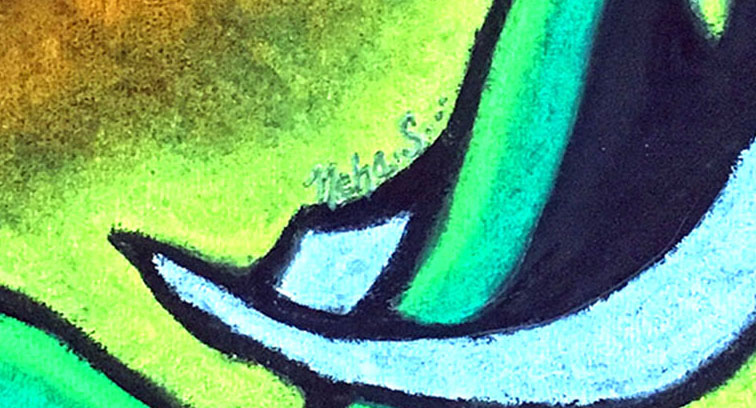
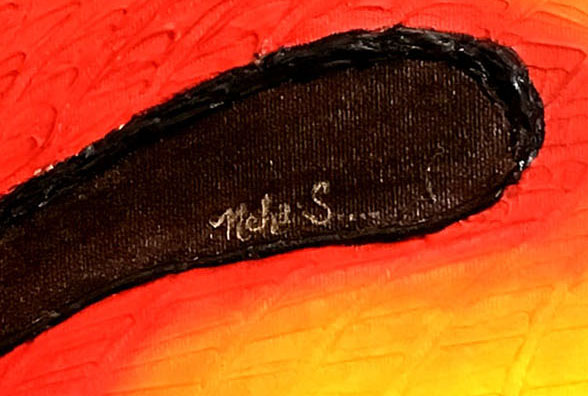
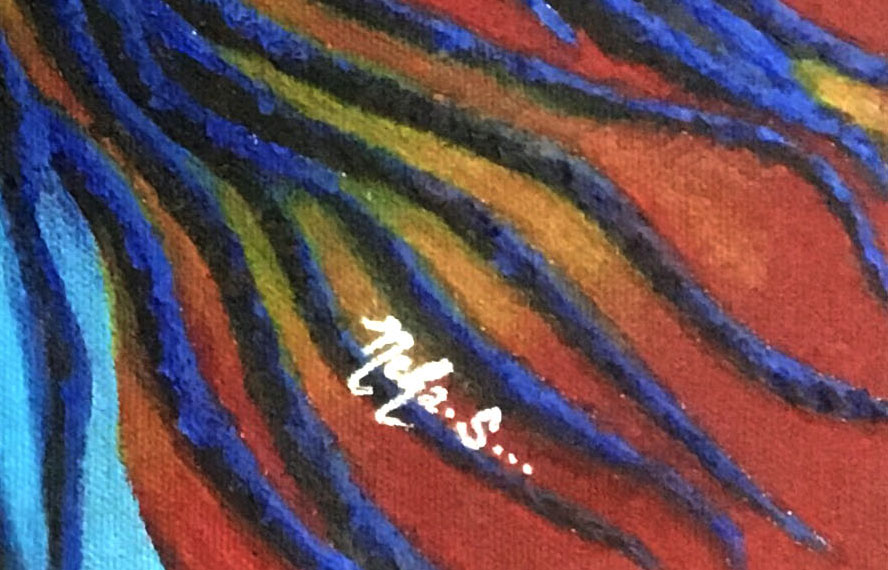
When I look back in time, I realize that I signed my debut painting with just my first name. Soon enough, I realized that there must be innumerable artists of my namesake and this will not give me a unique identity that I can call my own.

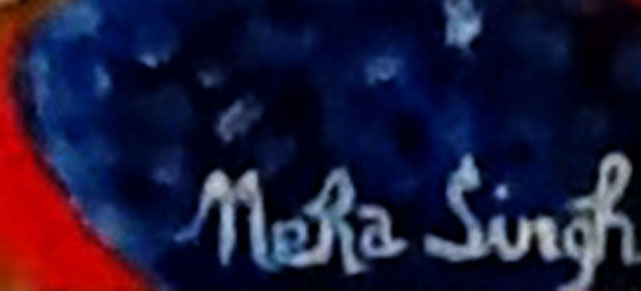
My first signature

So I added my surname to my signature. Now, another realization dawned upon me. My signature had become kind of too long for my liking! Not only was it distracting, but was also taking up some valuable space on my canvas as well as interfering with the composition of the very artwork it was supposed to define.

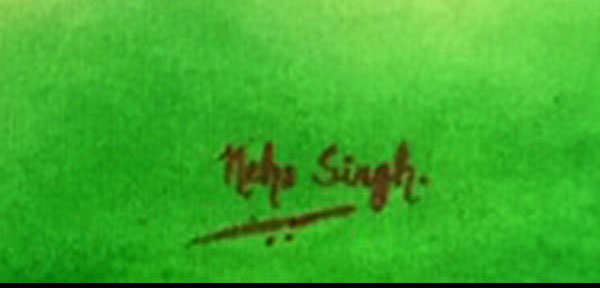
My second signature

So I decided to shorten it and I discovered the best way to do this was to use just the initial of my surname along with my first name. Perfect! Just what I wanted!! Neha S…

Now I can confidently say that I have a signature that defines my art without taking away anything from it. This is what it looks like – Neha. S…

My current signature

I wanted to break free from the conventional norms of creating a signature so I started exploring different styles of writing, from calligraphy to print. But finally it was my own running hand that did it for me. My very own handwriting in a slightly stylized way became my mark and it is “the one” for me.

I don’t like to bind my signature within the shackles of the same medium as that I have used for my painting. For me, my signature needs to be precise and crisp with clean lines.  Many a times this does not come through with a brush and paints. After several attempts of sloppy, goofed up, smudgy and blotchy signatures, I finally found the perfect solution for this problem in the form of fine tipped pens, my favorite being gel pens. How do I use them? Once my painting has completely dried, I just pick up a pen in a color that compliments the background of my artwork and sign away! It’s that simple!! Not only does it give me intricately thin and clean lines, but also makes my signature easily readable.

The sloppy one

Usually on darker backgrounds my choice of color is white and for lighter ones it’s black but as far as colors are concerned I keep a fairly open mind to ensure that it blends into my composition. I also like to play around with the positioning of my signature, very often placing it in such a way that it becomes a part of the composition. I know this holds the risk of my signature being lost within the composition and thus missed by my audiences so to ensure this doesn’t happen I make it conspicuous enough to be seen clearly.

When it comes to my signature, I don’t like to follow some arbitrary rules that have been followed for ages. I follow my own rules until I find something that speaks to my heart and makes me feel good. I can’t say for sure whether I have a consistent signature yet as I feel I need to give myself the space and liberty to make it better for it will ultimately help me promote and sell my art better. If you really want people to recognize your work, it’s not just the style of your art that helps do it. Your signature can act as a kind of logo for your work and help people who don’t know you learn about you.

I want to break the rules that don’t fit for me by doing what feels right for me. There is no right or wrong way to do it. You don’t always have to put it in the bottom right corner. So my advice is don’t agonize over this and lose time on your actual art. It won’t matter where and how you place your signature if you don’t finish the artwork in the first place! So take your time developing your style and don’t fret too much. A unique signature is something that comes with time. Innovate and be adventurous.  Go ahead and create a signature as astounding as your artworks and ensure that your ardent fans instantly recognize your stylish yet indisputable stamp.

DISCLAIMER – All the information, data and imagery in this blog post is for informational and educational purpose only. While there may be copyrighted material the use of which has not always been specifically authorized by the copyright owner, I have only made it available with the sole effort to stimulate creative progress and artistic enrichment. Some images may have been taken from the links included below and I give full credit to these websites/pages, thereby in no way claiming them to be my own. I have also used these links for reference purposes and collection of data; therefore I give full credit to the respective web pages. Most of the data in this post is based on my personal experiences and opinions and I am not responsible for any material that is found in the links at the end of this post.

Sources and Photo Credits –

https://www.gyst-ink.com/signing-dating-your-work

7 mistakes Artists make when signing their work and what to do instead

https://hubpages.com/art/artist-signature              https://makingamark.blogspot.com/2009/05/creating-signature-on-your-art.html

In pursuit of Texture

Whether a veteran artist, novice, art buff or a critic, if there’s one rule that applies to all who visit an art gallery or art museum, it is, DO NOT TOUCH. Unless it’s an interactive art exhibition where you are expected to touch and feel the artwork, there is generally a border line cordoning off the artworks from their viewers. But it’s hard to keep our hands off artists’ works as we humans experience the world through our sense of touch to a large extent.

It is this sense of touch that gives us an idea of textures. Rough or smooth, coarse or soft, these are some of the adjectives we use when we have to describe the texture of an object we touch.

But what exactly is texture? It can be difficult to define precisely, but it has everything to do with touch, thereby the sensation we get from a surface when we physically come into contact with it.  In simpler words:

Texture is the tactile quality of the surface of an object.

Texture can also be associated with dimensionality or depth. The more a surface protrudes into the 3rd dimension or varies in its degrees of protrusion, the more pronounced the texture.  It is for this reason that it is an important element of two-dimensional and three-dimensional designs and is distinguished by its perceived visual and physical properties.  In the visual arts, texture is the perceived surface quality of a work of art.

More often than not, we see texture before we touch it, so it involves the sense of sight as well. The mere sight of texture in an artwork appeals and invokes that inquisitive nature in us to experience it by touching it, even though it says “hands off!” That is why texture in art is so inviting.

Broadly speaking there are two categories of texture in art, just as in life: rough and smooth. Both can be hard or soft, wet or dry, organic or synthetic, etc. and infinite gradations of roughness and smoothness are possible. Most artworks are not even meant to be touched. And even when an artwork can be touched its texture relates more to our aesthetic experience than our continued existence.

In the real world, we tend to experience texture with our sense of touch much more than with our vision. For the uninitiated, it can seem strange to frame texture in terms of visual aesthetics. In fact, when creating a 2D work of art (or a website), visual texture is purely an illusion. However, texture is a fantastic way to add emotional depth and visual variety to any design.

Nonetheless texture is an important part of our interaction with art. It is one among the seven principle artistic elements, along with line, color, shape, form, value and space. It can affect mood, evoke psychological associations, bring attention to a medium, or divert our focus toward materials used in a work. Used adeptly, texture can even challenge our perception of what is real.

Texture stimulates two different senses: sight and touch. There are four types of texture in art: actual, simulated, abstract, and invented texture.

Actual texture in an artwork has a certain physical tactile surface whereas visual texture or implied texture feels a certain way (but actually isn’t).

Tactile texture is the tactile quality of a surface, such as rough, smooth, sticky, fuzzy, soft or slick. A real texture is one you can actually feel with your hand, such as a piece of sandpaper, a wet glass, or animal fur.  It also can be created by an artist by making a collage.

Real/Actual Texture

Actual texture is the physical feel an artwork has. It refers to the physical rendering or the real surface qualities we can notice by touching an object, such as paint application or three-dimensional art. From the silky texture of the paint to the rough texture of stone, artists use texture to add interest, create emphasis and expression, and add depth to their work. Visible brushstrokes and different amounts of paint will create a physical texture that can add to the expressiveness of a painting and draw attention to specific areas within it. Actual texture is a combination of how the painting looks, and how it feels on being touched.  Real, tangible texture can be created through endless tactile possibilities: cutting, building, tearing or layering of materials, etc. Real or actual texture can dramatically enhance a work of art. 

Many artists around the world use different items and materials to create actual texture. Some create textured pieces to be touched and experienced, such as MD Weems, who uses homemade gesso to sculpt texture into her artwork. Her textured artwork is then painted and sealed so that viewers can physically touch the artwork. The ability to touch the texture evokes multiple senses through sight and touch and allows for a deeper emotional feel.

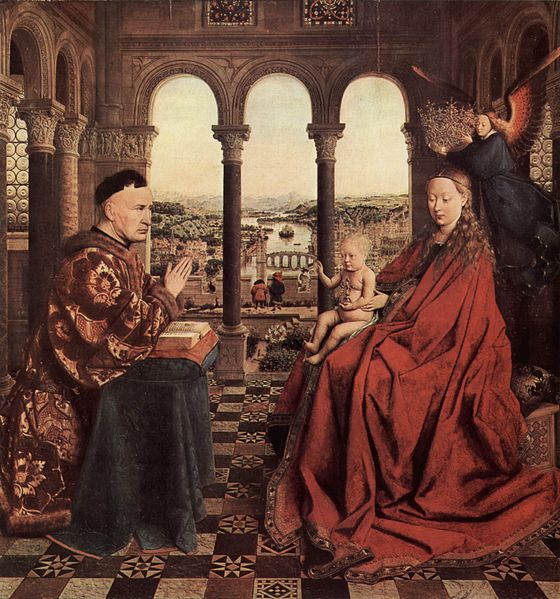
It is possible for an artwork to contain numerous visual textures but still remain smooth to the touch. For example Realist or Illusionist works of art, which rely on the heavy use of paint and varnish, yet maintain an utterly smooth surface. In Jan Van Eyck’s painting “The Virgin of Chancellor Rolin” we can notice a great deal of texture in the clothing and robes especially, while the surface of the work remains very smooth. Vincent van Gogh is known to have used a great deal of actual texture in his paintings, noticeable in the thick application of paint in such paintings as Starry Night.

Examples of Art with Actual Texture

Visual Texture/Implied Texture

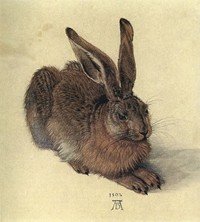
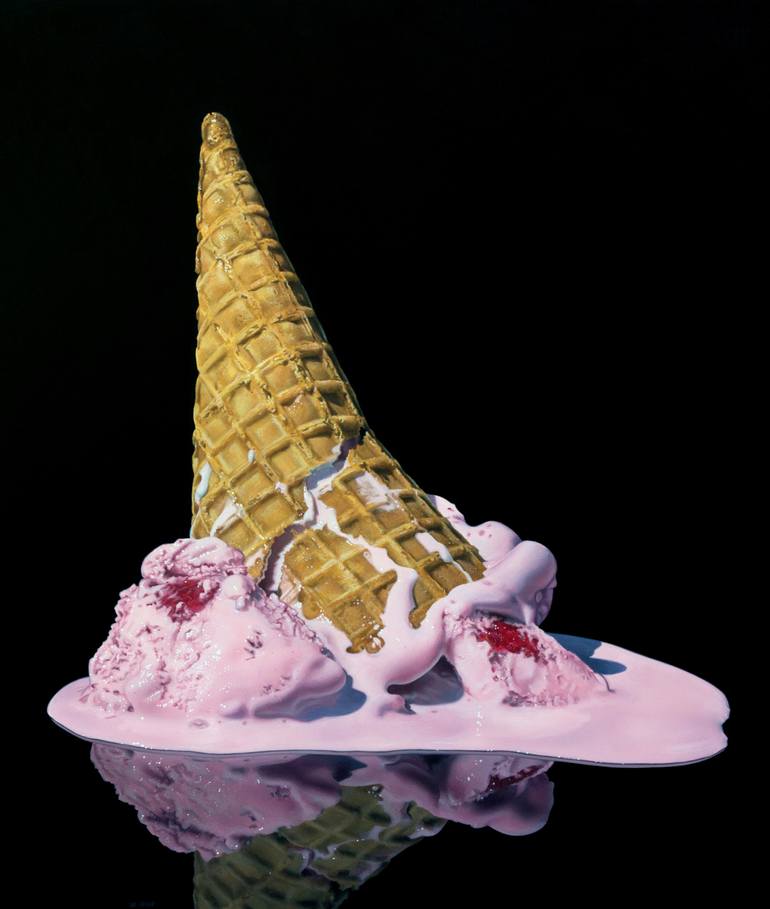
Visual texture in art (also called Implied Texture) is texture that is not actually real. The artist creates the illusion of textures through manipulation of the media. It is an implied sense of texture that the artist creates through the use of various artistic elements such as line, form, shape, shading, and color. Visual texture is a visual quality of a surface. It is a result of painting or drawing of the real texture. Paint can be manipulated to give the impression of texture, while the paper surface remains smooth and flat. One artist who’s a master at creating visual textures in multiple media is Albrecht Durer.

Examples of Art with Visual Texture

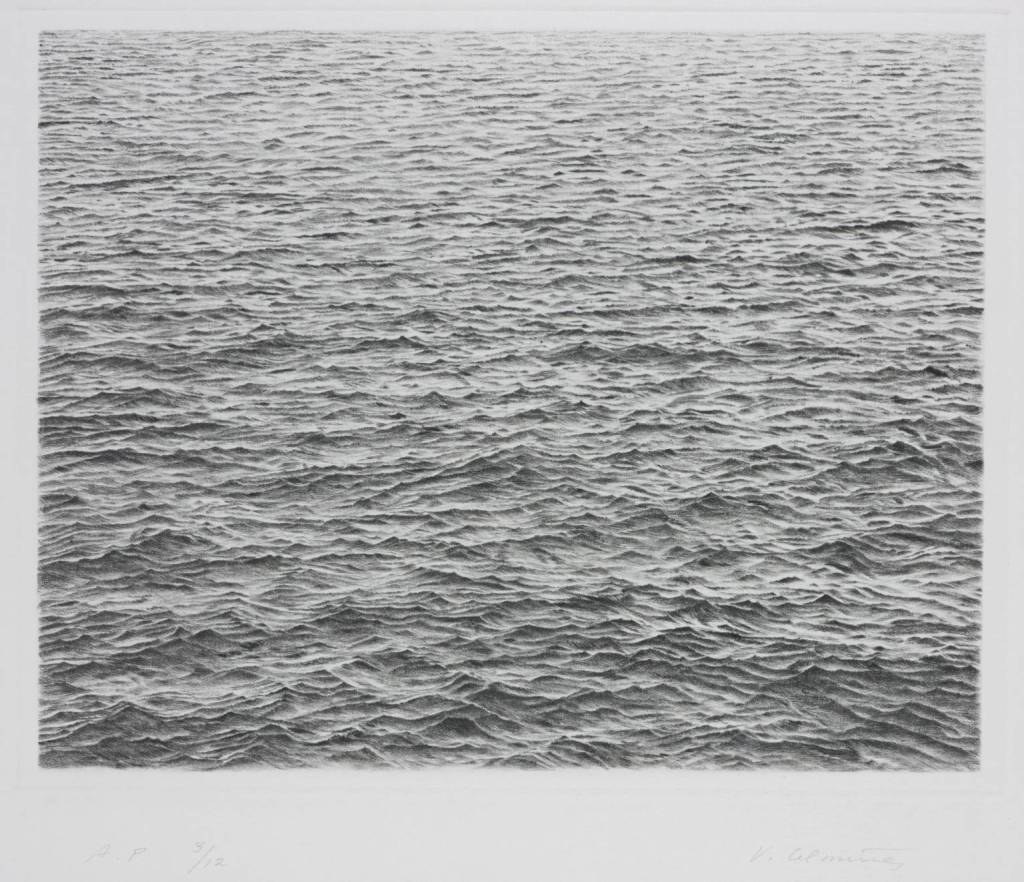
Examples of Visual Texture in Drawing

Photographs explore both real and implied texture — the photograph contains memories of textures captured in a freeze-frame moment.

Simulated texture

Simulated texture involves drawing the visual effect of texture without actually adding it. For instance, a texture may be made to look like something other than paint on a curve surface. An example is Cataract 3 painted in 1967 by Bridget Riley, which creates the illusion of ripples in the paper through the repetition of lines.

Cataract 3 by Bridget Riley

Texture in Digital Art

Visual texture on websites is an illusion, and there are two basic types; realistic texture and implied texture. It’s important to understand the difference between the two, because their communicative effects are dramatically dissimilar.

  1. Realistic Texture These are attempts to recreate natural-looking textures in order to add realism to a page. An example of this might be a background that looks like rough stone, or perhaps some crumpled paper. Adding some realistic texture will often send a more literal message to the site visitor and can make the site feel more like a physical place. This effect isn’t necessarily positive or negative, but it’s definitely important to be aware of. But realistic textures can be difficult to execute, so they should be used carefully and sparingly.
  2. Implied TextureImplied texture isn’t intended to look like anything, but it can add lots of emotional depth to a page. This type of texture is abstract and isn’t meant to be touched, similar to most decorative wallpaper or fabric with printed designs. Implied texture can even lack definition to the point that it just looks like noise, intended to add some slight visual variation beyond flat colors. Flat areas of color don’t always need texture; however, it is a good habit to add a bit of noise to gradients. This makes transitions in value look more natural with less color banding.

Layering of Textures

Contemporary fashion designers and interior decorators advise that there shouldn’t be too many patterns or textures in a single composition. However, when textures are arranged in an organized sequence of layers, rather than thrown together randomly, they can be drafted into a meaningful design. In fact, on most websites, it’s impossible to include only one texture because blocks of text typically read as textural elements. This technique of layered texture plays a different role with implied textures and realistic textures.

1.      Layering Implied Textures-It’s difficult to layer textures directly on top of one another when creating implied textures, because while the results may be aesthetically pleasing, it can make the page too distracting. Implied textures work when they’re subtle and light in opacity, but exceptions are always there. However, implied textures can work very well together when they’re adjacent to one another in a composition. Textures can be combined with colors and values to create distinct content areas in a single layout.

2.    Layering Realistic Textures-In real life, hardly any surface features a purely homogeneous texture, so layering realistic textures is actually much more natural than creating a solitary realistic texture. This isn’t the case when using photographs directly in a design, but when creating realistic textures artificially in an image editing program, it’s especially important to think in layers.

We can also divide textures into another category:

Natural texture

It’s the texture we find in nature and is not made by humans. For example: stones, sand, rice, etc. The rendering of real objects can be implied using texture, even when the image leans toward abstraction.

Artificial texture

 It’s the texture from things made by humans. For example: a pencil, a chair, a raincoat, etc.

Impasto texture

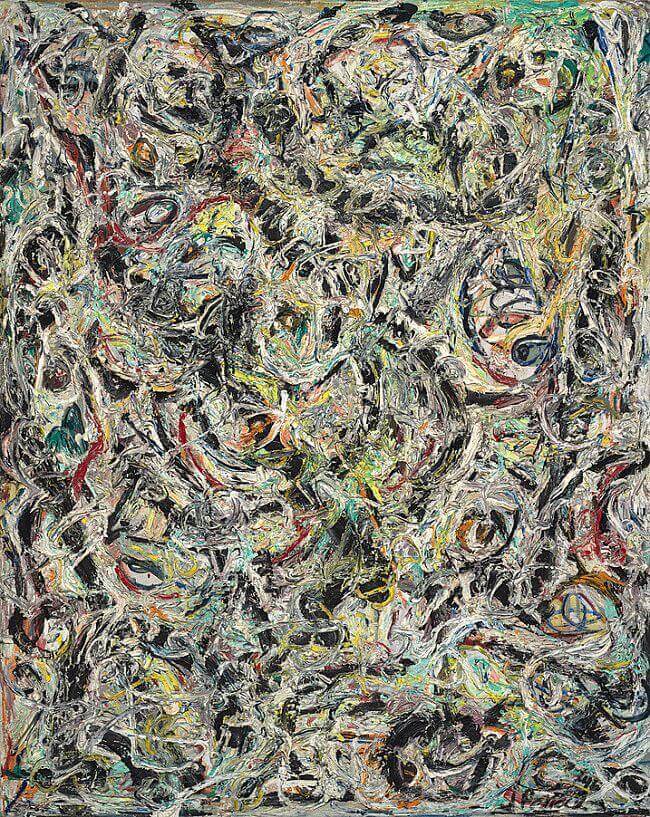
One of the earliest ways abstract painters experimented with texture is through a process called impasto. When we say a painting is impasto, we mean the painter has applied the paint to the surface in thick layers. An impasto work is considered painterly, since it gives prominence to the physical marks made by the painter. Post-Impressionist painters like Van Gogh used impasto to create drama, and to affect the way light interacted with the surface of their images since impasto layers create shadows and highlights. Abstract Expressionist painters like Jackson Pollock use thickly layered paint to bring attention to the act of painting and to reveal the personality and individual technique of the artist.

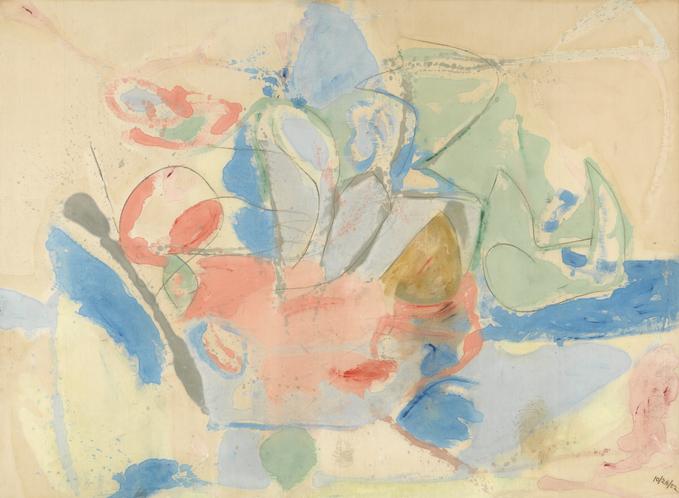
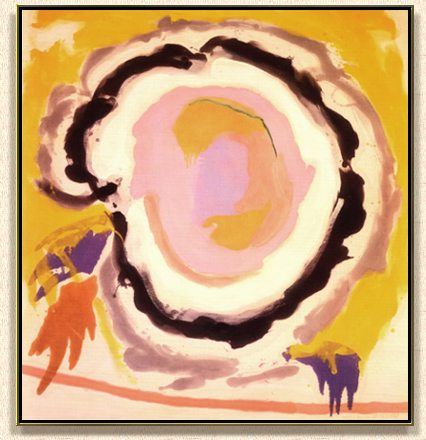
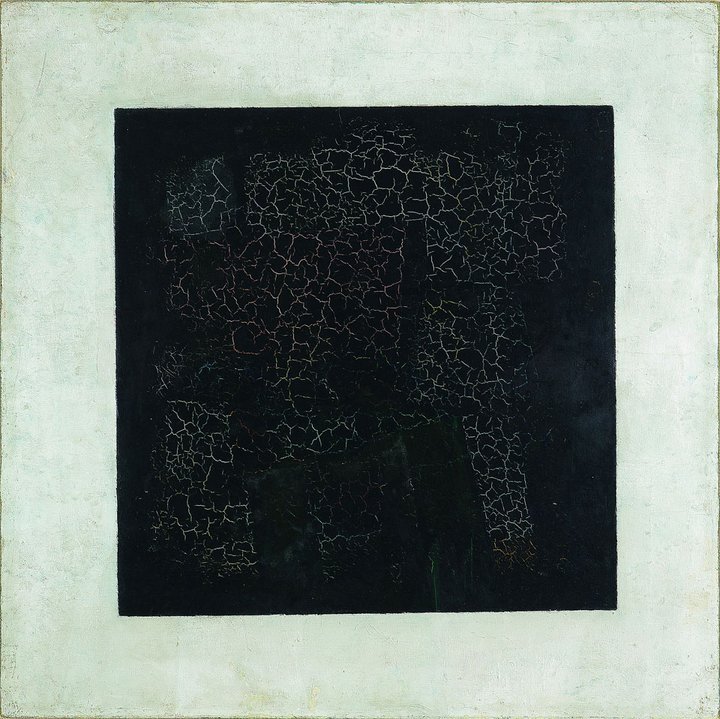
The opposite of impasto texture is flatness. Artists like Helen Frankenthaler and Kenneth Noland stained their canvases, pouring thinned paint directly onto unprimed canvases to merge the surface with the paint. Their flat textures diverted focus away from the physical gestures of the artist, encouraging the contemplation of other elements like color, surface, and space. Early abstract artists such as Kazimir Malevich also painted flat, non-painterly images. Interestingly, many of the iconic flat paintings Malevich painted, such as Black Square, have, with age, acquired textures much different than the artist intended. It is fascinating to contemplate whether the meaning viewers perceive in such works has been altered by the change in texture.

Texture can have more impact through variation and relief – contrasting rough areas with smooth ones. That will make a painting far more interesting than an even, unrelieved texture going from edge to edge.Remember- creating textures is easy; it’s where and how you place them that differentiate a good painting from an ordinary one.

What are some ways that artists create texture?

Texture is the look and feel of a surface. Painters have many ways to create different textures. They use different sized and shaped brushes: everything from tiny pointed brushes to flat, wide brushes. They can also use other tools—special knives, sponges, even fingers—to put create textures on canvas. Here are some techniques that artists employ for achieving textures:

  • They brush paint on in watery strokes and thick drips.
  • They put paint down in short, fat dabs and long, sleek strokes.
  • They twirl their brushes to make circles and curls.
  • They apply paint in thick layers that stick out from the canvas.
  • They put different colors on top of each other.
  • They mix in sand, dirt, or other materials into the paint.
  • They add white highlights to make things look shiny.
  • They scratch through paint to show colors underneath.

Techniques for creating textures:

  1. Collage – The term collage comes from the French word “coller” meaning “glue”. It is a form of art in which various materials such as photographs and pieces of paper or fabric are arranged and glued together on a surface like paper.
  2.     Tromp l’oeil This meansfool the eye. It is an art technique that creates optical illusions so the painted objects appear in three dimensions. It is usually used in murals.
  3.  Sand painting –    Materials required for this technique are thick white paper, glue and sand. Apply the glue with a paintbrush creating the shapes you want. Before it dries cover the picture with sand and let it dry. Then take off the remained sand.
  4. Create printing textures – Materials required for this technique are thick white paper and tempera painting, a range of materials (cotton, paper, plastic, a leave, etc.) The materials are painted with any colour and pressd softly onto the paper surface.
  5. Create rubbings textures – Materials required for this technique are paper of varying weight and colour, soft pencil or chalk, a range of rough surfaces. 
    A piece of paper is placed directly onto the surface intended to take the rubbing from, and then a soft pencil is used to rub on the paper.

My experiments with Texture

When we talk of art, the first thing that comes to mind is paintings. The use of texture, along with other elements of design, can convey a variety of messages and emotions in a painting. As an artist, this is my first and foremost objective too, but that’s not it. Incorporating texture or tactile feel in my art is not only a deliberate choice designed to invoke a certain response in my audience, but also an attempt to capture the depth and dimension that goes beyond the work itself. Consequently, I aim to invoke that sense of curiosity among my viewers, thereby compelling them to find out more about the techniques I have employed in order to achieve certain textural effects.

As an artist, texture has always appealed to me and hence forms the essence of almost all of my artworks. When I look back, I find that with time, my explorations with this tactile element of art have evolved and matured, not just in terms of surfaces and mediums, but also the use of different materials and techniques. I have also been able to open my mind to conceptual application of different textural elements based on the requirement of the theme I wish to represent through my work.

Now, I shall attempt to classify my paintings into the various categories of textures I have listed above and how I have achieved them. So here they are!

Attempts with Actual Textures – Enlisted below along with their techniques, are some of my paintings where I have tried to produce actual textures:

S NoPainting TitleTechnique used
1AwakeningImpasto with modeling past  for flower buds
2Dragon-FuryCrayon melt for the fire
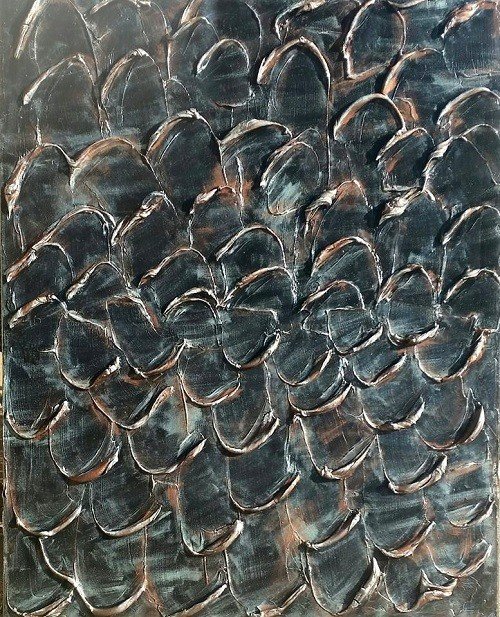
3Dragon-ResurrectionImpasto with modeling paste for scales and feathers
4Shringar–Inner BeautyPOP for background
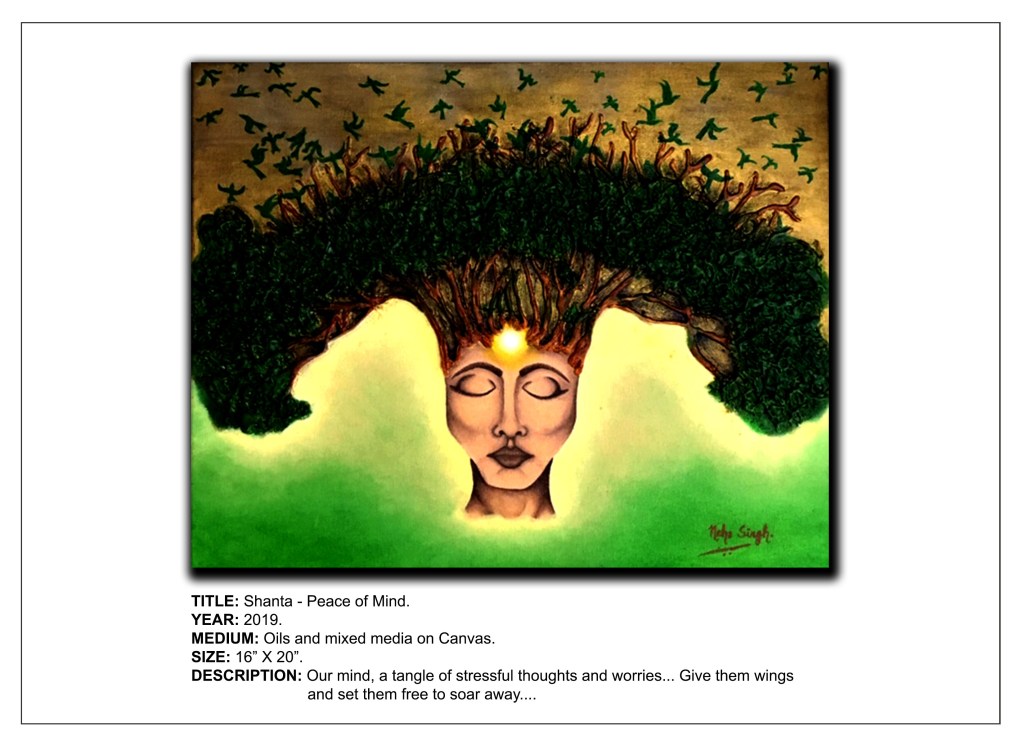
5Shanta-Peace of MindHot glue gun and gesso for tree
6Hasya–Joy to the SoulImpasto, hot glue gun and gesso
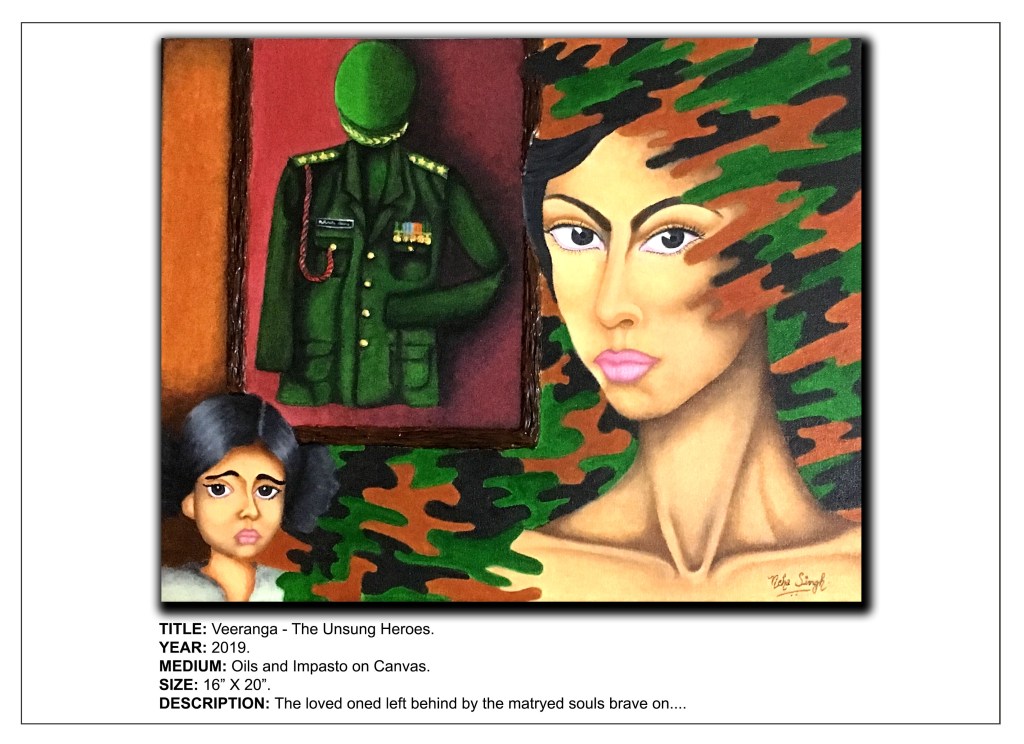
7Veer-The Unsung HeroesHot glue gun, gesso for picture frame
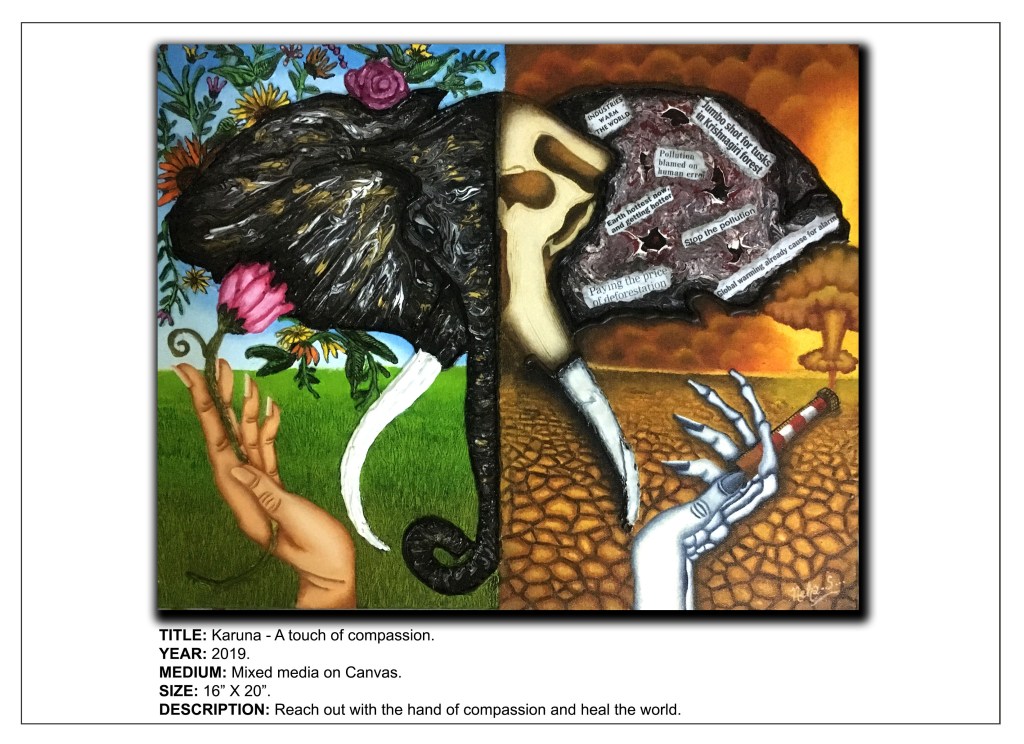
8Karuna-A Touch of CompassionAcrylic pour and decoupage for elephant ear, hot glue gun and gesso for flora and foliage
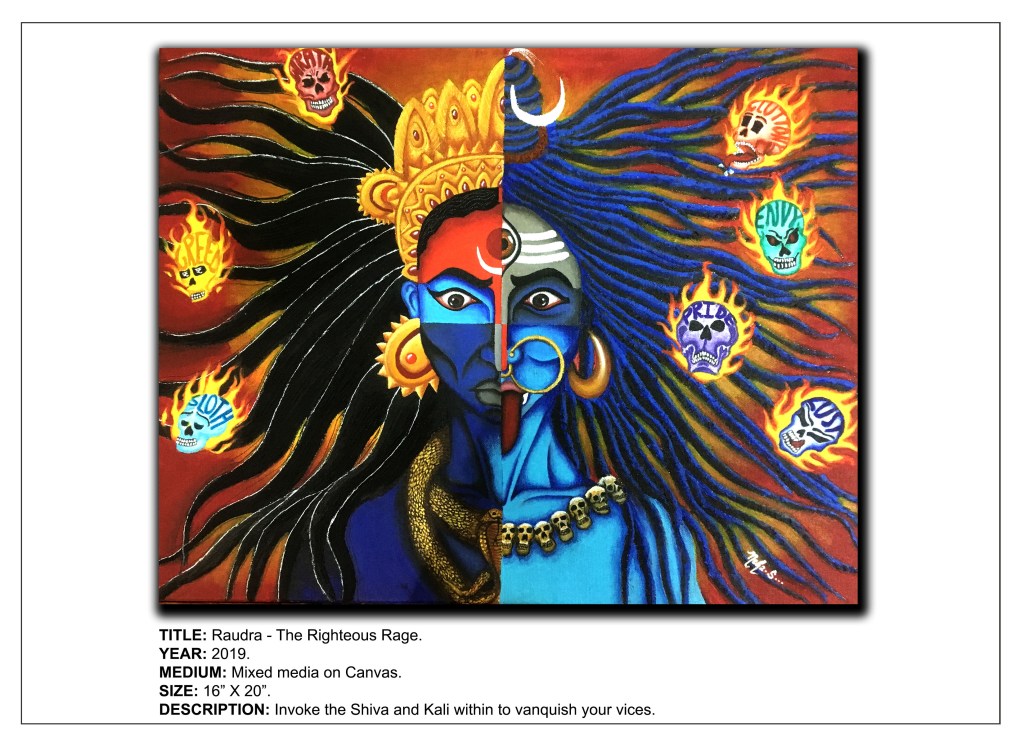
9Raudra-The Righteous RageImpasto with modeling paste for hair
10Bhayanaka-The Terminal FearImpasto with modeling paste for flame background, decoupage with cling wrap & gesso for Grim Reaper’s cloak

Attempts with Visual/Implied Texture – I have attempted to impart visual or implied texture in the following artworks:

S NoPainting TitleMedium/Technique
1AwakeningOil paints to imply folds of Buddha’s drape and ripples & reflection in water
2EnlightenmentOil paints for background texture
3Doodle Art (All)Pens and marker for various lines, marks & patterns
4Dragon Portraits (All 3)Oil paints to imply scales of dragons
5Dragon-CamouflagePeel Painting for dragon scales
6Dragon-The Fire WithinAcrylic pour with silicone for dragon gut
7Dragon-WrathAcrylic Pour for dragon fire
8Dragon-RepentanceCrackling effect for background, impasto and acrylic pour for eye
9Dragon-LiberationAcrylic Pour for wing
10EkdantaSoft pastels for Ganesha
11MormukutdhariSoft pastels for peacock feather, prismacolor pencils for Krishna
12Deep Sea DwellerOil paints for clouds and waves
13The EavesdropperOil paints for clouds and waves
14Flora in a PotOil paints for flowers, pot and background
15Fruit PlatterOil paints for textures of fruits

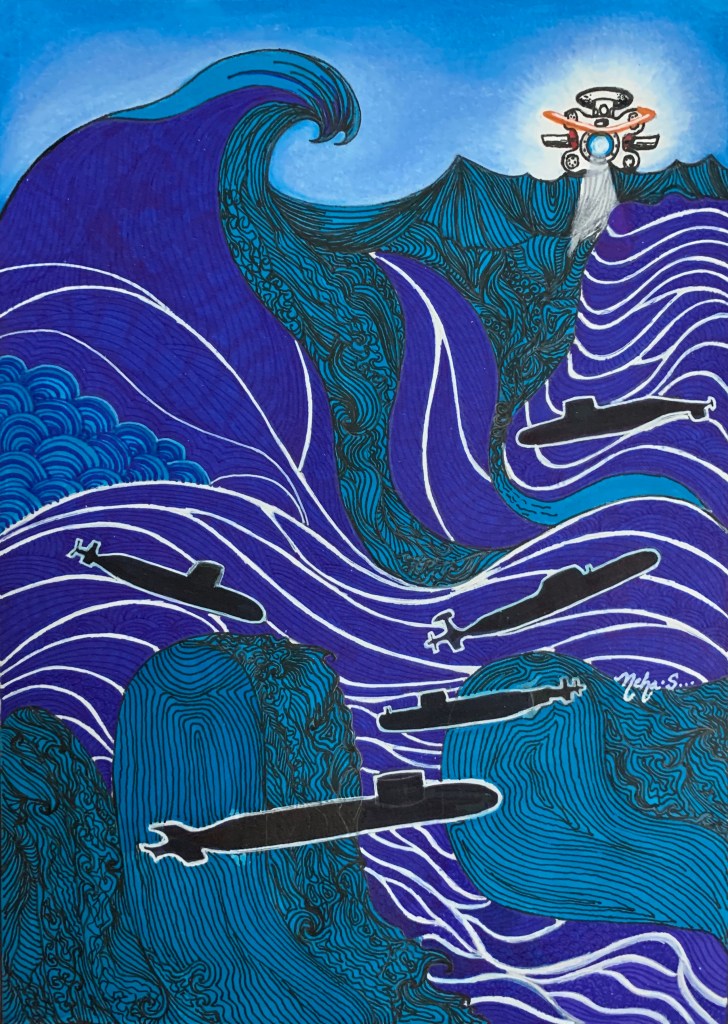
Digitally Implied Texture – I have explored this category in one of my artworks titled Steel Shark wherein I have imparted a grainy texture and fluidity to the underwater seascape digitally.

It is my constant endeavor to produce a painting that excites my viewers enough to be able to emote freely. I believe that in order to get a realistic feel of a subject, an artist needs to explore and imbibe its texture into his or her creation. This can only be possible if he or she views the subject not just in two dimensions, but the third dimension as well. So I’m forever in search of tactile elements surrounding objects as   I want them to come alive with my painting. I want my art to speak for itself. I want it to express my beliefs, feelings and emotions better than my words, for I truly believe in the saying, “A picture can speak a thousand words.”

DISCLAIMER – All the information, data and imagery in this blog post is for informational and educational purpose only. While there may be copyrighted material the use of which has not always been specifically authorized by the copyright owner, I have only made it available with the sole effort to stimulate creative progress and artistic enrichment. Some images may have been taken from the links included below and I give full credit to these websites/pages, thereby in no way claiming them to be my own. I have also used these links for reference purposes and collection of data; therefore I give full credit to the respective web pages. Most of the data in this post is based on my personal experiences and opinions and I am not responsible for any material that is found in the links at the end of this post.

Sources and Photo Credits –

https://www.ideelart.com/magazine/texture-in-art

https://www.nga.gov/education/teachers/lessons-activities/elements-of-art/texture.html

http://visualartspdsf.blogspot.com/2012/04/textures.html

https://artuk.org/discover/artworks/cataract-3-177152

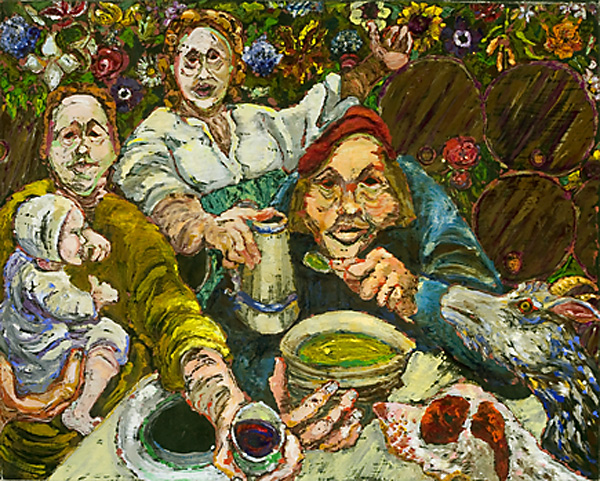
http://marciagygliking.com/recentwork/pages/RW-4-thefamily.html

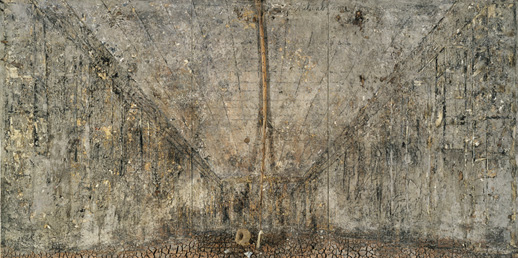
https://www.themodern.org/collection/aschenblume/1155

https://www.justingaffrey.com/

https://en.wikipedia.org/wiki/Rain,_Steam_and_Speed_%E2%80%93_The_Great_Western_Railway

https://wisconsinart.org/exhibitions/terese-agnew-portrait-of-a-textile-worker.aspx

https://www.wga.hu/html_m/d/durer/1/10/3holzsch.html

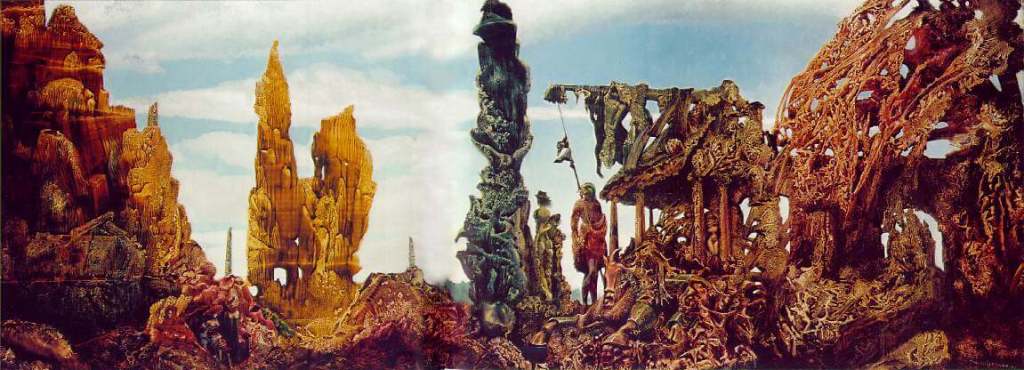
https://www.max-ernst.com/europe-after-rain.jsp

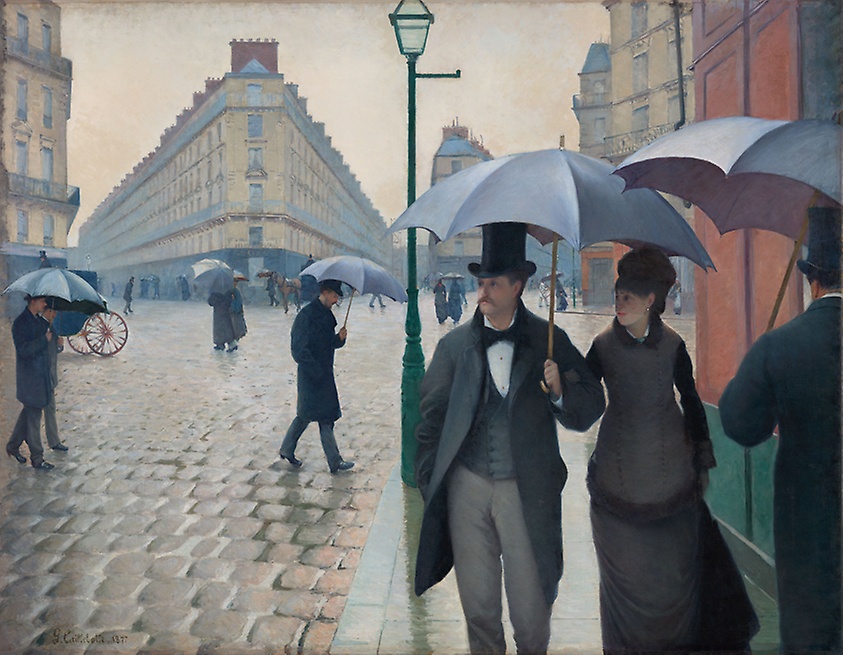
https://www.artic.edu/artworks/20684/paris-street-rainy-day

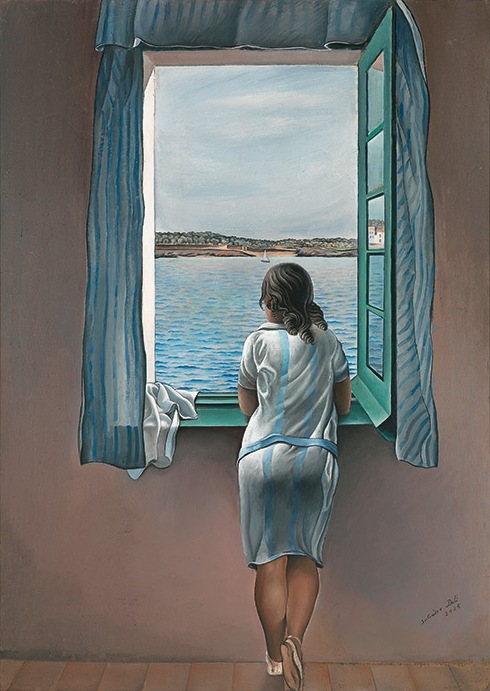
https://shop.salvador-dali.org/en/works-dali/girl-at-a-window.html

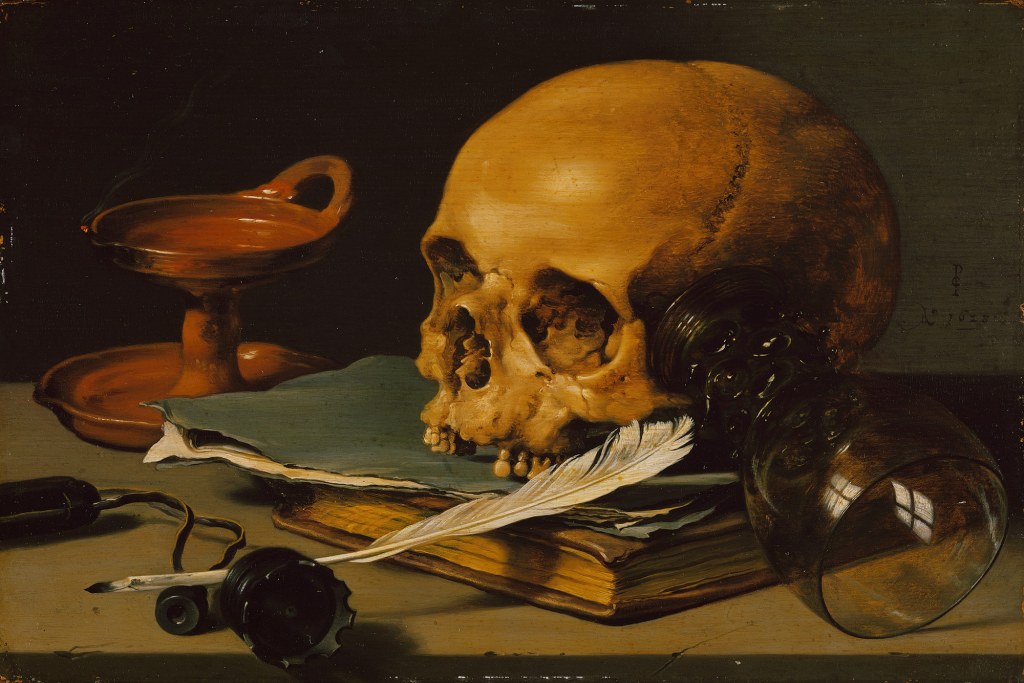
https://www.metmuseum.org/toah/works-of-art/49.107/

http://www.visual-arts-cork.com/famous-paintings/hare-durer.htm

https://www.saatchiart.com/ja5on

https://teresa-elliott.com/works/2444850/deliverance

https://www.tate.org.uk/art/artworks/celmins-drypoint-ocean-surface-ar00467

https://www.leonardodavinci.net/self-portrait.jsp

http://www.arminmersmann.com/graphite#/alps/

https://www.britannica.com/art/impasto

https://www.jackson-pollock.org/eyes-in-the-heat.jsp

http://www.frankenthalerfoundation.org/artworks/mountains-and-sea/details/all

http://www.sharecom.ca/noland/c2.html

https://www.tate.org.uk/art/artists/kazimir-malevich-1561/five-ways-look-malevichs-black-square

Once Upon a Doodle….

Before I kick off today’s post, just want to let you all know that this is not part of my ongoing Navrasa Series, of which  I’ve covered seven emotions till now and still have two more to go. But, that’s work in progress, as I am yet to put down these two rasas onto my canvas, so, I’ll get back to them as and when I complete their respective artworks. Till then, here’s something fun. Hope you enjoy it!!

Remember those cartoon versions of your teachers and friends you would absent mindedly sketch in school when you were bored in class? And the caricatures of your favorite TV stars or comic book heroes that you would squiggle out while chatting idly on the phone with your BFF? Well, guess what! You are still doing these things as you drift off in the middle of a meeting in office or even when you have nothing better to do at home!!

This compelling urge to put pen to paper as a grown up, or scribble with a crayon on a wall as a child is what we call “Doodling.”

So what is a doodle? It is an unfocused drawing made when a person’s attention is otherwise occupied. Doodles are simple drawings that can have concrete representational meaning or may just be abstract shapes. It’s the easiest thing to do and easy on the common media, such as paper, pen and pencil.

Doodling is mostly associated with kids, especially toddlers as their hand–eye coordination and mental faculties are not advanced enough to ensure their coloring attempts stay within the lines of their drawings. But, that doesn’t mean adults don’t doodle.  In their case, it is generally done casually or out of sheer boredom.

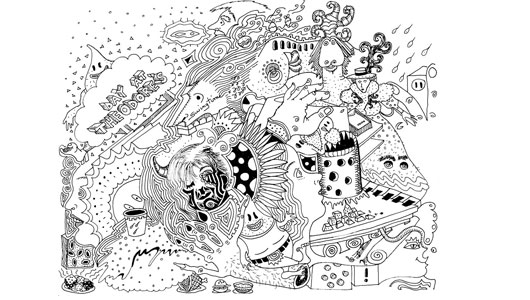
Doodle Art is abstract art, may or may not have concrete meaning or definitive shape and structure, but it looks unique and interesting. It sometimes even expresses it creator’s emotions which makes it an extremely profound and intense activity with its very own trademarks.

Doodle art can also involve the use of repeated patterns to decorate a drawing or image. There are many other versions of doodling such as Line Weaving, Repeat Pattern Art, Neo Pop Realism and Zentangles.

So, are doodling and drawing the same?

The answer is – No.

A drawing is defined as a picture or diagram made with marks and lines. Drawing is a work of visual art — the result of a productive process — whereas doodling is not. Drawing is the result of focused thinking and attentive observation. Drawing is meaningful. It communicates something, whether form, space, likeness, action, or ideas.

Doodling, on the other hand is aimless. A doodle is created with the sole objective of keeping a person occupied. It doesn’t need to be a meaningful, accurate drawing that depicts or conveys something. A doodle is simply a mark or series of marks that can be playful, geometric, linear, shaded, etc., etc. Anyone can doodle. It requires no talent, skill or special training.

Doodling is like daydreaming when we let our imagination run wild and let it come alive on a piece of paper whereas drawing is an organized activity which is preceded by observation, studying and analysis of the subject, so as to align our mind and body in a particular direction.

Doodle art is a fun way of expressing yourself. But it’s often underrated as an art form. Combining child-like doodles with expressive illustrations can create some beautiful and eye-catching designs. Doodling can support drawing. Doodling, in a way can be used as a warm-up session, loosening the body to engage in the drawing to come.

Who invented doodling?

Nobody knows exactly who invented doodling, but it was probably started by the cave men in the Stone Age. So cave drawings, technically, falls into the category of doodling. It is believed that they would crush beetles or anything else that created a pigment and used their fingers as their “pencil” or “brush” to paint onto the walls of caves.

One of the oldest abstract markings has been discovered in Indonesia. The zigzag marking carved by our earliest ancestors is said to be over 500,000 years old according to archaeologists. The scribble on a shell is the first evidence that man ever drew, paving the way for epoch tales and triumphs to be detailed in drawings in caves across the globe.

Prehistoric men made chicken-like etchings on cave walls to communicate and tell a story (or as some may argue, to perform rituals). Besides their fingers, cavemen also used stones and sticks to draw abstract patterns, human hands, and wild animals. Some such drawings were found in France and Spain. Around 3200 B.C., the drawings advanced from cave walls to clay tablets. Some rescued tablets from the Mesopotamian societies were said to have the same random images on the edges and sides of the clay pieces. Soon, in Africa as well, massive doodles of animals started to appear.

Moving the clock further in time, during the 15th century, due to the inefficiency of having to dip the quill in ink constantly, doodling was not a very convenient activity to indulge in. However, with the invention of the fountain pen in the 16th Century, things changed. This gave doodling a small boost, but not much. However, the Renaissance was right around the corner and during this period, innovators, inventors, even Leonardo Da Vinci, doodled with pens during times of stress and pressure. Even the Queen of Prussia doodled in 1795.

In 1875, the pencil had just been perfected by an inventor by attaching wooden handles around the “lead” (which has since been replaced with graphite due to the poisonous effects of lead). But pencils were expensive, and rural students couldn’t afford them due to the expensive wood handles. Then there was a twist during World War 2. England outlawed all pencils because “its lead and wood could and should be used for war efforts instead”. So people came up with a simple yet effective solution – replace the wood with cheap, red cedar. This made pencils much more affordable and England no longer outlawed them. To this day, our pencils are still made from red cedar. So pencils helped take doodling to a new level and thereafter there was no stopping people from creating doodles in the name of art.

Evolution of Doodling

Some of history’s most influential people were doodlers, and you’d be surprised at how many goofy stick figures decorate the margins of famous historical manuscripts.

The word doodle first appeared in the early 17th century to mean a fool or simpleton. It may have been derived from the German word Dudeltopf or Dudeldop, meaning simpleton or noodle (literally “nightcap”).It is the origin of the early 18th century verb to doodle, meaning “to swindle or to make a fool of”. The modern meaning emerged as a term for a politician who was doing nothing in office at the expense of his constituents. That led to the more generalized verb “to doodle”, which means to do nothing.

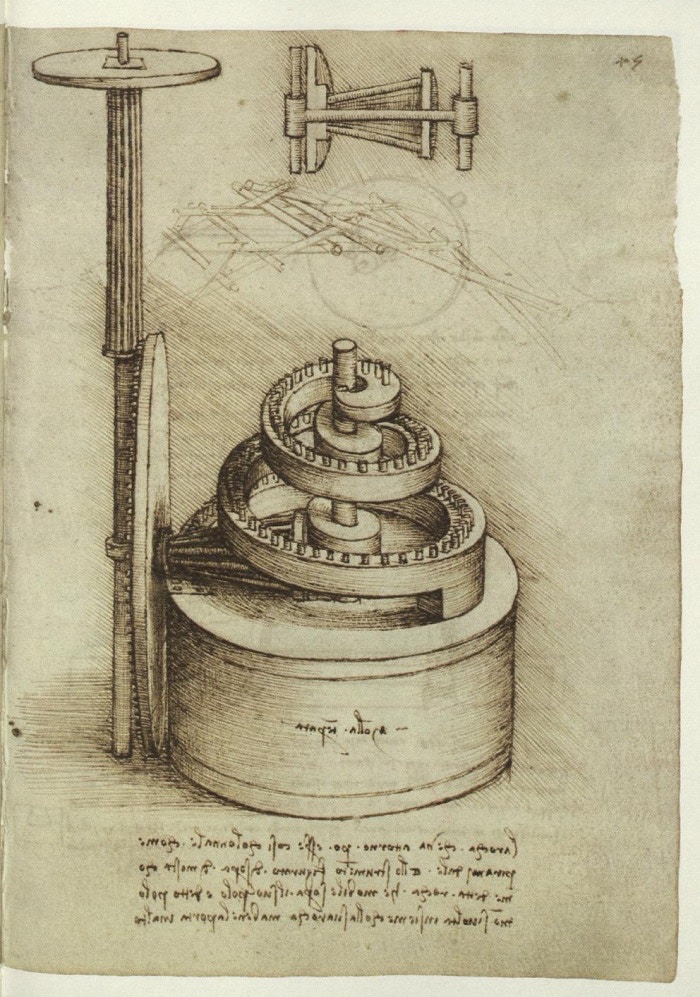
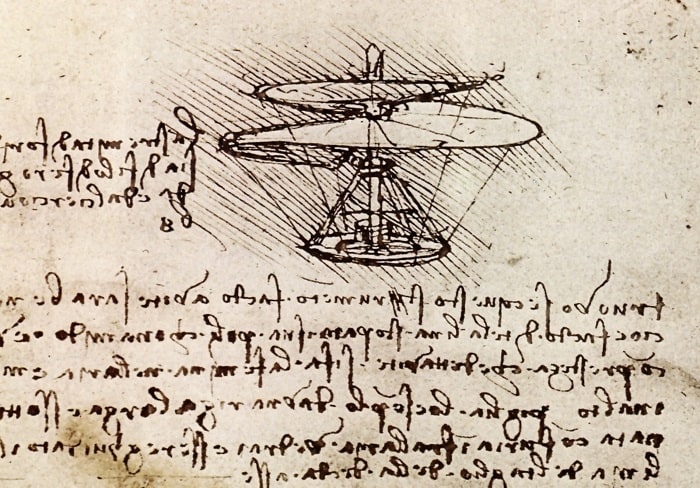
Doodles have been found in medieval manuscripts, as well as in the notebooks of Leonardo da Vinci and on the margins of manuscripts written by Fyodor Dostoyevsky. Leonardo da Vinci’s drawings are iconic. His bizarre mechanical inventions, life drawings of fetus in the womb and cross sections of animal skeletons are showcased in many museums across the world.

The increasing preoccupation in the 20th century with manifestations of the unconscious and the desire to interpret them both as art forms and as clues to the nature of personality have led to considerable interest in doodles. The Surrealist method of automatic drawing was used by Max Ernst, Salvador Dalí, and André Masson, and Jackson Pollock, an Abstract Expressionist, who did a series of drawings that were used as an element in his psychoanalysis.

In the final courtroom scene of the 1936 film Mr. Deeds Goes to Town, the main character explains the concept of “doodling” to a judge unfamiliar with the word, saying that “People draw the most idiotic pictures when they’re thinking.” The character, who has travelled from a fictional town in Vermont, describes the word doodler as being “a name we made up back home” for people who make “foolish designs” on paper when their mind is on something else.

Alexander Pushkin’s notebooks are celebrated for their superabundance of marginal doodles, which include sketches of friends’ profiles, hands, and feet. These notebooks are regarded as a work of art in their own right. Full editions of Pushkin’s doodles have been undertaken on several occasions. Some of Pushkin’s doodles were animated by Andrei Khrzhanovsky and Yuriy Norshteyn in the 1987 film My Favorite Time.

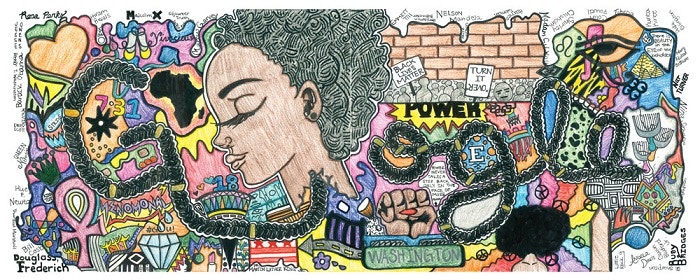
Another big boost for doodling came along in 1998 with the first Google Doodle for the Burning Man Festival. This increased the popularity of doodling dramatically. Then future studies about how doodling improves the brain just helped even more!

Other notable literary doodlers have included: Samuel Beckett, the poet and physician John Keats, who doodled in the margins of his medical notes, Sylvia Plath and the Nobel laureate (in literature, 1913) poet Rabindranath Tagore, who made numerous doodles in his manuscript.

Mathematician Stanislaw Ulam developed the Ulam spiral for visualization of prime numbers while doodling during a boring presentation at a mathematics conference.

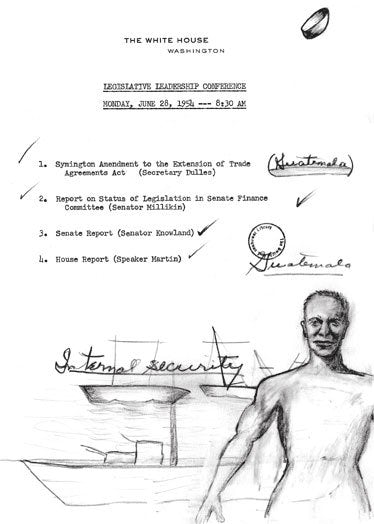
Many American Presidents, including Thomas Jefferson, Ronald Reagan and Bill Clinton, have been known to doodle during meetings. Notable doodlers also include some legendary authors.

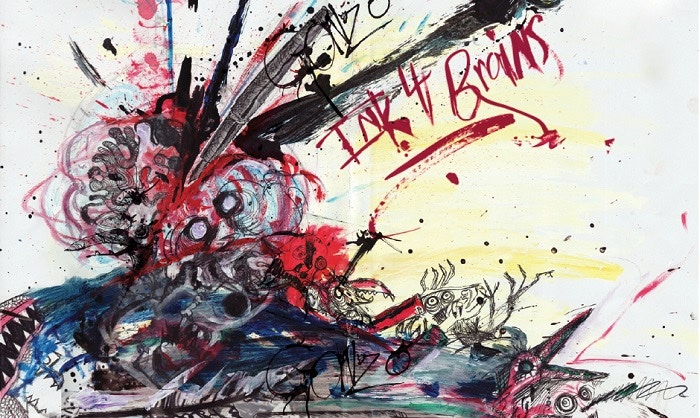
Ralph Steadman’s splattered illustrations and ink splotted doodles have frequently splashed across the pages of newspapers, magazines and famous authors for over 80 years. His provocative cartoons and often grotesque illustrations were brought to life beyond the precise technical drawing that occupied his professional career in The Royal Air force. Hopping across the pond to the US, Steadman experimented with the satirical and provocative illustrations that he is renowned for. His creative process often began with a blot of ink on a white page, and later combined acrylic and oil paint, etching and silk screen to create an abundance of lines and layered marks. He treated unintended marks as an opportunity to take his work in a different direction, the true ethos behind the doodle.

Digital Doodles

The conventional doodle drawing is changing. As technology makes our lives bigger, better, faster, stronger, it seems even the doodle is keeping up with the times as artwork makes the digital jump.

Google Doodles

Since the first doodle went live in 1998, Google has invited guest artists and illustrators to join their doodle team on over 2,000 homepages across the world. 

Celebrating anniversaries, visionaries, famous artist and the pioneers, their inspirational doodle-a-day ethos brings an element of joy to our daily Google search. From interactive games to detailed drawings, the range of doodles is endless fun. Running an annual competition across the world, they invite everyone to get thinking the doodle way and create their own digital artwork.

The endless possibilities for digital drawing have taken artists and illustrators to new realms of doodling.

Snap Chat

Sharing his adventures in 10 second bites of hilarious scribbles, artist Shaun McBride has taken his snaps to new levels, with his imaginative photos of his day-to-day life with his alter ego Shonduras.

From back-to-back snap sequences to a creative short film, Shaun has transformed Snap Chat into a platform where creativity and artwork can thrive.

What does one doodle?

Different people doodle different things, and even the same person will doodle different things depending on his or her mood. Besides cartoon characters and caricatures, doodling can also be of imaginary fantasy characters, mythical creatures, landscapes, geometric shapes and patterns, textures, banners with slogans, etc. Other commonly doodled subjects are – People, Faces, Flowers, Squares, cubes and checkerboards, Bricks, Arrows, Flying animals, Houses, Ladders and stairs, Names and initials, Squiggles and zigzags, Transportation vehicles, Stars, Spider webs, etc.

The Benefits of a Daily Doodle

Here are some benefits of doodling:

1. It stops your brain from slipping into its default state

When your brain has nothing to do, it goes into a default mode, enabling it sit and wait for the next task without using up too much energy. This default mode is active when you are daydreaming or replaying memories in your head. Doodling keeps people from falling into that default state and daydreaming. It keeps them at just the right level of arousal where they are able to attend to the information while drawing away. Doodling helps people concentrate and listen when the subjects can get rather boring.

2. It can improve your memory

Sometimes instead of daydreaming, what you need is for your brain to disengage but to still be paying attention to outside stimuli. That is where doodling might come in handy. Doodling has been scientifically proven to improve the retention of information as well as focus and concentration on the task at hand.

3. It can make you more creative

Doodling can be used to communicate, to reason, to engage, and to learn. You can use your doodles to clarify your ideas for your colleagues or clients, to help guide them and engage them through your reasoning for a design or idea, as well as to help yourself learn new techniques and to discover new ideas. It can help you come up with specific ideas to solve whatever problems you might be stuck on. Doodling can also help generate and refine ideas that you have already had as well as help with the negative aspects of creativity.

4.It is a stress buster

Whenever you are frustrated, anxious, or depressed, it can be difficult to convey those feelings in words. If are unable to find the right words, consider sketching out what you feel instead.

5. It is cheap and fun

Doodle art work and creativity is a means which is cheap and fun. It does not require special paper such as canvas. It’s entirely up to the artist when it comes to the equipment and doodling style in terms of his or her budget, convenience and signature style.

Doodling has a drawback too….

If the task you are supposed to be concentrating on is visual then doodling might not be the best thing to be doing. Multitasking using the same modality, vision, is too much for your brain to handle, and it has to prioritize one over the other. So, basically, doodle, except when you’re supposed to be watching something else. Otherwise there are almost no downsides to a bit of doodling.

Present day Doodle Artists

The popularity of Doodle art is growing day by day due to its abstract and unique characteristics. Now doodle art style has been widely in use as an element in graphic design, in mobile advertising, TV, etc. By using elements of doodle art, the messages conveyed in the work seem more friendly, relaxed, and humane.

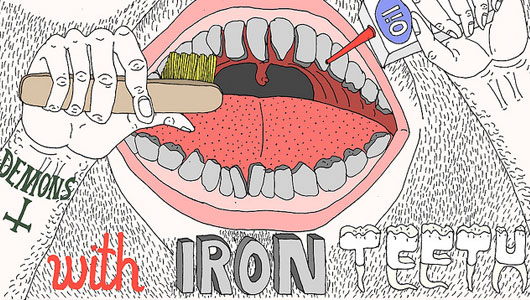
Here are some global artists who do doodle art:

There are some awesome Doodle Artists in India as well, who will inspire you to try your hands on doodling yourself. Here are some Indian “Doodlers” who depict almost every kind of subject through their illustrations –

1. The Filmy Owl – Angel Bedi has made her way to success through her amazing doodles, eventually coming out with customized merchandise with her doodle art on it.

2. Neha Doodles – Giving us a reality check, her quirky, funny and generic doodle memes connect us to our everyday lives. She’s got it all covered from women empowerment doodles to the daily drama of life.

3. Metrodoodle

Doodling is not just about creating art on paper but a majority of artists also doodle through virtual mediums creating some fascinating doodles. The Metrodoodle also works on the same lines – creating some super cool doodles around the everyday metro life.

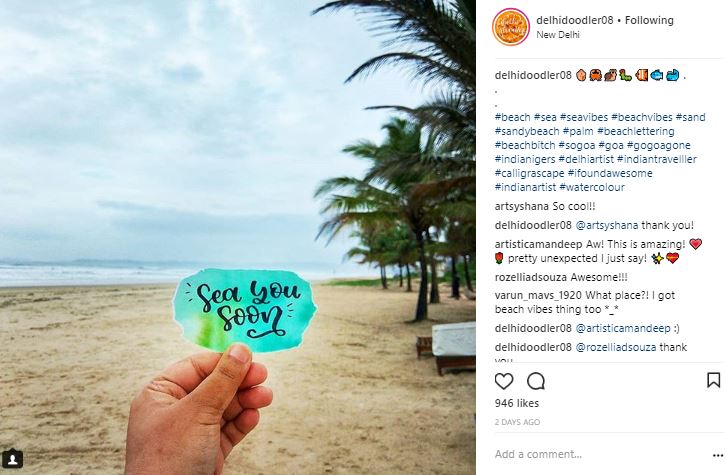
4. Delhidoodler08

Sadhika Gupta aka Delhi Doodler creates some beautiful, lively and interesting doodles with soothing watercolors and amazing calligraphy. She places her doodles in front of real-life backgrounds giving it some more life.

5. Doodle-O-Bong

Be it Mother’s Day, a special occasion or inspirational quotes, this one has got it all. She’s got her creativity on point with her artsy doodles.

6. Doodles by Mansha

Doodles by Mansha centers around illustrations, doodles and making people smile through her beautiful content. Her artistic doodles are filled with colorful imagery giving out positive vibes. She paints her thoughts down through beautiful calligraphy and vibrant colours.

7. Doodleodrama

Mounica Tata’s innovative and amazingly inspiring doodles convey a message and have a streak of maturity in them.

8. Abhinav Kafare

Abhinav Kafare doesn’t limit his art to doodles but has so much more to contribute and express his art through amazing graffiti as well. One can easily sense the maturity and essence of reality in his art which.

9. The Bombay Doodler

Speaking his heart out through his super-creative doodles, The Bombay Doodler has created some awe-inspiring and expressive artworks.. He can create it all from flowery doodles to mature inspiring work.

10. Trshdoodle

Trisha Gupta just started with her creative journey of creating some quirky doodles, which includes some super cool ones she created for Dunkin Doughnuts. She uses her creativity to make the best of the content to surprise her viewers. 

My Experiments with Doodling

Doodling is super fun and de-stressing. It is something each and every one of us would have done at some point in our lives, without even realizing it. In my opinion, doodle art encompasses all that art should be – creativity at its best without being tied down by rules.

I have recently come across such inspiring and creative doodle art that I find myself being drawn towards it more and more and have been inspired to try it out myself. And you know what? I found it’s so much fun that I look forward to it every day! In fact, I am almost addicted to it!! Here are some of my creations which were not only a great learning experiences for me, but also helped me evolve as an artist as I eased into the world of doodle art.

While creating these artworks, I have tried to explore various styles of doodling with an attempt to incorporate conventional as well as contemporary motifs in combination with other mediums or techniques of art. I have also tried doodling on various surfaces, that is, different types of paper. I will be talking about all this further down along this post.

Some of these artworks fit into the gamut of pure doodle art and don’t express anything in particular, while others have an underlying theme or message. In other words, some are meaningless and some hold meaning! Either ways, I consider them all as doodles.

The Hepburn Doodle – This one is inspired by the great Hollywood diva of the yesteryears, Audrey Hepburn. I decided to try and reinterpret this well known illustration of the starlet through the techniques of doodling. Not only have I rendered my version with various lines, marks and patterns characteristic of doodle art, I have also experimented with the surface, by using hand-made paper. On hindsight, this was a mistake as hand-made paper is not suited for pens and markers, thereby causing blotting and bleeding of colors at certain places. So keep this is mind when you are selecting your surface you intend to doodle on. Having realized this in time, I have rendered the background with pencil colors, which thankfully worked better.

The Hepburn Doodle

The Monroe Doodle – Like the Hepburn Doodle, this is also a rendition of yet another Hollywood diva, one that we all are familiar with, namely Marilyn Monroe. Once again, I have used a well know visual, that is the famous “flying skirt” image from a photo shoot for the film “The Seven Year Itch.” This time around, I was luckier even though the surface was hand-made paper. No blotting or bleeding…Phew! What a relief!! The yellow glow around the figure has been imparted by pencil colors.
The Monroe Doodle

Girl Power – I did this when Women’s Day was just around the corner. It is a totally spontaneous and impulsive rendition of as well as my tribute to femininity. Being an Indian, nothing for me epitomizes the strength of a woman better than Goddess Durga herself. Hence, I have doodled out a modernistic version of Her, thereby symbolizing the determination and grit of the women of today, tomorrow and for all times to come. I have used gel pens as a medium for this artwork and the surface of choice is black cardstock. A minimalistic illustration, but with a strong message.  
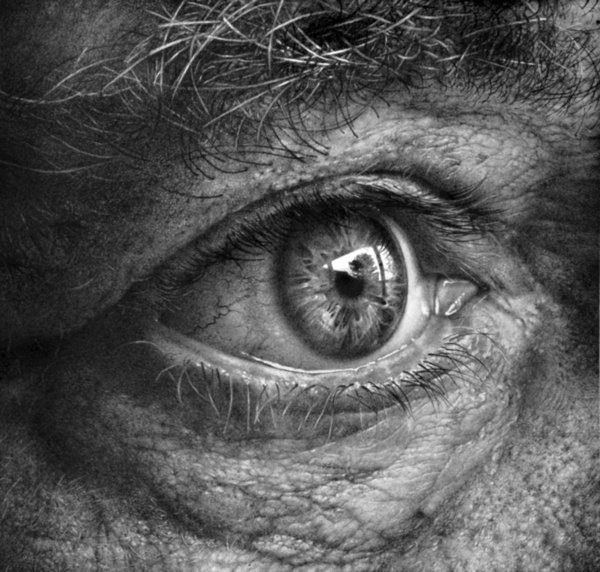
Girl Power

Health is wealth – According to Hindu mythology, Lakshmi is the Goddess of wealth, prosperity and fortune and an embodiment of beauty as well. She is depicted in Indian art as an elegantly dressed, prosperity-showering golden-colored woman seated or standing on a lotus pedestal, with four hands, which represent the goals of human life.I have used this very iconographic image of Lakshmi to depict the greatest wealth for us all – our health. With the help of various elements of doodle art, I have stylized her form, along with that of the lotus and the surrounding water pool. Each of her hands shows how every body part is equally important for our overall health and there is no bigger fortune that a healthy body, mind and soul.
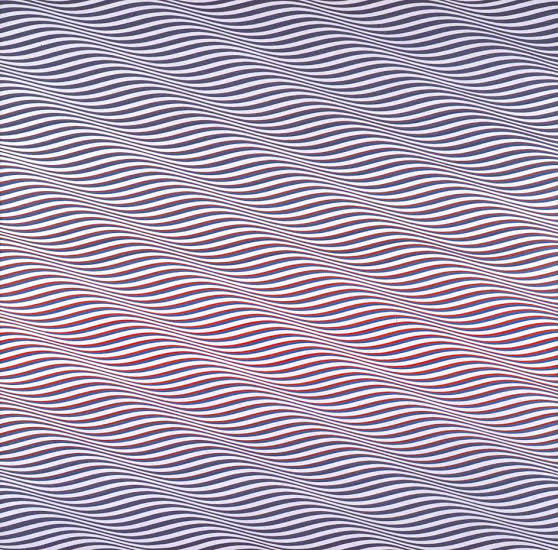
Health is Wealth

Touching Lives through Welfare – Depicting social welfare through art was a big challenge for me.  So, I decided to combine drawing as well as doodling to produce an abstract composition which portrays specific welfare organizations in my region. Each arm represent one such organization and together, hand in hand, they all work  in tandem towards one common goal – welfare of the under privileged. I have used geometrical shapes and patterns as doodle motifs in a multiple color palette to create this artwork.

Touching Lives through Welfare

Doodle Sub – If there’s one subject that has fascinated me as much as dragons, it is, the mighty submarine. I have dedicated an entire post to them in the past, which gives a detailed account of two of my original artworks of these invincible war machines (refer to posts dated July 27, 2019 and August 3, 2019). Yet again, I found these underwater giants calling out to me, but this time I wanted to render them differently. So I thought to myself, why not try doodling? I have used almost every element and motif of doodling to adorn the submarine, the underwater seascape as well as the aquatic flora in this stylized piece.

Doodle Sub

The Steel Shark – I decided to take my obsession for submarines to the next level by combining doodling and digital art. In this artwork, I have personified the submarine as a shark which truly epitomizes its stealth and menacing power. I rendered this personified version with prismacolor pencils, whereas the underwater seascape has been rendered digitally. Where’s the doodle you ask? In the lines of the rising waves of course!

The Steel Shark

Guardians of the Sea – And the saga of the submarine continues…only this time, it’s the entire fleet! This artwork depicts them all making their way underwater, prowling through the deepest abyss of the ocean. Once again, I have incorporated most of the marks, lines, scribbles and patterns  that are inherent to doodle art, with an attempt to impart individualistic character to the cresting waves, the surging underwater currents and the submarines respectively.

Guardians of the Sea

So are you feeling inspired enough to incorporate doodling into your art? Well, what are you waiting for?! Pick up your pens and pencils and doodle away!! But do share your explorations and experiences with me in the comments section below. Happy Doodling!!

DISCLAIMER – All the information, data and imagery in this blog post is for informational and educational purpose only. While there may be copyrighted material the use of which has not always been specifically authorized by the copyright owner, I have only made it available with the sole effort to stimulate creative progress and artistic enrichment. Some images may have been taken from the links included below and I give full credit to these websites/pages, thereby in no way claiming them to be my own. I have also used these links for reference purposes and collection of data; therefore I give full credit to the respective web pages. Most of the data in this post is based on my personal experiences and opinions and I am not responsible for any material that is found in the links at the end of this post.

Sources and Photo Credits –

http://jayce-o.blogspot.com/2012/05/doodle-art-introduction.html?m=1

https://magicpin.in/blog/doodle-artists-india/

https://www.canva.com/learn/7-ways-doodling-will-change-your-life/

https://share.sis.org.cn/22lx01/2016/06/01/the-history-of-doodling/

https://www.cassart.co.uk/blog/the-history-of-the-doodler.htm

https://www.britannica.com/art/doodle

https://99designs.com/blog/creative-inspiration/meaning-of-doodles/

https://99designs.com/blog/creative-inspiration/meaning-of-doodles/