Featured

Padme – The Spiritual Bloom

Padme – The Spiritual Bloom

“Just like the lotus we too have the ability to rise from the mud, bloom out of the darkness and radiate into the world.”

The lotus is one of the most revered and sacred symbols of Buddhism. It is this holy symbol that is the subject of today’s artwork tilted, “Padme – The Spiritual Bloom.”
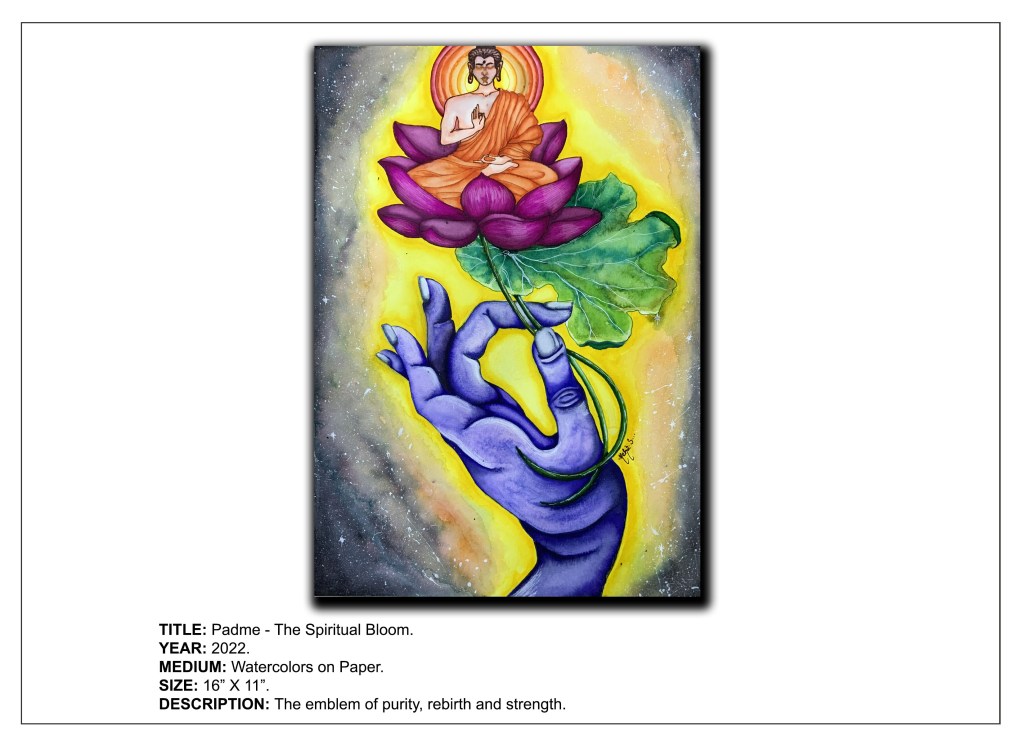
The lotus represents spiritual awakening, purity, and rebirth as the act of emerging from muddy water symbolizes rising above the challenges and adversities of life and moving towards the light of wisdom. It also represents nonattachment, as it is rooted in mud (attachment and desire) but its flowers blossom on long stalks untarnished by the mud below (detachment).

Another important aspect of the lotus is that when it blossoms, it simultaneously plants a seed, representing the Buddhist concept of cause and effect, whereby the flower is symbolic of the cause and the seed-pod the effect.

The lotus serves as a reminder that all beings can attain enlightenment. Just as the blossom rises from the depths of murky ponds and lakes to bloom immaculately above the water’s surface, so can the human mind develop the virtues of the Buddha and transcend desire and attachment to reveal its essentially pure nature. It symbolizes the blooming of the soul from the filth of the physical world, eventually flourishing in the bright sunshine of enlightenment and attaining nirvana.

There are a variety of colors of the lotus associated with Buddhism. The pink lotus is the supreme one and is the true lotus of Buddha. It is for this reason that the Buddha in this artwork is depicted seated on a pink lotus, which indicates His enlightened and divine status.

 All symbolism associated with the lotus points towards finding spiritual meaning in life. We all are like lotus blooms in the universal pond, striving to realize our true potential.
Featured

Buddha Charita – The Life of Buddha

“It is better to conquer yourself than to win a thousand battles. Then the victory is yours. It cannot be taken from you, not by angels or by demons, heaven or hell.”

The Buddha introduced into the world a philosophy which helped mankind navigate through his suffering. The life he led and the experiences that made him confront suffering also guided him to his final destination – the attainment of enlightenment. Buddha symbolizes a path to liberation and detachment from the triviality of the material world.

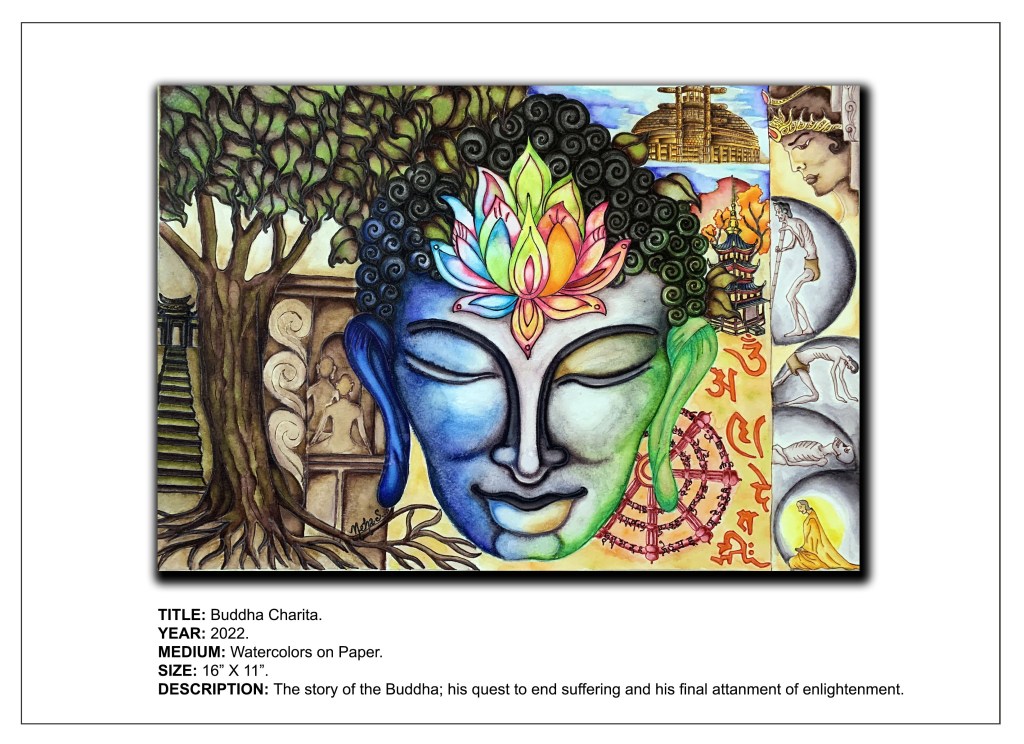
The most well-known historical account about the Buddha is the story of his life. It is this divine narrative that has become the inspiration for my latest artwork titled “Buddha Charita”, which is also the culmination of my new series – “Buddha Sutra”. Here’s an image of the artwork I have created:

Buddha Charita

Link to a video clipping of the painting – https://www.instagram.com/p/CdSddp6JL2k/

This watercolor artwork is a visual narrative linking several events in the life of the Buddha from his days as Prince Siddhartha Gautama, his confrontation with suffering, his quest for a path towards the cessation of this suffering and his final liberation in the form of his “awakening”.

The first embodiment of the Buddha as the royal Prince Siddhartha has been represented in the right-hand corner of the artwork by an image of him, resplendent with royalty. This is followed by the next stage in his life, where he comes across the sight of a decrepit old man, a sick man, and a corpse which have all been portrayed one below the other in the artwork. These sights changed the perspective of the prince and opened his eyes to all the suffering that accompanies life. Also depicted in the painting, is the image of an ascetic that Gautama encountered, who had learned to seek out spiritual solace in the midst of these worldly miseries and sorrows. Determined to find the same enlightenment, Gautama turned towards the path of renunciation.

After exploring asceticism, or restraint from all physical needs and desires, he discovered meditation and used the practice as a path toward enlightenment. This led to the third stage in the life of Siddhartha, which is displayed in the artwork as the central image of the Buddha, “the awakened one”. The tree on the extreme left of the painting represents the sacred Bodhi tree or the fig tree (Ficus religiosa) under which the Buddha meditated and finally reached the highest state of enlightenment or “nirvana,” which simply means “awakening”.

In addition to the figurative representation of the Buddha himself, his teachings have also been represented in the artwork through iconographic symbols of the likes of the Lotus flower and the Dharma Wheel. Other icons displayed in the artwork include various Buddhist monuments like pagodas and stupas, specifically the Sanchi Stupa, which is considered to be the most sacred monument of Buddhism, as it represents and displays various Buddhist ideals.  

Through this artwork, I wish to honour Buddha’s life, for it is a reminder of the basic Buddhist principles that form the stepping stones to a higher spiritual level.  It is these principles that serve as a source of strength in the grief-stricken world. It is my attempt to convey the philosophy of Buddha by reflecting on his life’s experiences and pledging to practice inward reflection to overcome sorrows, just as he did.