The Evolution Of Panchamukha – From Pencil Strokes To Watercolour Washes

Change artwork to Panchamukha Hanuman

Having explored the anatomical silhouette of the Panchamukha in my last post, now let me take you through the journey of its creation, layer by layer, from the initial sketch down to the last brushstroke.

Bringing sacred iconography like the Five-Faced Hanuman to life from the first conceptual sketch to the final composition was like transforming it into a dynamic visual narrative. It was about illustrating and rendering each of the five distinct personas as well as their energies into a singular divine reality.

Through textured layering using watercolours and intricate detailing with fine liners, I have attempted to depict the grounded reality yet otherworldly majesty of each of the faces of the Five-Faced Hanuman. I have endeavoured to enhance the texturing with an interplay of light and shadow to differentiate between skin and stone. The folds of the drapery of the mighty Hanuman have also been illustrated with fluid brushstrokes in order to capture the natural flow of the fabric, while complimenting the indomitable strength and sublime grace of the divine form.

One of the most meaningful aspects of creating Panchamukha was the background. Wanting it to resonate with the same spiritual energy as the deity it portrayed, I carefully inscribed onto it, verses from the Hanuman Chalisa—the sacred 40-verse hymn dedicated to Lord Hanuman—allowing the timeless words of devotion to become an integral part of the composition.

The script of the hymn does not merely serve as a decorative element; it forms the spiritual foundation of the artwork. Layered behind the divine form of Panchamukha Hanuman, the verses create the impression that the deity emerges from the very essence of sacred prayer. This subtle interplay between scripture and imagery transforms the painting into more than a visual representation—it becomes an offering of faith, where every brushstroke and every verse unite to celebrate Hanuman’s unwavering devotion, boundless strength and divine grace.

Sharing a detailed process video, where I take you through the complete artistic journey of Panchamukha—from the very first graphite lines to the final luminous watercolour rendition.  As each layer unfolds, it peels back not only the anatomical construction of every face and the figure as a whole, but also the profound symbolism woven into each element of the composition. More than a demonstration of technique, this is an intimate glimpse into the creative process that transformed my devotion into a work of art.

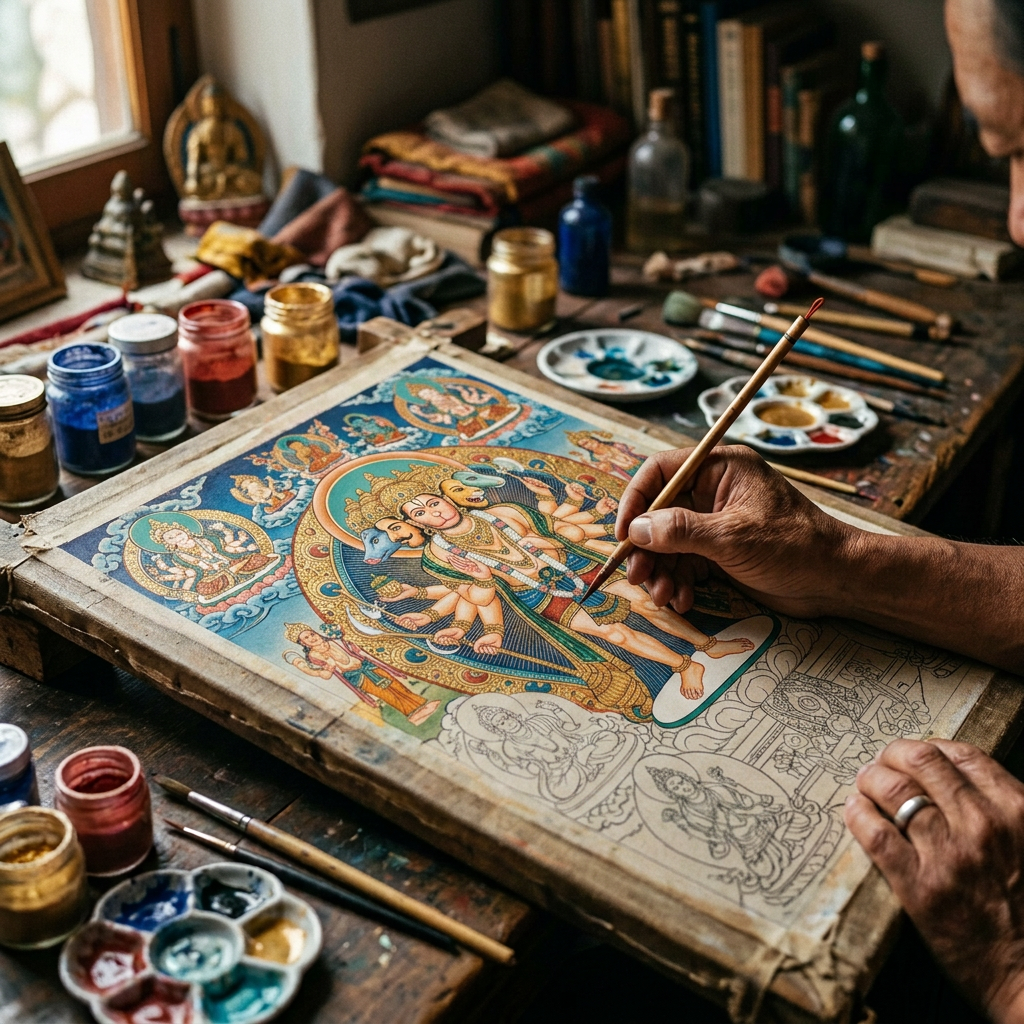
NOTE: The featured image at the beginning of the post is purely for illustrative and promotional purposes and is not the original artwork. It is included solely as a visual representation of the topic.
The Making of Panchamukha

Panchamukha – The Story Of The Five-Faced Hanuman

As I rummaged through the shelf that houses my Divinity Series in The Art Dungeon, I came across an artwork that I had christened “Panchamukha.” Looking at this composition instantly brought back memories of its creation, so here I am, narrating the story behind another treasured piece from my collection.

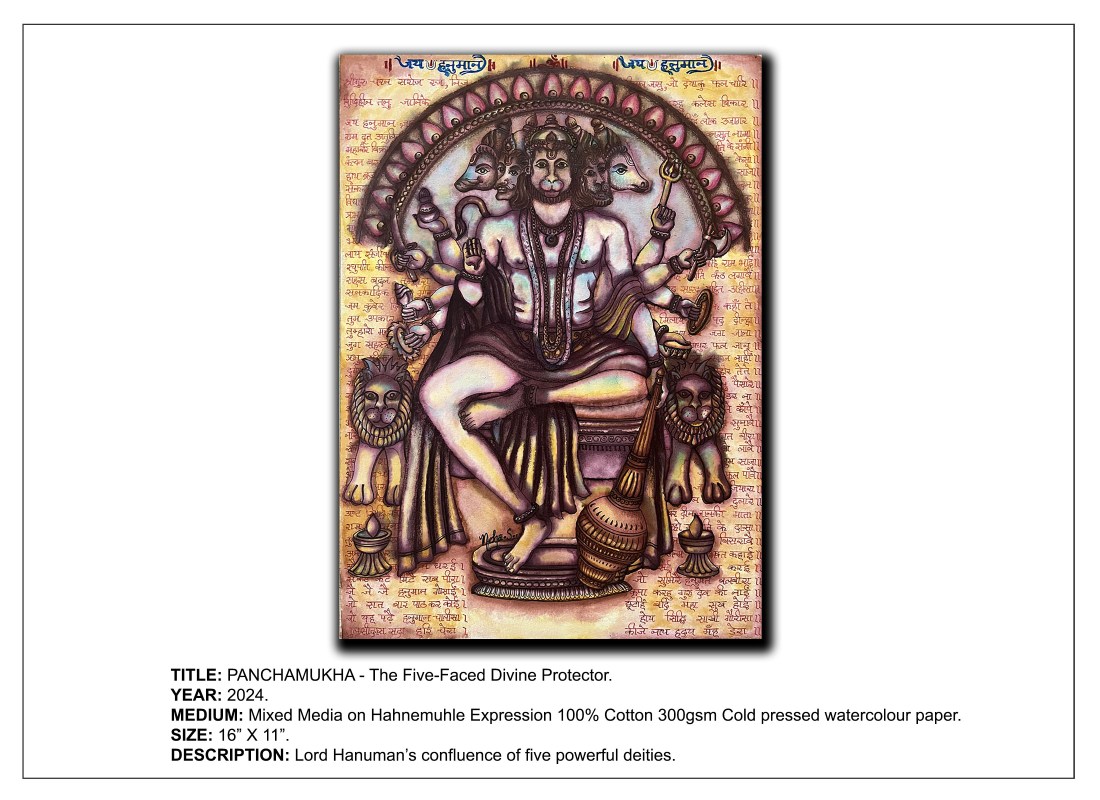
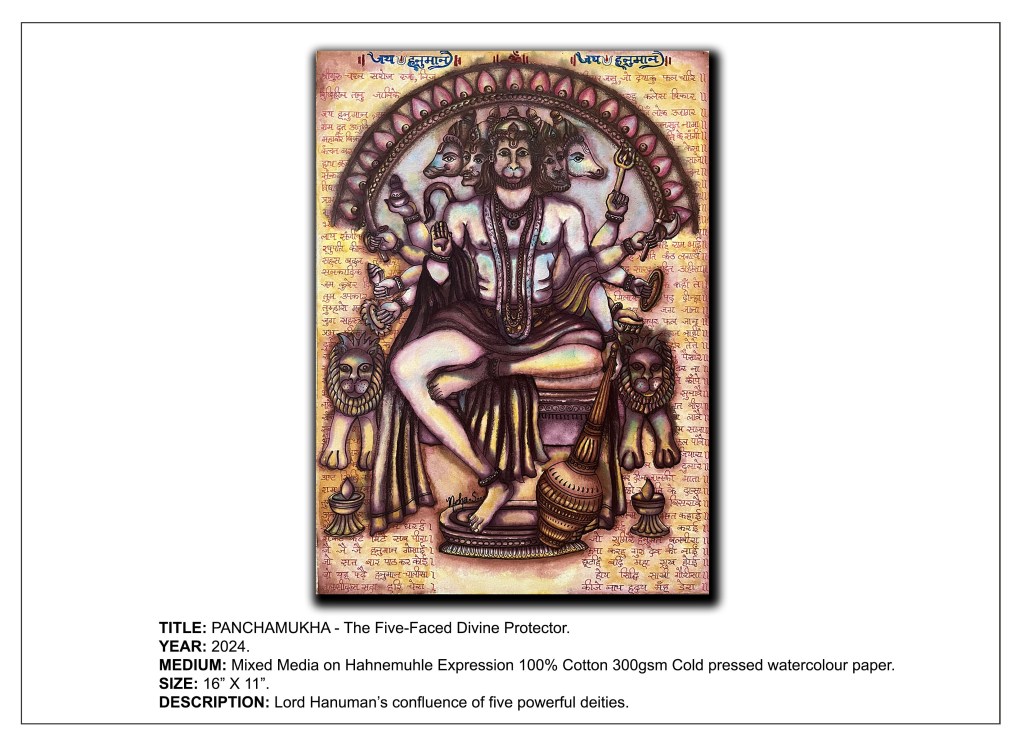
This artwork depicts Panchamukha Hanuman, a unique and revered form of Lord Hanuman with five faces. Each face reminds us of the diverse aspects of life that need balance—strength, fearlessness, protection, stability, and wisdom. This manifestation represents the confluence of the following five powerful deities, each embodying unique strengths:

  1. Hanuman (East-facing) – The original monkey-faced form, representing unwavering devotion, courage, strength, protection and victory over enemies.

     2. Narasimha (South-facing) – The lion-faced incarnation of Lord Vishnu, symbolizing fearlessness and the destruction of evil forces.

   3. Garuda (West-facing) – The mighty eagle, vehicle of Lord Vishnu, representing protection from negative energies, black magic, and serpents.

   4. Varaha (North-facing) – The boar incarnation of Lord Vishnu, symbolizing stability, wealth, and prosperity.

    5. Hayagriva (Upward-facing) – The horse-headed form of Lord Vishnu, embodying wisdom, knowledge, and spiritual enlightenment.

The multiple arms hold divine weapons and objects, including a gada (mace), chakra (discus), trishul (trident), parashu (axe), and a kamandalu (water pot), each signifying divine power and protection.

Two lions sit at Hanuman’s feet, representing strength, dominance over evil and divine guardianship. The halo with multiple eyes suggests all-seeing divine awareness and vigilance. The presence of sacred lamps (deepas) signifies enlightenment and devotion.

The background of the artwork features verses from the Hanuman Chalisa, (the sacred 40-verse hymn for Lord Hanuman), emphasizing the sacred nature of this depiction.

Rediscovering Panchamukha reminded me that some creations reveal their true meaning only with time. While I had originally painted it as a tribute to one of Lord Hanuman’s most powerful forms, revisiting it again made me appreciate the depth of its symbolism in an entirely new light. Each face, each weapon, and every carefully chosen element speak of courage, wisdom, protection, and unwavering faith—virtues that remain as relevant today as they have always been.

As The Divinity Series gradually unfolds, each canvas will reveal not only a sacred form, but also a story, a memory, and a piece of my artistic and spiritual journey.

Art is more than pigment on canvas. It is a vessel of stories, devotion and the emotions of the moment in which it was created. I hope Panchamukha leaves you with a sense of peace, inspiration and a renewed appreciation for the timeless wisdom embodied by the mighty Hanuman, and inspires you to look beyond its intricate details to discover the eternal spiritual message it carries—a message of strength, resilience, and the quiet assurance that divine grace is always watching over us.