Let’s get Digital!

The 21st century is the age of digital advancement where technology has completely revolutionalized the world. This digital revolution has also penetrated the world of art and transformed the way artists think, create and innovate. The art world is no longer confined within the four walls of galleries and museums, but is chartering new territories of its own into the cyber world. Digital technology has not just opened up new avenues for artists, it has also changed the entire outlook towards art. The impact of digital technology has greatly altered activities such as painting, drawing and even sculpture. From digital painting, to illustration and even photography, it has affected how art is created as well as presented.

But what is digital art?  It is the practice of creating works of art that are computer generated, scanned or drawn using a tablet or mouse. This includes digitally manipulated videos as well as photographs.

Digital illustration or computer illustration is the use of digital tools to produce images, usually through a pointing device such as a mouse. A mouse may not be very precise for drawing, so a graphics tablet is a better tool for a digital illustrator, because it allows the user to make marks that look more like the natural lines made by the human hand. Moreover, the pressure-sensitive surface, allows for faint to bold and thin to broad marks. These variations mimic traditional wet and dry media.

There are two main types of tools used for digital illustration: bitmapped (or “raster”) and vector applications. Bitmap applications are commonly called “painting” programs, such as Adobe Photoshop, while vector applications like Adobe Illustrator are called “drawing” programs.

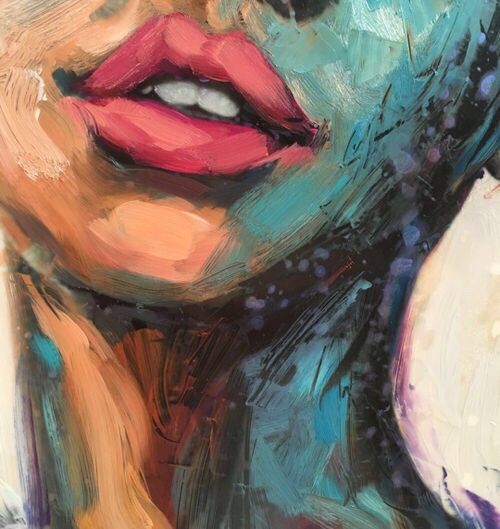
Digital painting is an art form in which traditional painting techniques such as watercolor, oils, impasto, etc. are applied using digital tools (software) on a computer or a graphics tablet using a mouse or stylus respectively. All digital painting programs have digital brushes for traditional styles like oils, acrylics, pastels, charcoal, pen and even airbrushing.

Digital painting software such as Corel Painter, Adobe Photoshop, ArtRage, GIMP, Krita and OpenCanvas give artists a similar environment to a physical painter – a canvas, painting tools, mixing palettes, and a multitude of color options. There are various types of digital painting, including impressionism, realism, and watercolor.

Advantages of Digital Art

  • More efficient – Easier to get started and work quickly.
  • More forgiving – Nothing is permanent when you have the undo button.
  • More exploration – Unlimited experimental possibilities.
  • Easier duplication – Ideal for working with clients.
  • Equipment/Materials – Ease of working in an organized, mess-free environment
  • Instant Sharability – Because digital art is already stored on a digital device, it is easier for artists to share their work in its highest form either on websites or through social media instantly.

There are some drawbacks also of digital painting. Some argue there will always be more control for an artist holding a physical brush in their hand. Others believe the character that is unique to physically made art is missing from digital painting.

Here are some of the best drawing apps:

  • Adobe Illustrator Draw.
  • Adobe Photoshop Sketch.
  • ArtFlow.
  • MediBang Paint.
  • Infinite Painter.
  • Autodesk SketchBook.
  • PaperColor.
  • DotPict.
  • Procreate.

The world of digital art is like a virtual simulation of the real art world. Digital art has changed not just how artists can express their creativity, but also how the audiences experience art. It is ever changing so is still in its nascent stage, but with time it will surely grow and mature into a fully developed art form. The day is not far away when the seemingly unorganized and random digital art world paves a definitive path for itself. The future holds the defining moments for digital art.

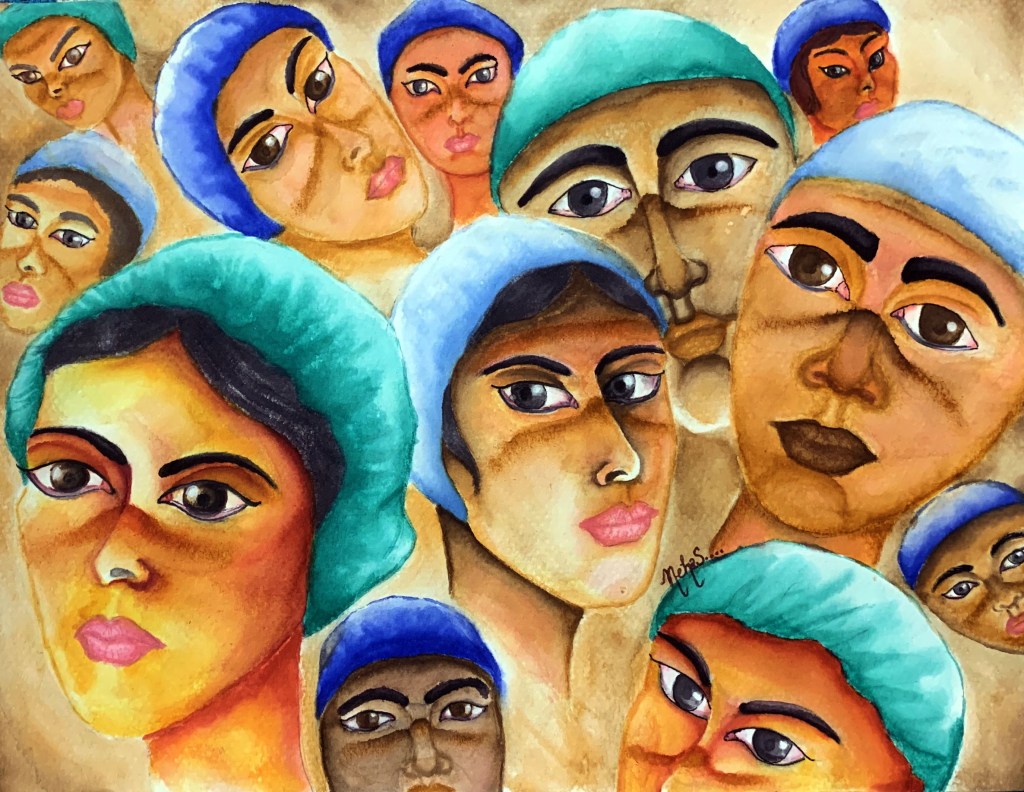
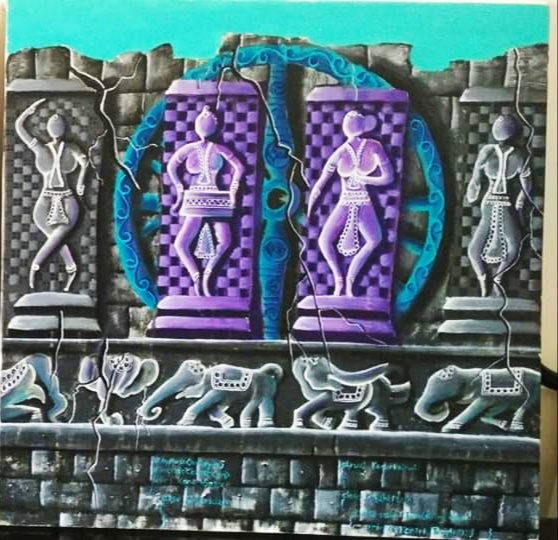
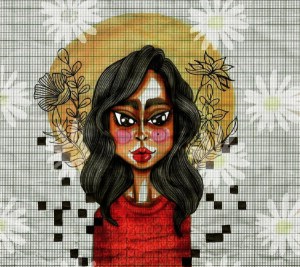
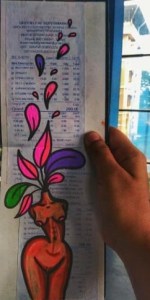
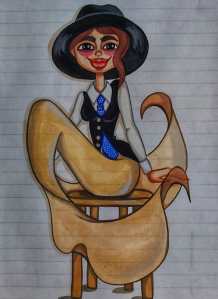
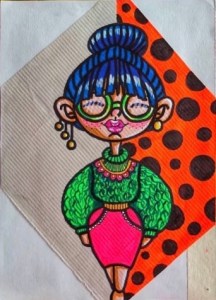
Here are a couple of my own explorations with digital art. Still getting a hang of it but I am loving it!!

Art for Art’s Sake

Heard of the phrase “Art for Art’s Sake?” It is a simple expression for the philosophy that “true” art is divorced from any didactic, moral, or utilitarian function. The basic idea is that art is by definition aesthetical and thus can have no other purpose. In addition, art’s role is not to educate or to enlighten someone. It exists just for itself.

Oscar Wilde is considered the father of aesthetics. The phrase l’art pour l’art (“art for art’s sake”) was coined by the philosopher Victor Cousin, in 1818. According to him and several other philosophers of the century, social and political themes are irrelevant and should not be used in art making unless they render the final product “beautiful”.

This approach to art was elucidated in the 19th century by the Aesthetic Movement that promoted pure beauty and aesthetic values by accentuating visual and sensual qualities of art rather than practical, socio-political, moral or narrative considerations. So art from this movement didn’t give emphasis to deeper meaning.

History and Origin

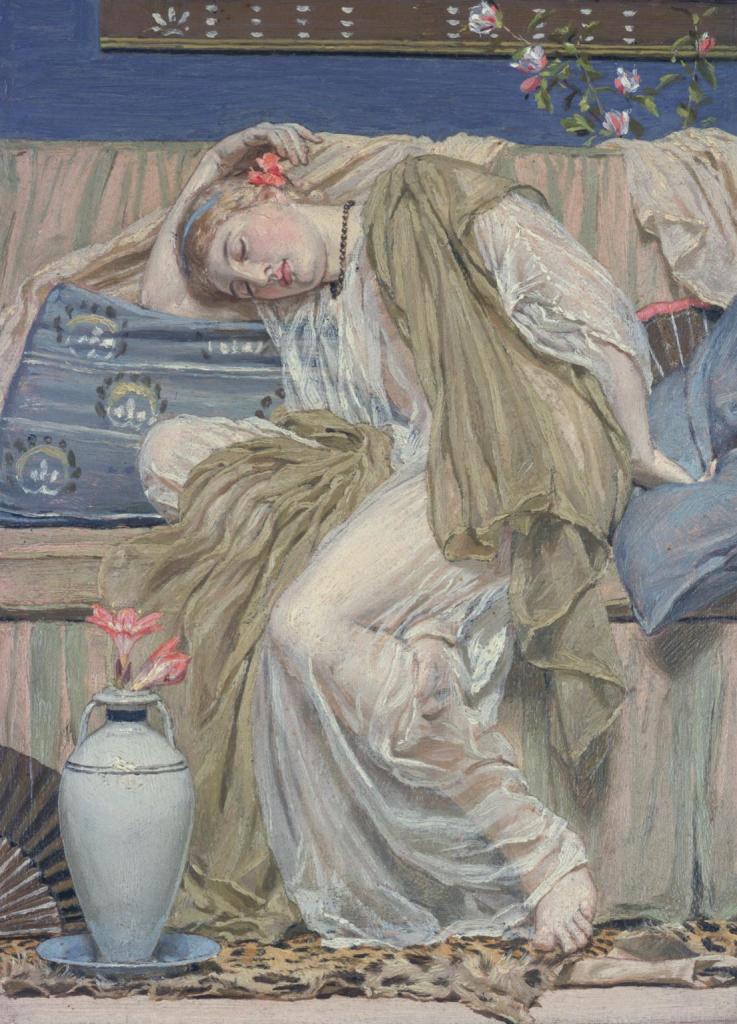
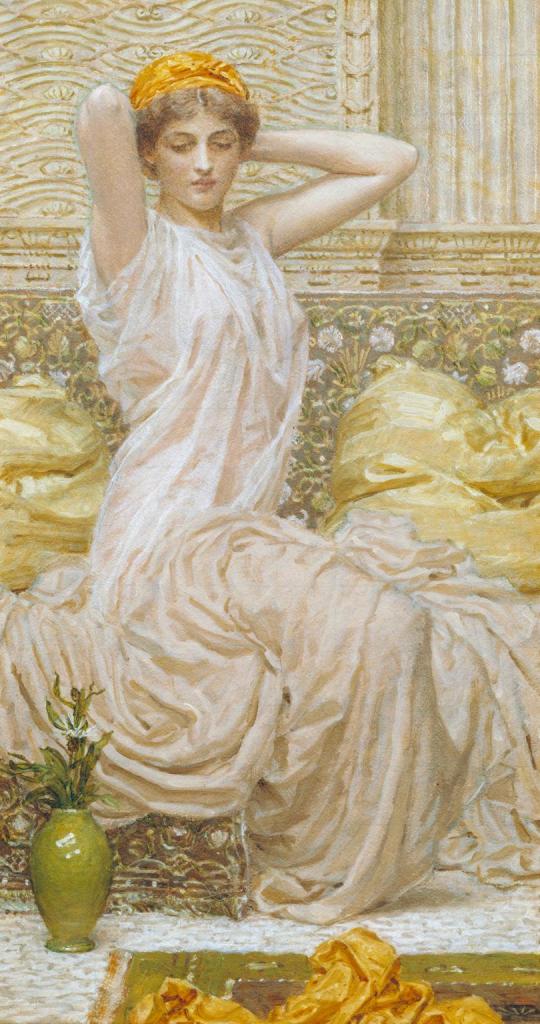
The aesthetic movement flourished in Britain in the 1870s and 1880s. In painting it was exemplified by J.M. WhistlerAlbert Moore and certain works by Frederic, Lord Leighton. Japanese art and culture was an important influence, especially on Whistler and aesthetic design. Aestheticism shared certain affinities with the French Symbolist movement, fostered the Arts and Crafts Movement, and sponsored Art Nouveau. From 1875 the ideals of aestheticism were commercialized by the Liberty store in London, which later also popularized Art Nouveau.

The movement began in reaction to prevailing utilitarian social philosophies and to what was perceived as the ugliness and philistinism of the industrial age. In England, the artists of the Pre-Raphaelite Brotherhood, from 1848, had sown the seeds of Aestheticism, and the work of Dante Gabriel Rossetti, Edward Burne-Jones, and Algernon Charles Swinburne exhibited it and expressed a yearning for ideal beauty through conscious medievalism. The painter James McNeill Whistler raised the movement’s ideal of the cultivation of refined sensibility to perhaps its highest point.

The roots of Aestheticism can be traced back to the 1860’s; however, it was not until the 1880’s that the movement gained noticeable popularity. The Aesthetic movement is often associated with the French term fin de siècle,” or the “end of the century,” which refers to the closing of an existing era and implies the beginning of a new one. It is often used to describe late 19th century Britain, a time when the ideals of the Victorian Age were losing precedence and being replaced by Aesthetic values. The Aesthetic movement denounced the sober morality and middle-class values that characterized the Victorian Age and embraced beauty as the chief pursuit of both art and life.

The Aesthetic Movement provided a challenge to the Victorian public when it declared that art was divorced from any moral or narrative content. In an era when art was supposed to tell a story, the idea that a simple expression of mood or something merely beautiful to look at could be considered a work of art was radical. In its assertion that a work of art can be divorced from narrative, the ideas of the Aesthetic Movement paved the road towards Modern Art. The movement is often considered to have ended with Oscar Wilde’s trials, which began in 1895.

Modern Day Aestheticism

Although aestheticism emerged more than 150 years ago, it’s still active today and very powerful too. Every time an art movement rejects pure aesthetical approach towards art, supporters of aestheticism raise their voices, questioning the quality of such art. So, aestheticism is not some art movement that existed in history and disappeared into oblivion – it’s still alive.

There are no specific names from the world of contemporary art today that would fit into the genre of aestheticism because artists usually tend to distance themselves from this movement. Apparently majority of contemporary artists reject basic principles and ideas of aestheticism.

Still, the movement is quite vivid, particularly its intellectual side. If we take a look at the contemporary art scene, we will see that the vast majority of pieces that are popular could not be labeled as products of aestheticism. In my personal opinion there are enough artists who create art with the sole purpose of making something beautiful without any deeper meaning behind it. Here are a few of my favorite art pieces which I feel fit the bill of aesthetic art. I hope you all will appreciate them for their sheer beauty as much as I do!

DISCLAIMER – All the information, data and imagery in this blog post is for informational and educational purpose only. While there may be copyrighted material the use of which has not always been specifically authorized by the copyright owner, I have only made it available with the sole effort to stimulate creative progress and artistic enrichment. Some images may have been taken from the links included below and I give full credit to these websites/pages, thereby in no way claiming them to be my own. I have also used these links for reference purposes and collection of data; therefore I give full credit to the respective web pages. Most of the data in this post is based on my personal experiences and opinions and I am not responsible for any material that is found in the links at the end of this post.

Sources and Photo Credits –

https://www.tate.org.uk/art/art-terms/a/aesthetic-movement

https://www.britannica.com/art/Aestheticism

https://www.khanacademy.org/humanities/becoming-modern/victorian-art-architecture/pre-raphaelites/a/the-aesthetic-movement

https://www.widewalls.ch/magazine/abstract-illusionism

Pros and Cons of Watermarks

Posting artworks online is an economical as well as appealing way for artists to spread their art far and wide. But is it safe? By putting it out there, are you not offering it to anyone and everyone to claim as their own? There have been umpteen stories about artists’ works being copied or claimed by others as their own. Copyright infringement is a reality.

But the big question is do they still own the copyright to the images once they have posted them online? The answer is yes. You own the copyright to your work as soon as you have created it. So what can you do to protect your copyright? Should you post thumbnail images only? Should you paste watermarks over them so nobody can reproduce or copy your work? Or should you attach copyright notices with each and every image? Today’s post is my attempt to answer all these questions and many more, but be warned, these are my personal inputs so if in doubt, seek legal advice.

To Watermark or Not?

Adding a small watermark to your images is a good way of sending the message that they are not up for grabs. It reminds people of the fact that they cannot use your images without your permission. When they come across your work on the internet, a watermark will point out the fact that it is not theirs. On the flipside, a watermark can have its cons too. If it’s too big or overpowering, it can ruin your work of art or at the least distract from it. So tread with caution.

What should a Watermark look like?  

A watermark can be your company’s name, your personal name, or your logo. It should be as subtle as possible. A good watermark is one that doesn’t distract from your image. If it is too big, it will cover your artwork and your friends and patrons will not be able to see it. Standard practice is to keep it fairly small, place it in the bottom right corner and keep the opacity at 50% or less.  That way it is semi transparent yet visible and doesn’t distract from the image.

What should be the Size of your Images?

It is generally recommended to post small images online to prevent theft as these will become blurred when enlarged hence making it impossible to copy or reproduce. However, too small an image will not do justice to your work. At the same time, large image files also slow down your website. So the best option is to optimize your file as well as image size.

Do Watermarks really protect?

A simple watermark placed in a corner can easily be cropped out of your image by thieves so it is not a good enough protection against piracy. However, a full image watermark, the kind that stock photography companies use to protect images can serve as protection as it subtly covers the entire image and cannot be removed without wrecking the picture itself. But this comes with a cost as it takes away from your image.

My Watermark

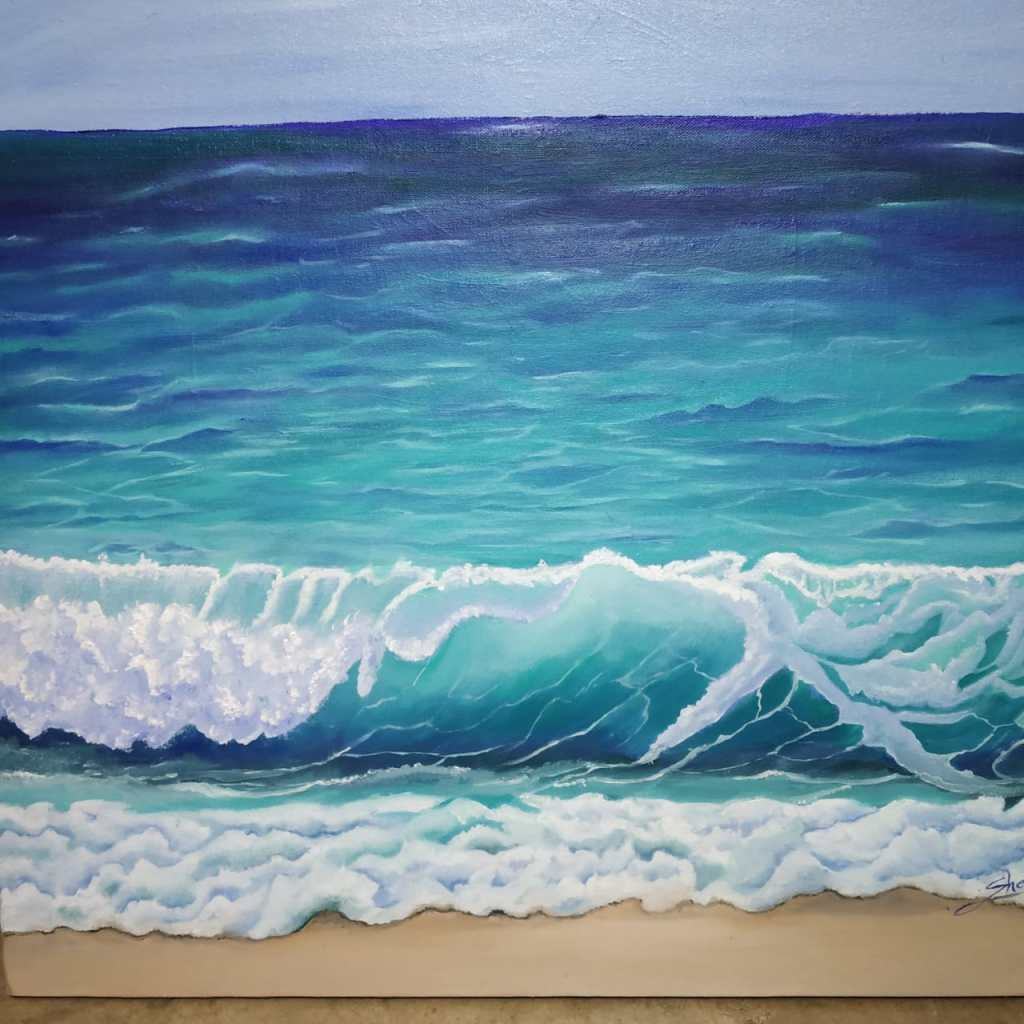
While I don’t watermark my images in the literal sense, I have devised a tactic that serves as a watermark in its own unique way. Since my objective was to watermark my images in my personalized style at the same time serve as a subtle reminder of my copyright and prevent theft, I thought what better option than my signature itself!  So here’s what I do. I just sign my painting strategically and discreetly in such a way that my signature is placed somewhere in the middle of the artwork and not in a corner. This way, my signature serves as my watermark but since it kind of blends into the composition it is difficult to remove without spoiling the image itself. Killing two birds with one stone don’t you think? Here are images of some of my paintings with my signature as my watermark.

Whether you decide to watermark your images or not is totally your choice. Where and what kind of watermark you wish to plaster on your work is also your decision. Just keep in mind that it doesn’t spoil the images but lets people know that you own them.  If you decide not to use watermarks, a copyright notice in the footer can also serve the purpose. More importantly, let your fans enjoy your work.

A Symphony of Light and Ice

Ever seen a flaming halo of colors splashed across the bright blue sky? This extremely rare yet enthralling phenomenon, commonly known as a “Fire Rainbow” is neither myth nor fantasy but a marvel of nature in reality. It is an alluring arch of vibrant colors draped around a select few clouds floating around in the wild blue yonder.

But the term fire rainbow is actually a misnomer, for this luminous crown of colors adorning the pristine white tufts in the sky is not a rainbow at all. It is an optical anomaly, scientifically and more accurately termed as a Circumhorizontal Arc and is formed by the refraction of sunlight (or moonlight) on ice crystals in cirrus and cirrostratus clouds. Simply put, it’s caused by sunlight shining through tiny ice crystals suspended in the atmosphere.

Fire rainbows are formed when the sun rises above 58 degrees in the sky and shines through the right type of cloud at a certain angle lighting up the sky with a riot of colors. When light enters the cloud’s hexagonal ice crystals vertically and leaves them horizontally, the 90 degrees change causes it to separate into the rainbow spectrum. But light needs to come through very specific crystals at a very specific angle, and that’s why this event is pretty rare.

How often a circumhorizontal arc is seen, depends on the location and the latitude of the observer. You’ll never see one at latitude greater than 55 degrees north or south – because at those latitudes, the sun simply isn’t high enough. At other latitudes the solar circumhorizontal arc is visible, for a greater or lesser time, around the summer solstice.

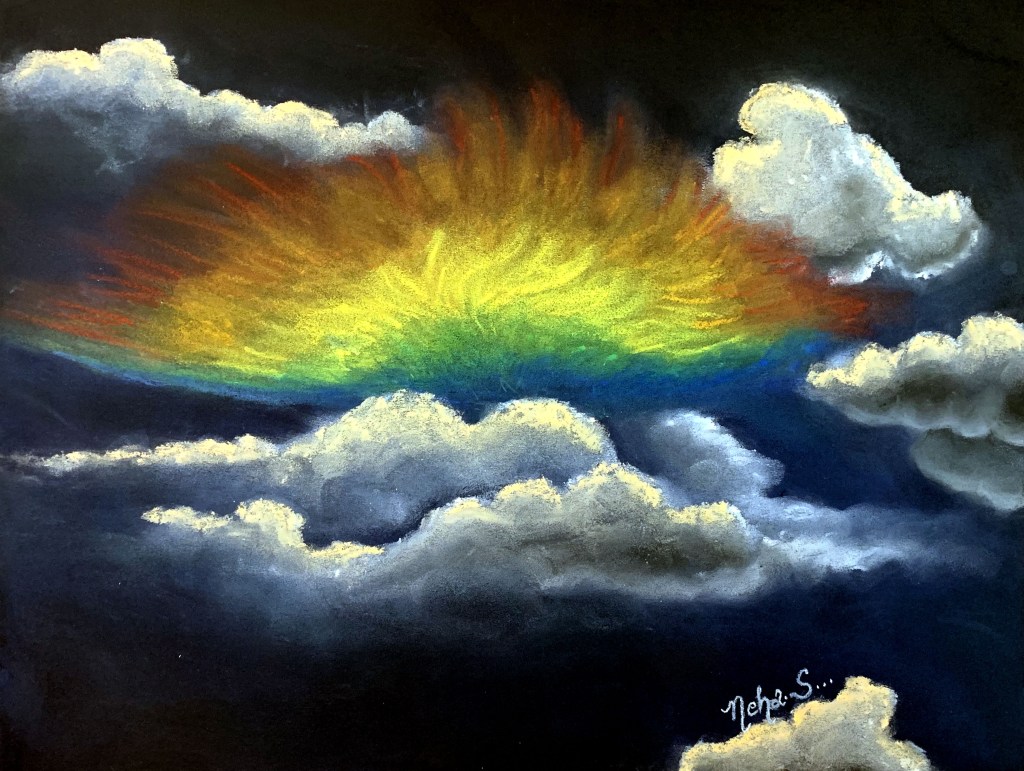
Today’s artwork, titled “A Symphony of Light and Ice” is inspired by this marriage between scientific rarity and artistic sensibility. This is my soft pastel rendering of the extraordinary yet exceptional marvel of nature.  

My soft pastel rendering of a fire rainbow

Humans work so hard to bring beauty into this world. We can pen down epic verses and classic tales, compose melodic symphonies and paint memorable masterpieces, but none of these can ever match the beauty and splendor of the cosmos. Perhaps it’s the rarity of this optical phenomenon that makes it so beautiful. Hope you enjoyed my artwork!

Out of Stock?!

In the current unprecedented times of quarantine and isolation, artists all over the world are practicing art voraciously. People who would have never imagined putting a brush to paper have also taken advantage of lockdown and resorted to artistic endeavors in order to lift their spirits. Art is proving to be the silver lining to the dark, gloomy corona virus cloud. 

But what do you do when you are running out of canvas and paper during the lockdown? How do you replenish them when all but essential shopping has been forbidden? Many of us may be finding ourselves skimming through our dwindling art supplies, frantically hunting for ways and means to keep our art practice going, but little do we realize that what we need to engage with our creativity is probably tucked away somewhere in our home itself. 

I’m sure many of us are sailing in the same boat so here’s a quick guide that can perhaps help replace that rapidly depleting stock of art supplies and keep the creative process going. I have compiled some tips and tricks, mostly conceived by fellow artists who deserve a special mention in this post. Thank you all for your innovative inspirations! So go ahead, browse through, pick your favorite options and innovate!!  

  1. Paints – If you think you are the only ones running out of oil or watercolor paints, join the gang! Don’t sweat….your regular house paints can serve as a good option. But don’t forget to check whether they’re oil or water based before using them.
  2. Drawing material – Take stock of all your pencils, pens, markers, pastels, color pencils and other dry mediums that may be lying around in a state of neglect in your house. Every small bit of charcoal and chalk counts.
  3. Paper and Canvas – If you are anticipating a shortage of drawing and painting surfaces, make do with whatever is available at that time. It doesn’t matter if it’s small pieces of paper, a tiny sketch book or discarded canvases. Expressing your creative instincts is of prime importance.

Here are some options that some of my fellow artists have come up with to nourish and nurture their creative faculties:

  • Unsold or discarded paintings that are nothing but dead stock can be gessoed over and reused to create brand new artworks.
  • Different types of ornately printed paper, gift wrapping paper or even wall paper have great potential for collage and mixed media effects.
  • Newspaper and magazine pages are an awesome replacement for plain old boring paper. The fine print can add an extra element of interest to the subject sketched or painted on top if it complements the theme of the artwork. Picasso used to add his own characters on magazine photos.
  • Don’t get rid of all those grocery bills, corrugated packing sheets, brown paper, crinkled craft sheets, etc. They can prove to be valuable drawing and painting surfaces.
Aditi’s artwork on brown paper
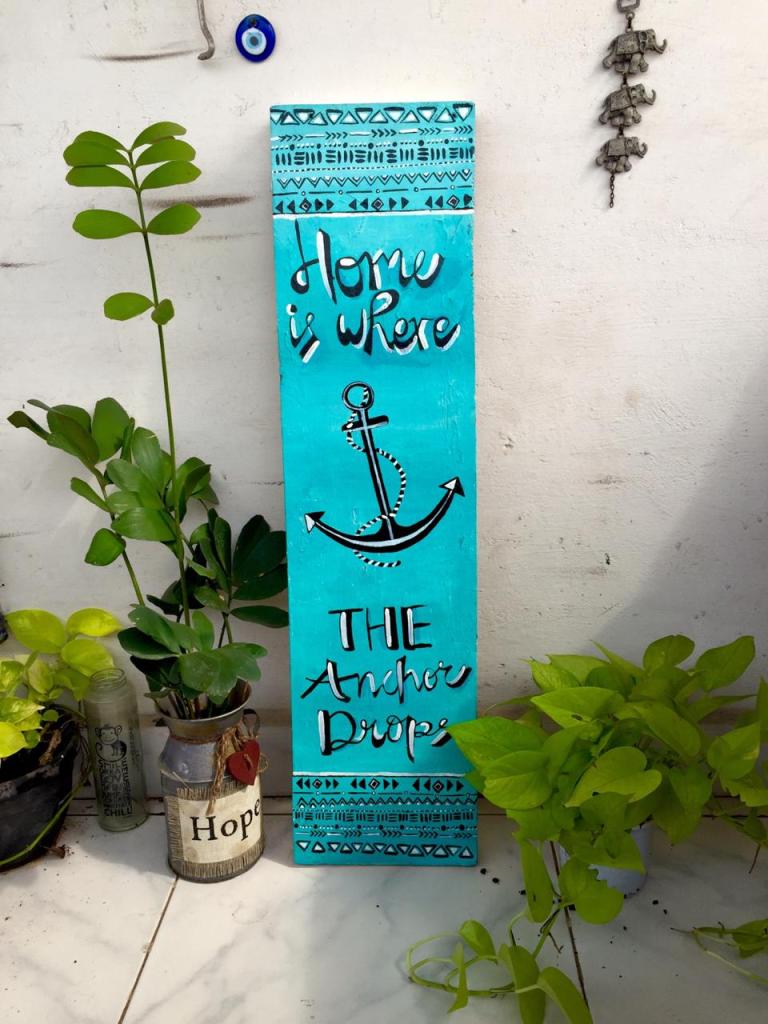
  • Leftover pieces and planks of wood from your carpentry projects for home improvement can serve as a good replacement for canvas.
Swati’s ingenious recycling of a waste plank of wood
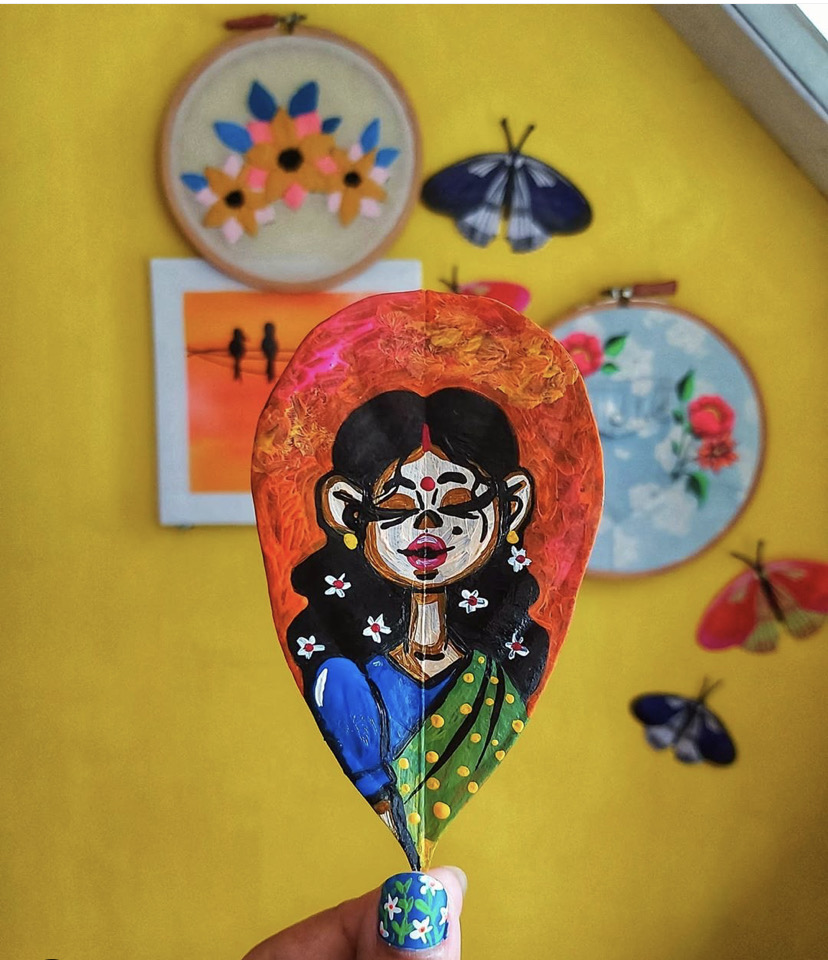
  • Dried leaves when painted on with acrylic paints can be transformed into beautiful works of art.

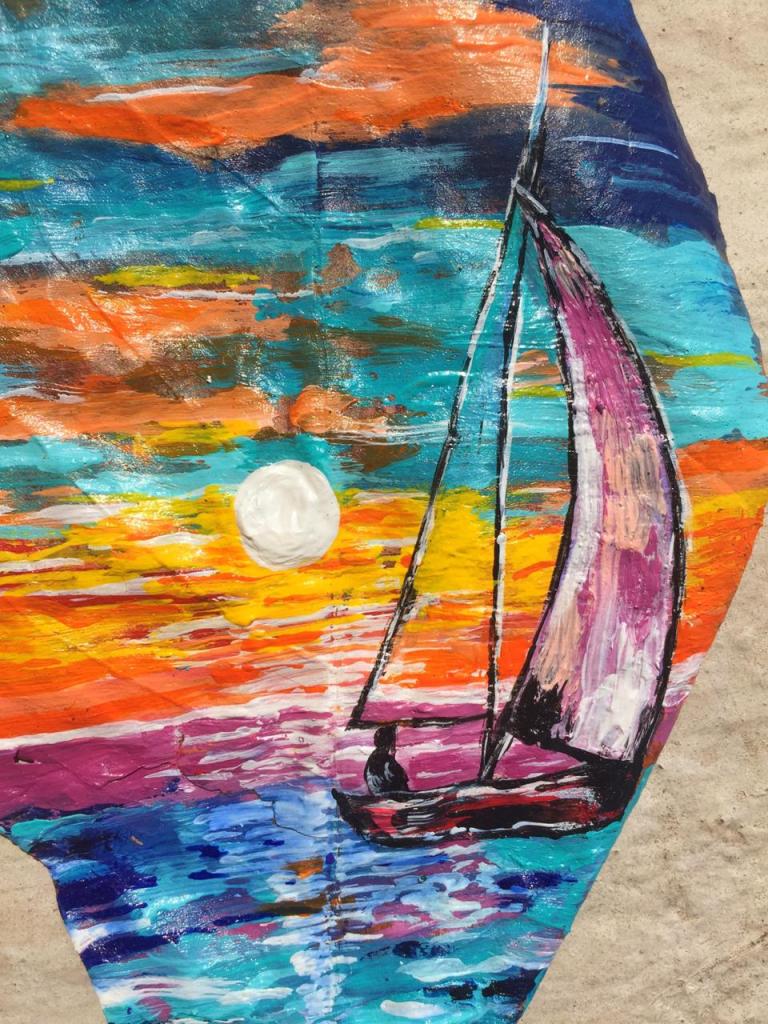
Stones and pebbles can be used as miniature canvases and painted over with acrylic paints or markers.

A word of caution…sometimes the materials you choose may not live up to your expectations and you may not achieve the desired results. Don’t fret too much at this point. It’s all about trial and error. After all, art is an enriching and learning experience and every mistake can become a precursor to a great masterpiece.  All you need to do is work your way around it and try something else. Another upside to using leftover material is that it can help open up new channels of creativity.

The key to innovative progress right now is to carefully consider what you have at the present moment and how it can be put to good use. Now’s the time to tests the limits of your creativity. Who knows? Maybe you’ll come up with something stunning with all those scraps of paper lying around in your house!

Acknowledgements and Credits –

As I had mentioned earlier, several of these ideas are the creative genius of my fellow artists. All the images featured in this post belong to these immensely talented “innovators” and I do not claim any of them as mine in any way. They deserve to be applauded for their resourcefulness and brilliance. I hereby acknowledge their skills and give them full credit for their contributions towards the enrichment of art. Thanks a ton Sheetal, Anannya, Swati and Aditi for your innovative improvisations. Cheers to your ingenuity!

Lockdown Art – Labyrinth

The global COVID-19 pandemic has pushed the pause button for humanity and stopped the world in its tracks. It has brought all of us down on our knees, but as we struggle to cope with it, we are also slowly learning to live with it. Even though all over the world lockdowns and restrictions are being eased out progressively, it doesn’t mean that the virus is gone. Our respective governments may have granted us some relaxations, but COVID-19 hasn’t. This is a long-drawn battle and we should continue to be on the vigil and fight on till we defeat the enemy and emerge victorious.

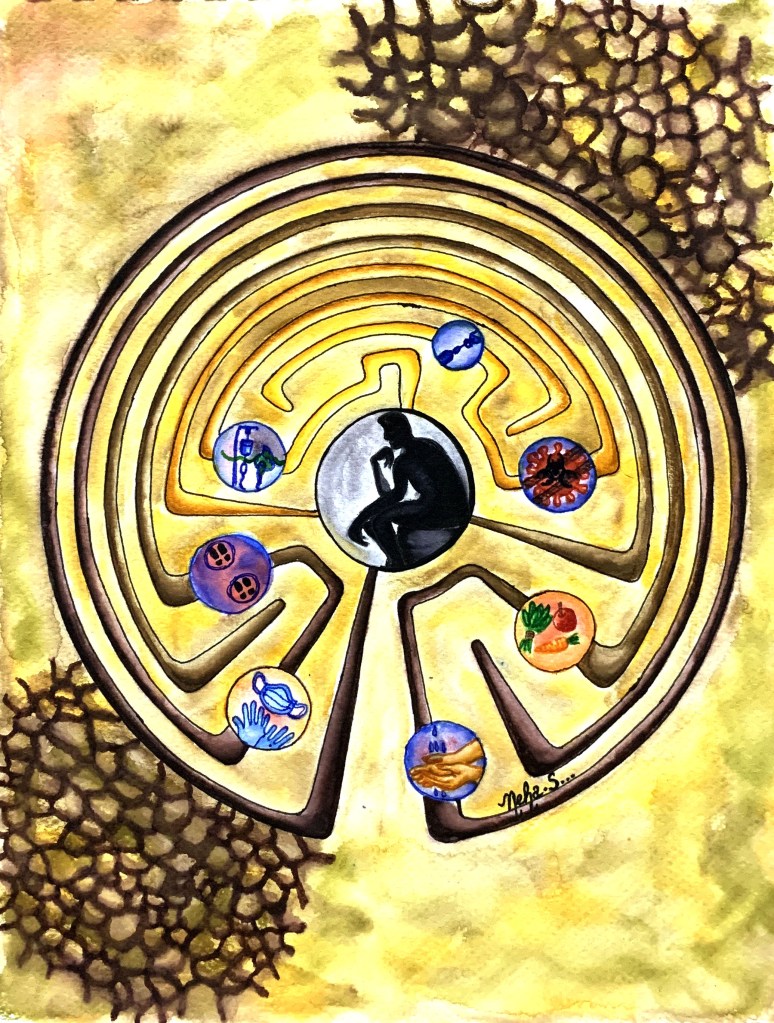
Today I present to you “Labyrinth,” the last artwork of my Corona Series, as we embrace the “new world order” of a dangerous world in the midst of a perilous virus. This one is inspired by the most brilliant yet dangerous military formation in Indian mythology, the mythical “Chakravyuha.”

Labyrinth

To give a brief account of the Chakravyuha, it is a multi-tiered defensive formation chronicled in the Hindu epic, Mahabharata. It is believed that it was a seven-layered circular maze where each of the layers is rotating in the same or opposite direction, with strategically placed weak and strong soldiers. The warriors at each interleaving position would be in an increasingly tough position to fight.  Each of the layers are presented with possible openings which are closely guarded by one of the main highly ranked warriors and his personal troops.

It is this brutal form of assault that I have adapted in my artwork as an attempt to depict all the strategies and tactics that are being implemented by us in order to keep the virus at bay. The Chakravyuha was not just an allegory or a physical labyrinthine disc, but a representation of a ferocious form of defense. This ring formation could hover across the battlefield and consume opponent soldiers from within, like a tornado or typhoon moving unhindered and destroying everything in its path.

Just like the Chakravyuha rotates on its axis as well as revolves in its trajectory, thus making it a great defensive as well as offensive mechanism, we too have devised a labyrinth of preventive and counter attacking measures that can be as impenetrable as the deadly Chakravyuha itself if implemented effectively. Each layer of this maze is our defense against the virus and their potency keeps becoming stronger as you move inwards. The innermost layer represents our ultimate defense against the virus – a vaccine. Even though we are still working on this aspect, I am sure the day is not far away when we will succeed in completing this layer of defense.

I have depicted the other six layers as our current lines of defense, namely, personal hygiene measures like washing hands, sanitization, etc., personal protective gear like gloves and masks, healthy eating to build up immunity, social distancing, quarantine/isolation and medical treatment for the infected. Together all these layers need to be set into motion, in unison, moving continuously across the COVID-19 warzone.

This spinning spiral of death can also be put into action as an offensive tactic to attack the seemingly invincible Corona virus from all sides. If we manage to enforce and carry out this plan incessantly, we stand a chance at defeating the fatal virus and ending the pandemic. All it requires is a collective effort from one and all so let us all stand together, for all of us are soldiers in this global war.

Lockdown Art – Light at the End of the Tunnel

“Sometimes life seems a dark tunnel with no light at the end, but if you just keep moving forward, you will end up in a better place.”

In the current COVID-ridden times, we seem to be stuck in an endless tunnel of lockdowns and curfews. Just when we think the exit is around the corner, it seems to stretch on further at the very next turn. That’s exactly what’s happening presently, what with lockdowns being extended incessantly across the world.

The worldwide lockdown has changed our lives drastically, engulfing us in the darkness of uncertainty as we remain restricted within our four walled fortresses.  People all over the world are experiencing this darkness in varying forms, be it curfew, lockdown, isolation or quarantine.

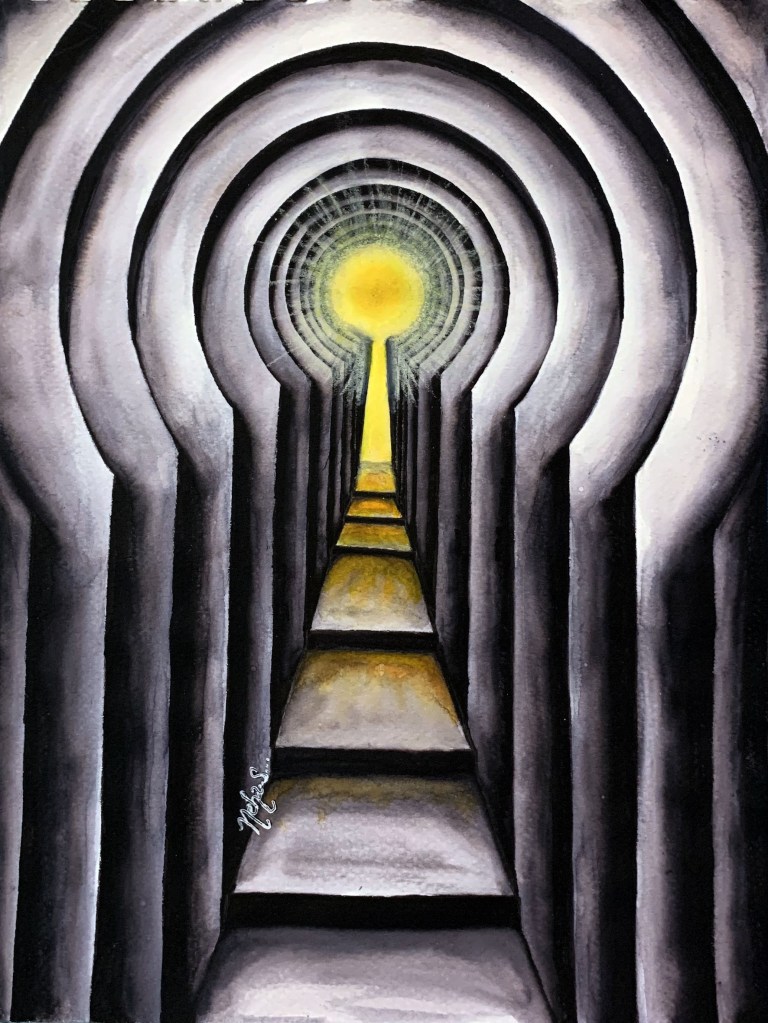
This Global Lockdown is what I bring to you as an artwork in today’s blog entry, which is inspired by and named after the very phrase – “Light at the End of the Tunnel.” Another rendering in watercolor, it is a symbolic representation of the multiple lockdowns that our world is being subjected to in order to slow down the pandemic. I have used the contour of a keyhole to depict the dark cavernous tunnel of confinement. Each keyhole silhouette represents a lockdown phase and together all the contours collectively form the tunnel that we seem to be traversing through.

Light at the End of the Tunnel

I have used the technique of perspective to illustrate the three dimensional view of a tunnel onto the two dimensional surface of a paper with an attempt to make it as natural and realistic as possible, at the same time creating an illusion of space and depth. The innermost keyhole signifies what lies beyond the tunnel – the light of hope. It’s this light that we need to see beyond the darkness of the seemingly never ending lockdowns, but to do so we have to travel all the way through the dark abyss with the faith that what lies at the end of the tunnel is the much needed relief of the confinements being eased.  This light gives us hope that the end is just around the corner.

The tunnel in my artwork symbolizes our journey through these dark times, which seems as gloomy as the path itself. We find ourselves entrapped in the darkness of this murky cavern unable to navigate our way ahead through the sufferings we encounter on the way. The only way to beat this darkness and get through to the other side is to divert our thoughts towards the light of positivity, thereby asserting our faith in the fact that respite in close at hand. We need to channelize and transform the gloom into our strength and illuminate our resilience to go through with the sojourn. To find the light at the end of the tunnel, advance through the darkness knowing that nothing lasts forever and this too shall pass. 

The light in my artwork also represents the hope-filled signs that this crisis will end soon. These signs include efforts of the likes of social-distancing, testing, contact tracing, isolation and quarantine which at least for now are helping us in controlling the spread, until effective treatments and vaccines can help us put the virus back in it’s box. I opted for a monochromatic grayscale color palette to render the contours of the tunnel as it represents how we view the world during the lockdown – in black and white.

In this global crisis of uncertainty and unpredictability, everything depends on the effectiveness of containment measures which can only attain their full potential when followed stringently. So let us all kindle the spark of positivity and help it guide us through to the end of the tunnel where the light awaits us. For –

There is a light at the end of the tunnel, but the way out is through.” — David Allen

Lockdown Art – Battle Scars

As COVID-19 continues to march across the globe making every man, woman and child it comes across its prisoner, our gallant soldiers in white fight on relentlessly. Doctors, paramedics, nurses and health care workers all over the world stand their ground like a shield between us and the deadly virus. They form our front line defense in the battle against this silent and invisible enemy.  

Here’s another watercolor tribute to the tireless service being rendered by these courageous warriors, who have been selflessly caring for others day and night without giving a thought to their own safety and well-being. This artwork, like an earlier one of mine titled “Gods in White Capes”, is once again a salute to their grit and determination. Their dedication towards their duty and their conviction to save each and every life they are entrusted with are not just praise worthy but also inspiring.

Battle Scars

Words cannot do justice to the rigorous toil and sweat of our medics but it becomes evidently visible when they step out of their protective armor which conceals tales of their valor. Their undiluted courage can be seen in the impressions on their faces that have been left behind by the masks they are forced to wear round the clock. It is these marks of courage that I have highlighted in my rendition of our real life superheroes. These tell-tale marks are also witness to their noble service and are a constant reminder of the hardships they are willingly putting themselves through to safeguard the ailing and heal them back to health.

 These men and women knowingly choose to put their own lives in jeopardy to save lives that are on the line.  At times like these, when your own survival is at risk, it is difficult to think about others but these are the people who make it look easy. We are all indebted to these soldiers who choose to serve humanity over being with their near and dear ones.  Let us all remember their “Battle Scars” even after they fade away. Let them remind us to forever be grateful to these saviors for rising up to the challenge in these unprecedented times.  

Lockdown Art – Tame the Curve

In today’s Covid-19 ridden world, the phrase “flattening the curve” is not just a figure of speech used to represent statistical data, but also one of the strategies we have adopted with the hope of containing the pandemic until a vaccine or effective treatment comes into existence.  It is our desperate attempt to delay the spread of the infection and keep our health care services within their operational capacity. That’s why countries all over the world are tirelessly working to flatten the curve.

I don’t think I need to go into the mathematical aspect of the phrase as I am sure most of us are well versed with it by now. So in a nutshell, flattening the curve implies reducing the number of new COVID-19 cases with time. This can take the load off our healthcare system to some extent and prevent it from becoming overwhelmed. When a country has lesser new COVID-19 cases appearing with every passing day, it’s a sign that the country is flattening the curve.

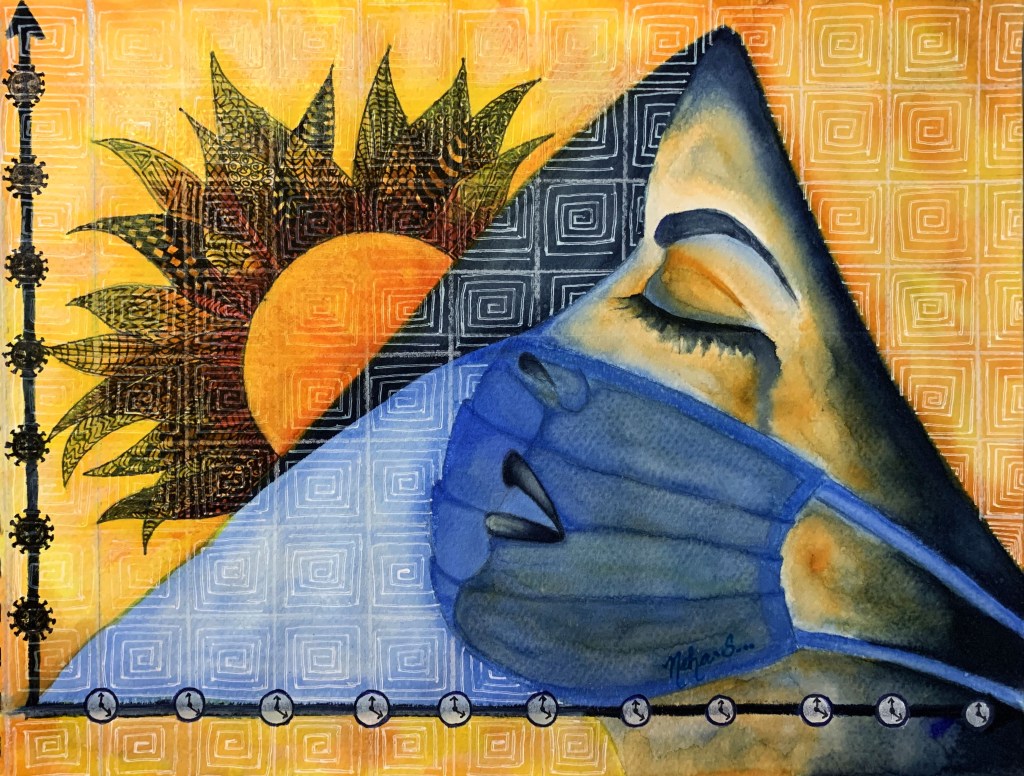
It is this metaphor and its pictorial representation that inspired me to create this week’s artwork once again through my new found love for watercolors. I know it’s an extremely abstract depiction so bear with me if it doesn’t come across to you at first glance!

My artwork – Tame the Curve

I have attempted to illustrate the COVID-19 trajectory on a conventional graph with its two slopes, the steeper one signifying the exponential rise in cases against time and a flatter one which represents what we are aiming at in order to sustain our health care systems. The face within the steeper curve symbolizes the suffering humanity has to endure if we do not contain the spread of the contagion. The mask within the flatter slope embodies all the measures we need to take to counter the infection and ensure that we limit its spread within the confines that can be handled by our health care systems and also succeed in flattening the curve.

The background of the artwork is also an abstract representation of a graph sheet that is used to plot a graph. I have used the technique of pattern doodling to create this backdrop. Now you all must be itching to know what’s the role of the sun that I have depicted here? Well this symbolizes the hope that we will beat this darkness and there is light at the end of the tunnel. Once again, I have rendered the sun using watercolors and further enhanced it through doodling.

This artwork is my personal expression of our need to do everything in our power to check the escalation of this deadly sickness.  This modern day plague is like a wild predator that has been unleashed on us and is devouring our health and well being. The only way we can ensure our survival is if we can restrain this beast, terminate it and send it to its grave, before it does the same to the entire human species. It’s almost as if we need to “tame” this monster, hence the title of my artwork – Tame the Curve.  So let’s all flatten the curve and save lives.

Lockdown Art – One World

A deadly contagion has declared war on our world, afflicting us with illness and fatality. Every corner of the planet feels like a warzone as we make desperate attempts to combat the Corona virus with lockdowns, quarantine and isolation. As social distancing and staying home become the norm, we are slowly learning to acknowledge the importance of these actions in keeping us alive and kicking. 

In the face of this global health crisis we are seeing endless human suffering which is changing people’s lives for the worse. Mankind is traumatized and our social fabric is torn. People are worried and scared. We need to counter this atmosphere of fear and panic by recognizing and accepting the fact that we have only each other to ensure our survival. This is not the time to indulge in skin-deep, color based prejudices and fanaticism but to unite against our common faceless enemy. This human crisis calls for global solidarity and unification.

It is this thought that has inspired me to create a watercolor rendition that I call “One World.” Through this artwork I wish to convey that we are all in the same troubled waters so all the nations of the world need to come together and unify their forces as well as resources in order to successfully tackle COVID-19. I have attempted to express this by depicting all the nations as one single cityscape under the same skyline.

One World

Even though each country is trying its level best to address this worldwide epidemic in its own way, it is too complex a predicament to be handled individually. This demands combined action from the world leaders not just to help their own country but also look out for the less developed and more vulnerable ones. Universal coordination and cooperation are the need of the hour.

COVID-19 is the Trojan horse that has insidiously infiltrated the human operating system and is slowly shutting it down. The only antidotes we have against it come in the form of lockdown, quarantine, isolation and precautionary measures of the likes of social distancing, washing hands and wearing of masks. These countermeasures are being adopted globally hence I have highlighted some of them in my artwork.  As of now this is the only “antivirus” we have against the infection.

If our nations become more integrated in this battle full of uncertainties, the human race stands a chance of pulling through this dark time. So let us all come together in our fight against Corona virus even though we are miles apart. In these difficult times, Bob Marley’s legendary lyrics from “One Love” sound just right so signing off for now with a few lines from the song –

One love
One heart
Let’s get together and feel alright

One love
One heart
Give thanks and praise to the Lord and I will feel alright
Let’s get together and feel alright

Let’s get together to fight this Holy Armageddon (one love)
So when the Man come, there will be no no doom (one song)
Have pity on those whose chances grows thinner
There ain’t no hiding place from the Father of creation (sayin’)