Mind Mapping for Art

Featured

Having trouble organizing your artistic thoughts and ideas? Have your creative musings become a tangled mess? Want to harmonize your aesthetic reflections and transform them into your artistic expressions?  

Artist and inventor, Leonardo da Vinci, said, “Everything is connected to everything else.”

Most artists commence their creative process by brainstorming possible concepts or themes for their artworks. Sometimes ideas pop up inside our heads one after the other so rapidly, that it becomes almost impossible to keep track or to retain them in our memories. At times like these, when our thoughts are in a clutter, we need to document them in a systematic and organized manner so that we can see clearly through the chaos.

When our multi-dimensional thinking triggers a tsunami of ideas and listing these down in a sequence becomes a daunting task, a Mind Map can help by rounding up, organizing and recording them graphically as well as visually. 

What is a mind map?

Mind map creator Tony Buzan coined the term ‘mind map’ to refer to a diagram that has a branch or root-like structure radiating from a central image on the page, and which uses lines and colour to show relationships, groupings and connections between words, ideas and images. A mind map helps one to think out of box by ensuring that a wide range of possibilities are considered, thereby bringing clarity of thought.

mind map is nothing but a graphic organizer that uses a diagram to visually organize ideas and concepts. The main idea or concept is placed in the center of the diagram, and then related ideas are added to it in a radial fashion.   It is a visual thinking tool that structures information, helping you to better analyze, comprehend, synthesize, recall and generate new ideas. Just as in every great idea, its power lies in its simplicity.

How to make a mind map

Tony Buzan has set official guidelines for drawing a mind map on the ThinkBuzan website. These include:

  • Using a landscape format.
  • Starting with a central image in the middle of your page to represent your main concept or theme.
  • Using curving lines to add branches to the centre that represent secondary ideas with respect to the main concept and then connecting these to smaller branches representing topics describing and extending these ideas in detail; use single words and images.
  • Adding colours doodles and symbols for aesthetic and organizational purposes as well as making the mind map more effective.
  • Using short topic and sub topic headings. A single word or better yet, a picture or image will work best.
  • Varying text size, color and alignment. Vary the thickness and length of the lines to provide as many visual cues as you can to emphasize important points. Every little bit helps in engaging your brain and unlocking its creative potential.

A mind map can have different formats such as a tree diagram, spider diagram – or even just a flurry of thoughts on paper, as long as it displays the possibilities for a central concept.

Some Creative Mind Map Ideas

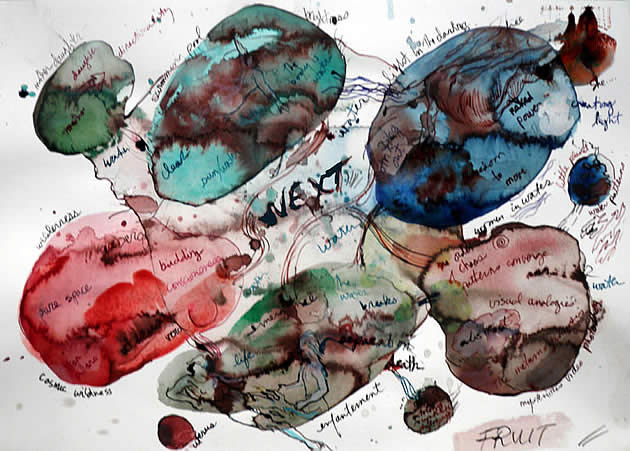
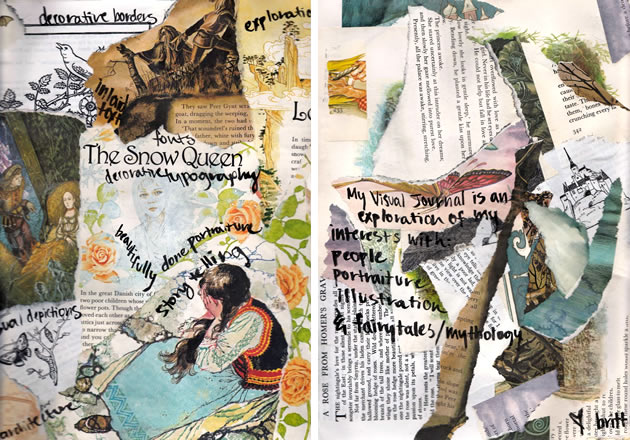
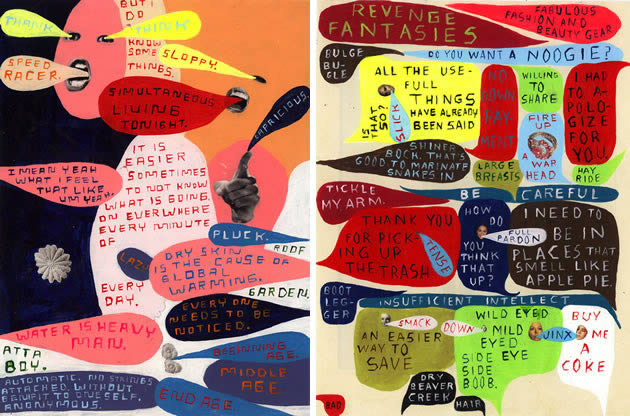
Here are some interesting and innovative minds maps created by artists(click on thumbnails to view full image) :

Advantages of Mind Mapping

Mind mapping increases creativity and productivity by helping you come up with more unique ideas in lesser time and also improves your brain’s cognitive powers. It opens your mind while brainstorming and gets rid of hurdles posed by linear thinking. It’s a great way to sort out and link up the ideas you have brainstormed on a single page as all the data is visually available at a glance. It can even lead to the triumphant discovery of relationships between seemingly unrelated topics.

Disadvantages of Mind Mapping

Inspite of all the benefits, mind mapping has some disadvantages too. If you are a left brained or logical person, radial thinking is predominant. While brainstorming you need to be intuitive so as to allow ideas to flow freely. This is tough as logic tells them it’s not possible. Moreover, mind maps can become too complicated if not structured well, making them difficult to understand. Another setback with a mind map is that in order to comprehend it completely, active participation is required as it involves a step by step process while structuring it so it might be a little difficult for people who did not go through the process themselves to make sense of the mind map. But the good news is all these problems can be fixed!

Mind mapping is such an extensive concept that this post just about covers the tip of the iceberg. I personally find the entire idea of mind mapping extremely intriguing and would love to give it a shot for my future artworks. Hope you all are also inspired to try it out as well!

DISCLAIMER – All the information, data and imagery in this blog post is for informational and educational purpose only. While there may be copyrighted material the use of which has not always been specifically authorized by the copyright owner, I have only made it available with the sole effort to stimulate creative progress and artistic enrichment. Some images may have been taken from the links included below and I give full credit to these websites/pages, thereby in no way claiming them to be my own. I have also used these links for reference purposes and collection of data; therefore I give full credit to the respective web pages. Most of the data in this post is based on my personal experiences and opinions and I am not responsible for any material that is found in the links at the end of this post.

Sources and Photo Credits –

https://www.studentartguide.com/articles/how-to-make-a-mindmap-creative-ideas

https://litemind.com/what-is-mind-mapping/

Let’s get Digital!

Featured

The 21st century is the age of digital advancement where technology has completely revolutionalized the world. This digital revolution has also penetrated the world of art and transformed the way artists think, create and innovate. The art world is no longer confined within the four walls of galleries and museums, but is chartering new territories of its own into the cyber world. Digital technology has not just opened up new avenues for artists, it has also changed the entire outlook towards art. The impact of digital technology has greatly altered activities such as painting, drawing and even sculpture. From digital painting, to illustration and even photography, it has affected how art is created as well as presented.

But what is digital art?  It is the practice of creating works of art that are computer generated, scanned or drawn using a tablet or mouse. This includes digitally manipulated videos as well as photographs.

Digital illustration or computer illustration is the use of digital tools to produce images, usually through a pointing device such as a mouse. A mouse may not be very precise for drawing, so a graphics tablet is a better tool for a digital illustrator, because it allows the user to make marks that look more like the natural lines made by the human hand. Moreover, the pressure-sensitive surface, allows for faint to bold and thin to broad marks. These variations mimic traditional wet and dry media.

There are two main types of tools used for digital illustration: bitmapped (or “raster”) and vector applications. Bitmap applications are commonly called “painting” programs, such as Adobe Photoshop, while vector applications like Adobe Illustrator are called “drawing” programs.

Digital painting is an art form in which traditional painting techniques such as watercolor, oils, impasto, etc. are applied using digital tools (software) on a computer or a graphics tablet using a mouse or stylus respectively. All digital painting programs have digital brushes for traditional styles like oils, acrylics, pastels, charcoal, pen and even airbrushing.

Digital painting software such as Corel Painter, Adobe Photoshop, ArtRage, GIMP, Krita and OpenCanvas give artists a similar environment to a physical painter – a canvas, painting tools, mixing palettes, and a multitude of color options. There are various types of digital painting, including impressionism, realism, and watercolor.

Advantages of Digital Art

  • More efficient – Easier to get started and work quickly.
  • More forgiving – Nothing is permanent when you have the undo button.
  • More exploration – Unlimited experimental possibilities.
  • Easier duplication – Ideal for working with clients.
  • Equipment/Materials – Ease of working in an organized, mess-free environment
  • Instant Sharability – Because digital art is already stored on a digital device, it is easier for artists to share their work in its highest form either on websites or through social media instantly.

There are some drawbacks also of digital painting. Some argue there will always be more control for an artist holding a physical brush in their hand. Others believe the character that is unique to physically made art is missing from digital painting.

Here are some of the best drawing apps:

  • Adobe Illustrator Draw.
  • Adobe Photoshop Sketch.
  • ArtFlow.
  • MediBang Paint.
  • Infinite Painter.
  • Autodesk SketchBook.
  • PaperColor.
  • DotPict.
  • Procreate.

The world of digital art is like a virtual simulation of the real art world. Digital art has changed not just how artists can express their creativity, but also how the audiences experience art. It is ever changing so is still in its nascent stage, but with time it will surely grow and mature into a fully developed art form. The day is not far away when the seemingly unorganized and random digital art world paves a definitive path for itself. The future holds the defining moments for digital art.

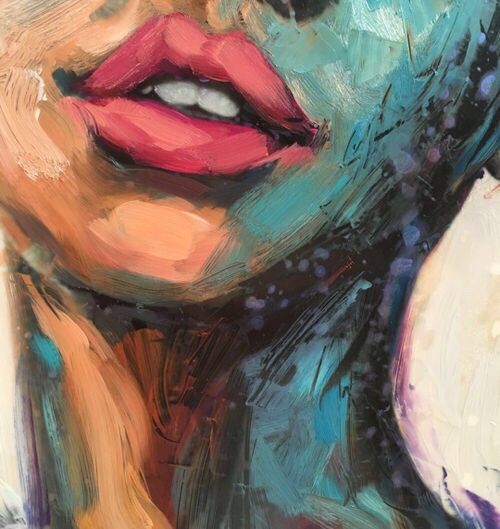
Here are a couple of my own explorations with digital art. Still getting a hang of it but I am loving it!!

Art for Art’s Sake

Featured

Heard of the phrase “Art for Art’s Sake?” It is a simple expression for the philosophy that “true” art is divorced from any didactic, moral, or utilitarian function. The basic idea is that art is by definition aesthetical and thus can have no other purpose. In addition, art’s role is not to educate or to enlighten someone. It exists just for itself.

Oscar Wilde is considered the father of aesthetics. The phrase l’art pour l’art (“art for art’s sake”) was coined by the philosopher Victor Cousin, in 1818. According to him and several other philosophers of the century, social and political themes are irrelevant and should not be used in art making unless they render the final product “beautiful”.

This approach to art was elucidated in the 19th century by the Aesthetic Movement that promoted pure beauty and aesthetic values by accentuating visual and sensual qualities of art rather than practical, socio-political, moral or narrative considerations. So art from this movement didn’t give emphasis to deeper meaning.

History and Origin

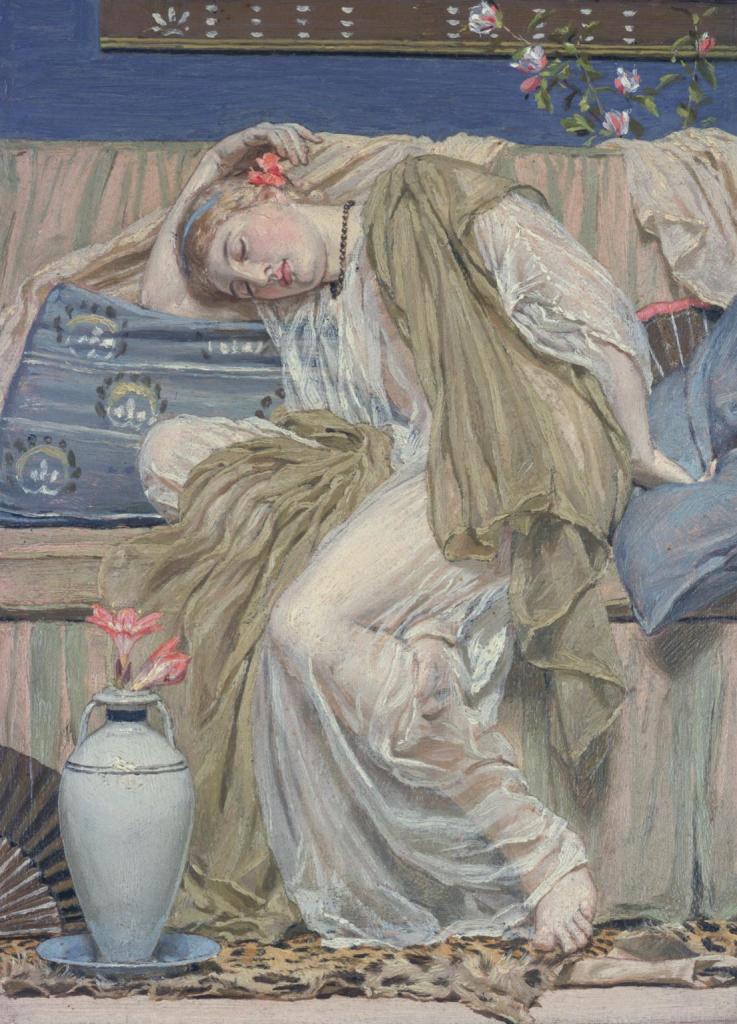
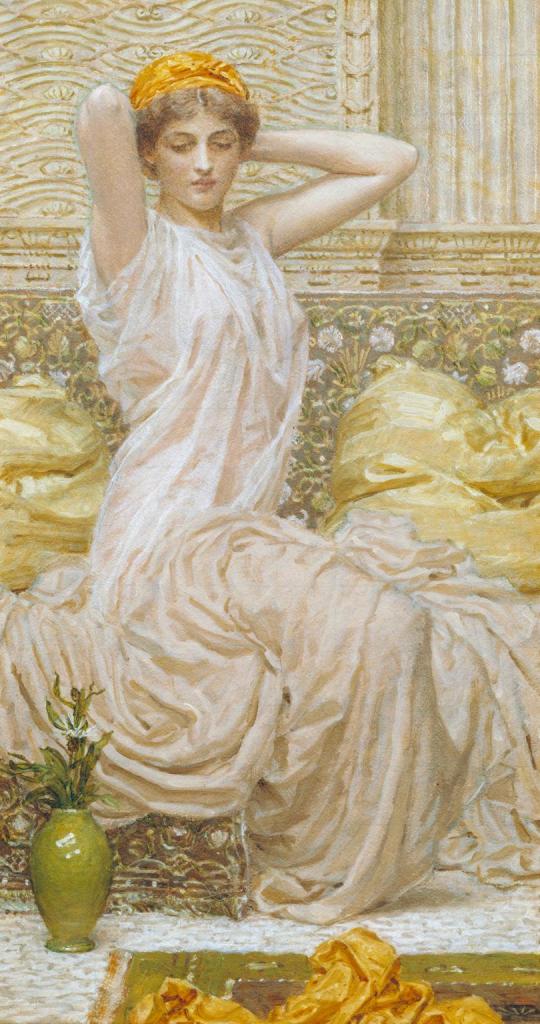
The aesthetic movement flourished in Britain in the 1870s and 1880s. In painting it was exemplified by J.M. WhistlerAlbert Moore and certain works by Frederic, Lord Leighton. Japanese art and culture was an important influence, especially on Whistler and aesthetic design. Aestheticism shared certain affinities with the French Symbolist movement, fostered the Arts and Crafts Movement, and sponsored Art Nouveau. From 1875 the ideals of aestheticism were commercialized by the Liberty store in London, which later also popularized Art Nouveau.

The movement began in reaction to prevailing utilitarian social philosophies and to what was perceived as the ugliness and philistinism of the industrial age. In England, the artists of the Pre-Raphaelite Brotherhood, from 1848, had sown the seeds of Aestheticism, and the work of Dante Gabriel Rossetti, Edward Burne-Jones, and Algernon Charles Swinburne exhibited it and expressed a yearning for ideal beauty through conscious medievalism. The painter James McNeill Whistler raised the movement’s ideal of the cultivation of refined sensibility to perhaps its highest point.

The roots of Aestheticism can be traced back to the 1860’s; however, it was not until the 1880’s that the movement gained noticeable popularity. The Aesthetic movement is often associated with the French term fin de siècle,” or the “end of the century,” which refers to the closing of an existing era and implies the beginning of a new one. It is often used to describe late 19th century Britain, a time when the ideals of the Victorian Age were losing precedence and being replaced by Aesthetic values. The Aesthetic movement denounced the sober morality and middle-class values that characterized the Victorian Age and embraced beauty as the chief pursuit of both art and life.

The Aesthetic Movement provided a challenge to the Victorian public when it declared that art was divorced from any moral or narrative content. In an era when art was supposed to tell a story, the idea that a simple expression of mood or something merely beautiful to look at could be considered a work of art was radical. In its assertion that a work of art can be divorced from narrative, the ideas of the Aesthetic Movement paved the road towards Modern Art. The movement is often considered to have ended with Oscar Wilde’s trials, which began in 1895.

Modern Day Aestheticism

Although aestheticism emerged more than 150 years ago, it’s still active today and very powerful too. Every time an art movement rejects pure aesthetical approach towards art, supporters of aestheticism raise their voices, questioning the quality of such art. So, aestheticism is not some art movement that existed in history and disappeared into oblivion – it’s still alive.

There are no specific names from the world of contemporary art today that would fit into the genre of aestheticism because artists usually tend to distance themselves from this movement. Apparently majority of contemporary artists reject basic principles and ideas of aestheticism.

Still, the movement is quite vivid, particularly its intellectual side. If we take a look at the contemporary art scene, we will see that the vast majority of pieces that are popular could not be labeled as products of aestheticism. In my personal opinion there are enough artists who create art with the sole purpose of making something beautiful without any deeper meaning behind it. Here are a few of my favorite art pieces which I feel fit the bill of aesthetic art. I hope you all will appreciate them for their sheer beauty as much as I do!

DISCLAIMER – All the information, data and imagery in this blog post is for informational and educational purpose only. While there may be copyrighted material the use of which has not always been specifically authorized by the copyright owner, I have only made it available with the sole effort to stimulate creative progress and artistic enrichment. Some images may have been taken from the links included below and I give full credit to these websites/pages, thereby in no way claiming them to be my own. I have also used these links for reference purposes and collection of data; therefore I give full credit to the respective web pages. Most of the data in this post is based on my personal experiences and opinions and I am not responsible for any material that is found in the links at the end of this post.

Sources and Photo Credits –

https://www.tate.org.uk/art/art-terms/a/aesthetic-movement

https://www.britannica.com/art/Aestheticism

https://www.khanacademy.org/humanities/becoming-modern/victorian-art-architecture/pre-raphaelites/a/the-aesthetic-movement

https://www.widewalls.ch/magazine/abstract-illusionism

Pros and Cons of Watermarks

Featured

Posting artworks online is an economical as well as appealing way for artists to spread their art far and wide. But is it safe? By putting it out there, are you not offering it to anyone and everyone to claim as their own? There have been umpteen stories about artists’ works being copied or claimed by others as their own. Copyright infringement is a reality.

But the big question is do they still own the copyright to the images once they have posted them online? The answer is yes. You own the copyright to your work as soon as you have created it. So what can you do to protect your copyright? Should you post thumbnail images only? Should you paste watermarks over them so nobody can reproduce or copy your work? Or should you attach copyright notices with each and every image? Today’s post is my attempt to answer all these questions and many more, but be warned, these are my personal inputs so if in doubt, seek legal advice.

To Watermark or Not?

Adding a small watermark to your images is a good way of sending the message that they are not up for grabs. It reminds people of the fact that they cannot use your images without your permission. When they come across your work on the internet, a watermark will point out the fact that it is not theirs. On the flipside, a watermark can have its cons too. If it’s too big or overpowering, it can ruin your work of art or at the least distract from it. So tread with caution.

What should a Watermark look like?  

A watermark can be your company’s name, your personal name, or your logo. It should be as subtle as possible. A good watermark is one that doesn’t distract from your image. If it is too big, it will cover your artwork and your friends and patrons will not be able to see it. Standard practice is to keep it fairly small, place it in the bottom right corner and keep the opacity at 50% or less.  That way it is semi transparent yet visible and doesn’t distract from the image.

What should be the Size of your Images?

It is generally recommended to post small images online to prevent theft as these will become blurred when enlarged hence making it impossible to copy or reproduce. However, too small an image will not do justice to your work. At the same time, large image files also slow down your website. So the best option is to optimize your file as well as image size.

Do Watermarks really protect?

A simple watermark placed in a corner can easily be cropped out of your image by thieves so it is not a good enough protection against piracy. However, a full image watermark, the kind that stock photography companies use to protect images can serve as protection as it subtly covers the entire image and cannot be removed without wrecking the picture itself. But this comes with a cost as it takes away from your image.

My Watermark

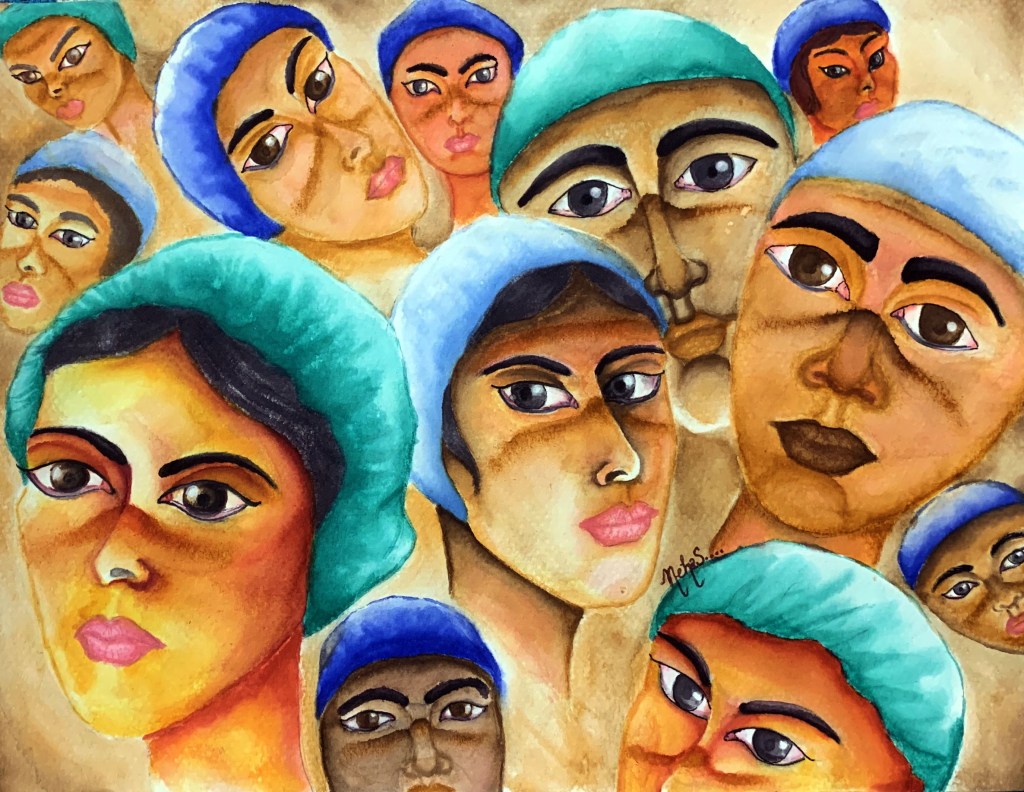
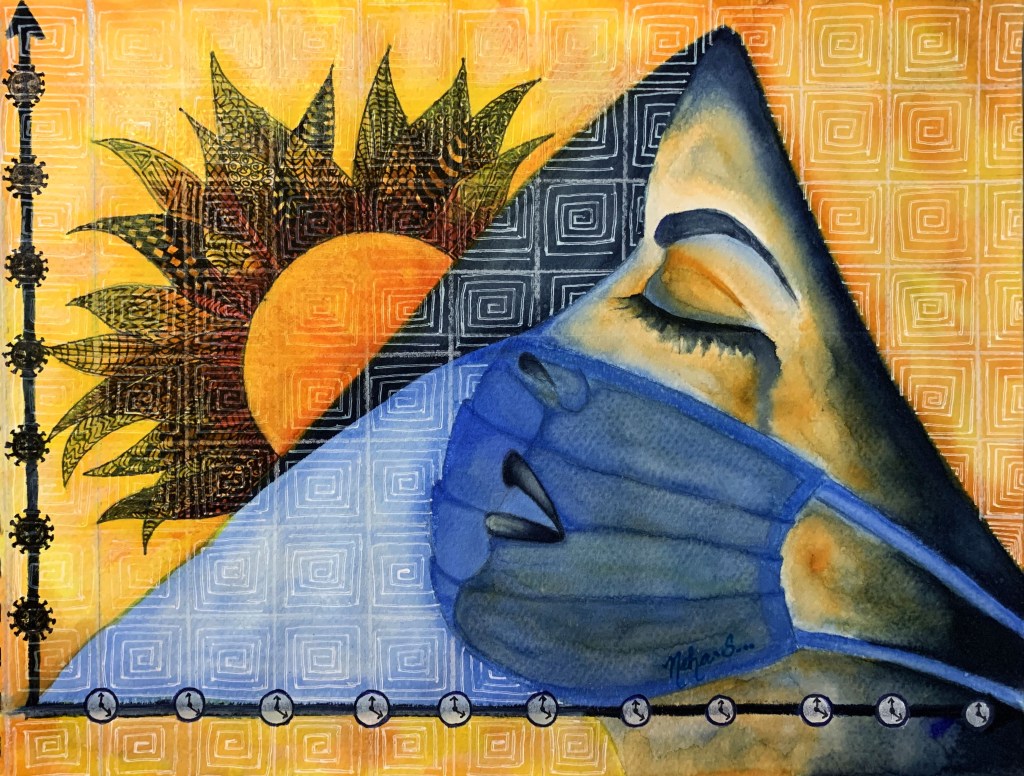
While I don’t watermark my images in the literal sense, I have devised a tactic that serves as a watermark in its own unique way. Since my objective was to watermark my images in my personalized style at the same time serve as a subtle reminder of my copyright and prevent theft, I thought what better option than my signature itself!  So here’s what I do. I just sign my painting strategically and discreetly in such a way that my signature is placed somewhere in the middle of the artwork and not in a corner. This way, my signature serves as my watermark but since it kind of blends into the composition it is difficult to remove without spoiling the image itself. Killing two birds with one stone don’t you think? Here are images of some of my paintings with my signature as my watermark.

Whether you decide to watermark your images or not is totally your choice. Where and what kind of watermark you wish to plaster on your work is also your decision. Just keep in mind that it doesn’t spoil the images but lets people know that you own them.  If you decide not to use watermarks, a copyright notice in the footer can also serve the purpose. More importantly, let your fans enjoy your work.