“Shringar” – The Rasa of Beauty

In my previous post, I had introduced the concept of emotions, in particular the Navrasas, or the nine emotions in the performing as well as fine arts. I had discussed in great detail how these rasas are depicted aesthetically through art as well. I had also provided a brief synopsis of how I have attempted to interpret them in my own artworks, with the promise that I would elaborate on each one of them in upcoming posts. 

So here I am, to fulfill my promise with the first Rasa – “Shringar.”

The word Shringara in Sanskrit means love, romance, decoration and beauty, attractive and aesthetic sense. Shringar can give rise to all kinds of love, be it romantic love, the love between siblings or the affection towards a pet. Devotional love and parental love are also forms of this rasa.

Songs about the childhood of Krishna and Rama tell us that little Krishna was playful and sometimes naughty, whereas Rama was more serious. By seeing Krishna and Rama as children, we think of God every time we see a child, and that increases our devotional love.


Shringar takes shape as a rasa at the onset of puberty. It is the predominant rasa during adolescence. Teenagers go through changes in their bodies, physically, emotionally as well as chemically. They want more attention, more love and more care. They feel something is missing and may feel uneasy or depressed if the one they love does not notice them. To gain this love and affection, they want to look beautiful and that’s where Shringar fits in as a means of adornment or beautification to please and attract the beloved.  

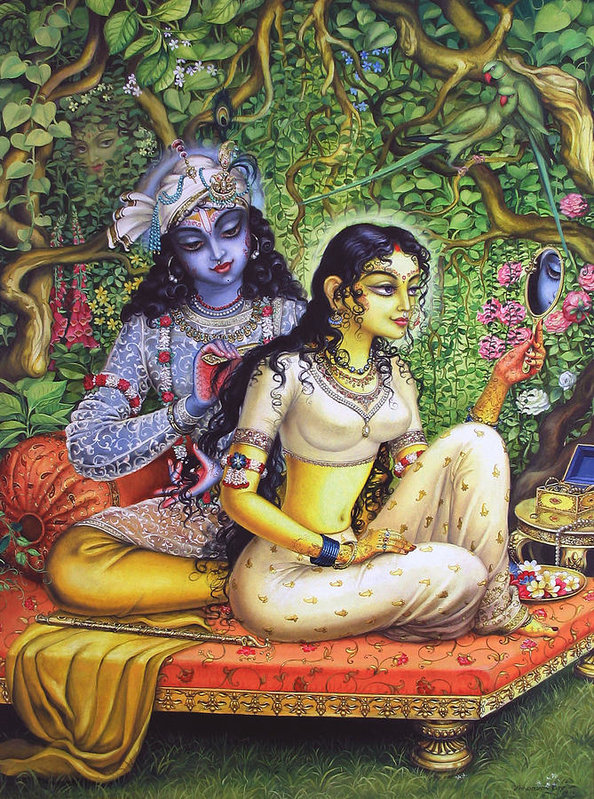
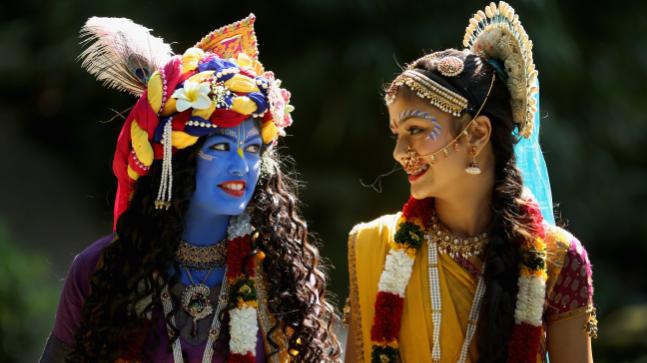
In Indian mythology, Lord Krishna’s Raas Leela is full of Shringar Rasa. The Raas Leela or Raas dance is part of the traditional story of Krishna where he dances with Radha and her friends. The term, raas, which stands for rasa, means “aesthetics” and leela means “act,” “play” or “dance, thus can be broadly defined as“Dance of Divine Love”.

Shringar also implies that there is inherent beauty everywhere and that everything can be loved. It denotes love and attraction. It is the ultimate Rasa, the king or queen of emotions, so to speak that possesses the power to heal anything.  It helps us let go of ego and connects us to the divine. Flowers, fragrances, perfumes, colors add Shringar to life.  Sringar rasa is depicted by light green color.

Shringar basically is superficial, but when we fall in love, our body becomes overwhelmed and Shringar gets a deeper meaning on a more emotional and spiritual level. Not just our mind and spirit, but our body also becomes overwhelmed with this feeling of infinite affection towards that which we find beautiful or attractive.

When we see an attractive person but our ego comes in the way, then the mind steals small glances and the emotion is short lived. On the other hand, when we let go of ego, our mind becomes flirtatious and indulges in fantasizing about our beloved’s beauty, so much so that nobody else in the world seems as beautiful. To maintain this illusion, the mind makes many small changes in the perceived appearance of the person, but, when the effect fades, it sees the person more realistically.


If we see our beloved as an object of desire and the scent of our dear one excites us, then lust takes over and love becomes more physical. On the other hand, when the beauty of our beloved and his or her eyes intoxicate us, we forget about ourselves and our love becomes spiritual or divine. Shringar rasa in its divine form can sustain the feelings of love for many years, even more than a lifetime. In India when partners are profoundly pleased with each other, they may promise to marry again in their next life.

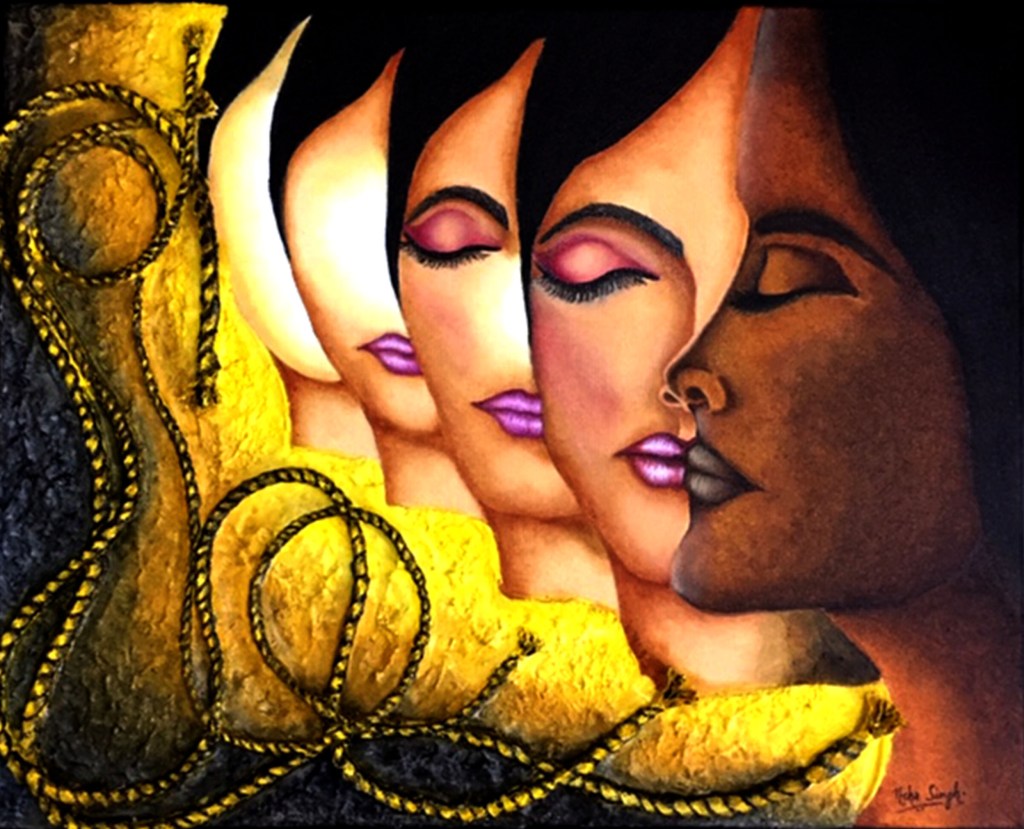
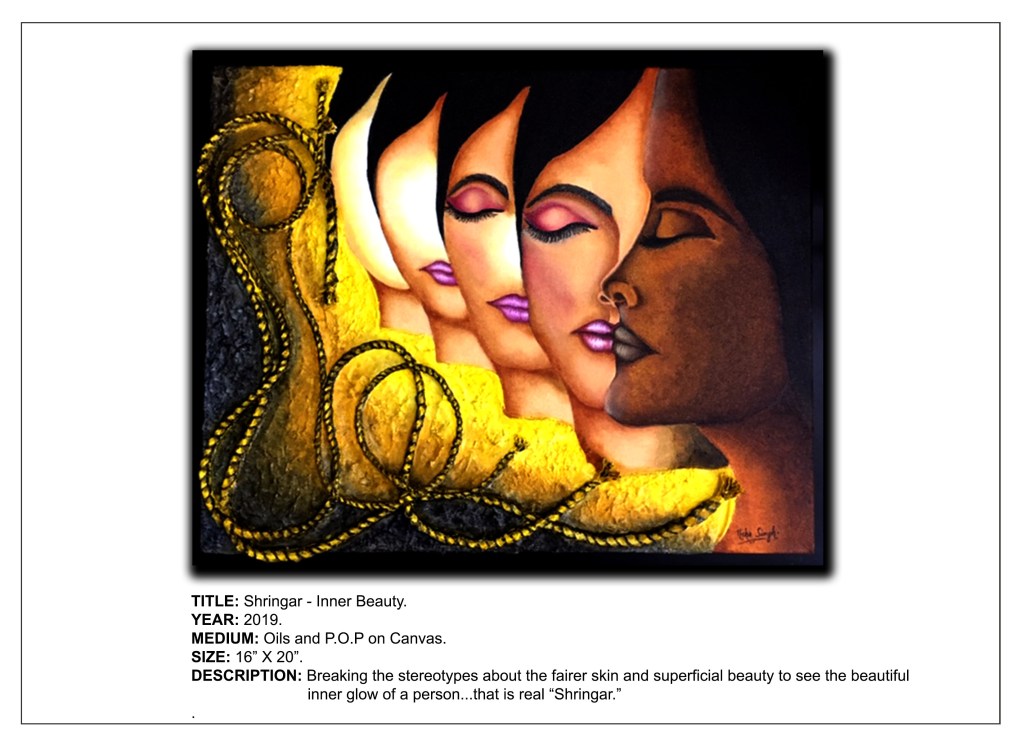
It is this emotion of beauty and love that I have tried to illustrate in the first artwork of the Navrasa Series, titled, Shringar – Inner Beauty. You all must have heard of the saying “beauty lies in the eyes of the beholder”. But the sad irony is that in today’s so called modern society, almost everyone believes in the conventional ideas of external beauty. The entire concept has been endorsed by the flourishing fashion and cosmetics industries to such an extent, that we can no longer see beauty beyond the face of a person. This also applies to skin color, specifically in India, where fairer skin is considered more attractive than its darker, or for that matter, even duskier counterparts.
Another proverb that further contradicts the idea of true beauty is, “beauty is only skin deep.” This phrase can be interpreted in several ways, the most widely accepted one being that external beauty has no effect on the internal qualities of a person.  This can mean that while someone may be beautiful on the outside, their character need not necessarily be attractive. It can also be interpreted in the opposite sense, that is, just because a person is not beautiful on the outside, it doesn’t mean he or she doesn’t have a heart of gold. In other words, it is not superficial looks, but the intrinsic goodness of one’s soul that make him or her attractive.

I strongly believe in the second interpretation. Being compassionate and having a good character are more important than good looks. Not only speaking of doing good things but having your actions match your words is beauty. Having a gentle and kind heart is beauty. In other words, Inner beauty is true beauty.

To express this belief of mine onto the canvas, I have taken the help of a woman’s face, which has been the epitome of external beauty for centuries. However, I have rendered the first face in a darker tone. By doing so, my attempt is to convey the message that not being fair skinned doesn’t make her any less attractive physically as well as intrinsically. One needs to look beyond her looks and skin tone, deep down into her soul and find that inherent goodness, which is the real essence of her beauty.  For all you know, she may have such a beautiful soul that its beauty radiates outwards from within in the form of the most resplendent glow. This beautiful, radiant essence is true inner beauty.

I have gradually eliminated the facial features in each of the faces to convey that we need to surpass these mortal physical features. Simultaneously I have lightened the skin tone, thereby trying to bring out that inner glow which is visible only when one learns to disregard the superficial visage. When we begin to appreciate the real beauty within, we experience the feeling called love.  

I have also attempted to convey the message that physical beauty fades with age, but the glow of good character and kindheartedness lasts eternally.

It is becoming clearer and clearer with each passing day that the socially construed notion of physical attractiveness, is something all women strive to achieve and maintain. In fact, they are so obsessed with looking beautiful that the fashion and makeup industries are thriving at their expense. Women give so much importance to looking good with the help of clothes, makeup and other accessories that these have become the stereotypes defining beauty today. To add to it all, the obsession with the fairer skin makes them resort to using fairness creams with the hope of lightening their complexion a shade or two.

The entwined ropes in the artwork symbolize these stereotypical bonds of superficial beauty and “fairer skin” that most women are entangled in. We need to break these shackles as they are mere illusions that prevent us from seeing the real picture. As long as we continue to live in this make believe world of “cosmetic charm”, we will not be able to see beyond the physical attributes of people who are truly beautiful deep down. After all, Shringar transforms into a divine feeling only when we let go of the ego that makes us worry about how we look instead of what kind of a people we are.

Coming to the medium and techniques….apart from my beloved oil paints, I have experimented with Plaster of Paris (POP) in order to impart texture to the background. I prepared a paste of POP and PVA glue in a ratio of 1:1 as I intended embedding strands of rope within the paste while it was still semi dry. Yes, I used real rope, which I gessoed and painted over later! While the POP provided the requisite coarseness to the texture, the PVA glue helped bind the ropes to the surface of the canvas. But it did have its disadvantages…the ropes lost their realism as they got covered with the POP paste in several places and I had to painstakingly repaint the twists in the cords to make it look like real rope again. On hindsight, the better option would have been to just stick the rope on top of the POP background after it had dried completely. It would have saved me a lot of work!

I had mentioned before that Shringar rasa is typically represented with light green color. But then, I did not want to restrict myself to one hue. Also, since my entire artwork was based on skin color, I had to vary my color palette and explore the more earthy tones. In a way, I too broke a stereotype!

Shringar rasa is generally depicted in Indian poetry, dance and music, so it was quite a challenge for me to portray it unconventionally in my art.  I have tried my level best to make it as simple and comprehensible as possible, so that anyone viewing it would easily understand what this “king of rasas” is all about. Would love to know if I was successful in invoking any emotions in you through this painting!

Sources and Photo Credits –

https://www.speakingtree.in/blog/9rasas-as-9-emotions-in-human-beings

http://drvidyahattangadi.com/the-navrasa-of-life/

https://en.wikipedia.org/wiki/Rasa_lila

https://pixels.com/featured/sringara-lila-satchitananda-das-saccidananda-das.html

https://pixels.com/featured/rasa-lila-satchitananda-das-saccidananda-das.html

https://fineartamerica.com/featured/shringar-lila-vrindavan-das.html?product=art-print

The Art of Emotions

Ever wonder what evokes feelings inside us? Feelings of love surprise, anger, sadness, fear, courage, aversion or peace? These feelings, that are born deep down inside the core of our bodies, namely our soul, are what we call Emotions. They are the ways we express our reactions towards various activities and happenings in our lives. They make life lively, rich, colorful and interesting, even though some of those colors may be bright and others darker.

The artist in me would describe emotions as the light and dark hues, shades and colors that paint the ultimate mortal canvas that is life.  As a designer, I would say they form the warp and weft of the fabric called life. Infact, I believe life and emotions have a symbiotic relationship and one cannot exist without the other. Can you imagine life without emotions? If they didn’t exist, how different would we be from robots and machines?
Emotions can be both positive as well as negative depending upon our perspective towards life and how we perceive situations. They are also displayed in varying degrees from person to person, depending upon his or her intensity of reaction to a particular situation. In psychology and philosophy, emotion is defined as a metaphysical experience displayed in the form of a psychological expression of our mental state as well as the biological reactions of our body.

Emotions form the foundation of Indian classical dance and music, theatre, art and literature and are recognized as the 9 Rasas among these traditional Indian performing arts. Popularly known as the Navrasa, they are translated into the nine emotions, moods or sentiments that figure in the daily lives of every human being. However, Rasa, a Sanskrit word, has multiple meanings as it can denote emotions as well as taste or flavor. The word Navrasa is also of Sanskrit origin, where Nav means nine and Rasa means taste or essence.
Not just the performing arts, the fine arts too (specifically drawing, painting and sculpting), have been a medium of expression for the Rasas.  Evoking the rasas in the audience through their art work is the primary objective of every artist, hence artworks are created solely with this aim.

 Come to think of it, every artist’s work evokes a certain emotion or a combination of emotions.  Rasa exists in each and every object, event or action. Not just that, everything that we do has Rasa. Depending on the individualistic nature of an object or person, some rasas hold a place of higher importance than others and at the same time may be extrinsic or innate. Rasa is the true “essence” of life itself.  

The nine emotions included in Navarasa are Shringara (love/beauty), Hasya(laughter), Karuna (sorrow), Raudra (anger), Veera ( heroism/courage), Bhayanaka (terror/fear), Vibhatsya (disgust),  Adbutha (surprise/wonder), and Shantha (peace or tranquility).

The “Color Spectrum” of Emotions

In the performing arts, specifically Indian classical dance forms, the “emotional color spectrum” consists of seven colors, just like the rainbow. Each emotion is designated a different color – rage(red), greed(orange), fear(yellow), will power(green), hope (blue), compassion(indigo), and love(violet). However, it also represents the absence of color (black), which is death, and the combination of colors (white) which is life. Similarly each rasa is also depicted with a different color, as listed below:

  1. Shringara – Green.
  2. Hasya – White.
  3. Karuna – Grey.
  4. Rudra – Red.
  5. Veera – Orange.
  6. Bhayanaka – Black.
  7. Vibhatsya – Blue.
  8. Adbhuta – yellow.
  9. Shanta – White.

These guidelines are being followed as a general rule to portray the rasas in Indian classical dance forms, but for us artists, the sky is the limit. So, don’t let it stop you from thinking out of the box and innovating!

Depiction of Navrasas in Art

The early 20th Century saw the rise of an art movement called “Expressionism,” in which the artist wanted to express an emotional experience rather than depict a scene realistically. Some artists would attempt to capture what they were feeling at the time of making the artwork and it would eventually reflect in their final finished piece. Others would create an image with the hope of awakening an emotional response in the viewer. 

One of the best ways to depict an emotion is through facial expressions. And this is the element most artists have adopted while illustrating emotions in their art. Some artists have used eyes to achieve the same goal. As they say, eyes are the mirror to the soul! Apart from these, several other approaches have been taken by artists in order to depict emotion in their art, for instance hands and even the entire body. Infact, the subject’s hands have become a fundamental element for expressing emotion. Some of the greatest masters of modern art like Matisse, Picasso, Lichtenstein and Chagall have displayed emotion in their art.

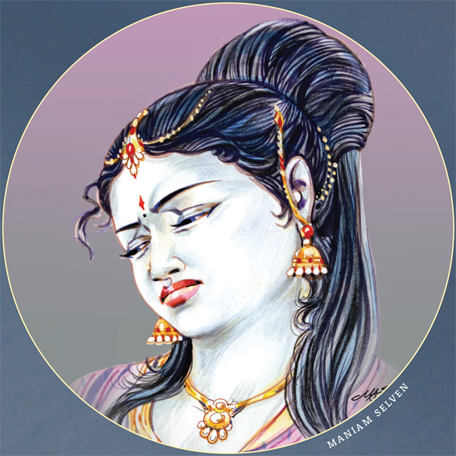
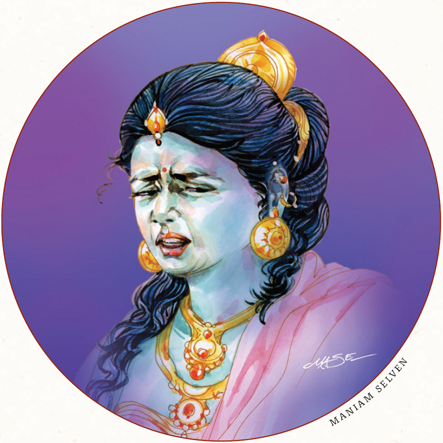
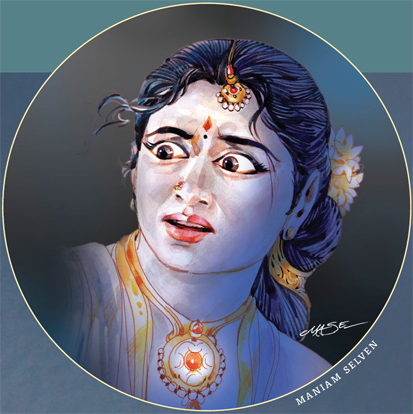
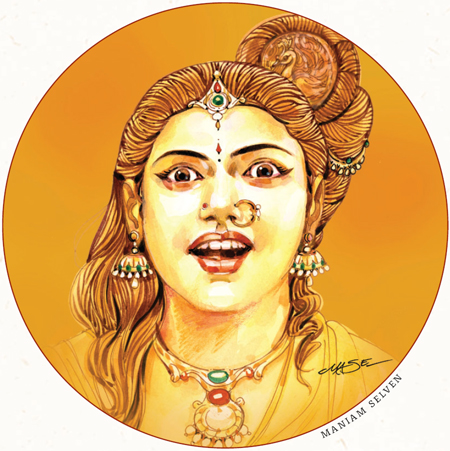
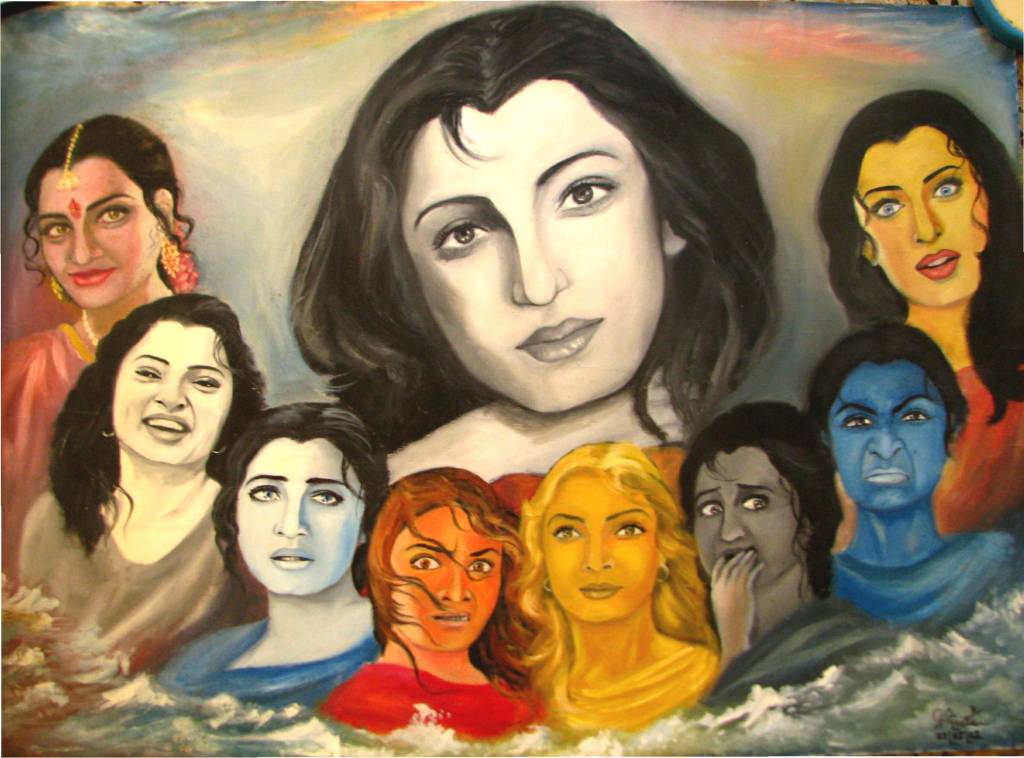
But how do artists illustrate the Navrasas in their art? The most common way is through facial expressions, as is seen in the work of an Indian artist and a leading illustrator in Tamil magazines, Maniam Selvan. In one of his paintings, he depicts the rasas with joy at the centre, surrounded by love, sorrow, anger, courage, fear, disgust, wonder and peace.

The Navrasas by Maniam Selvan

He has also rendered the rasas individually in the form of facial expressions on a woman’s face.

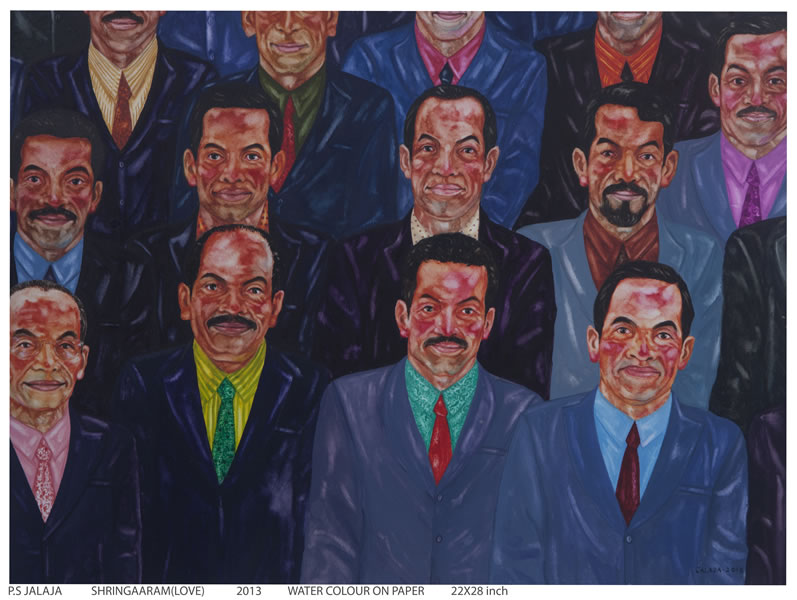
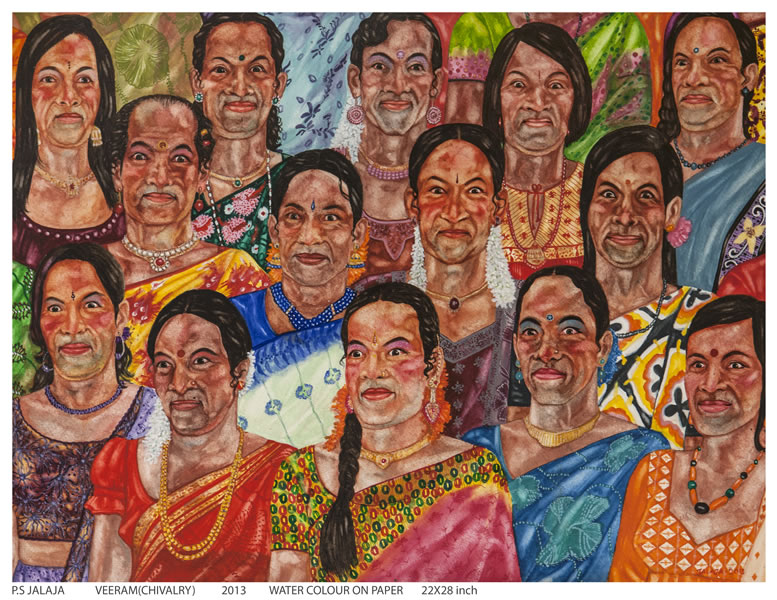
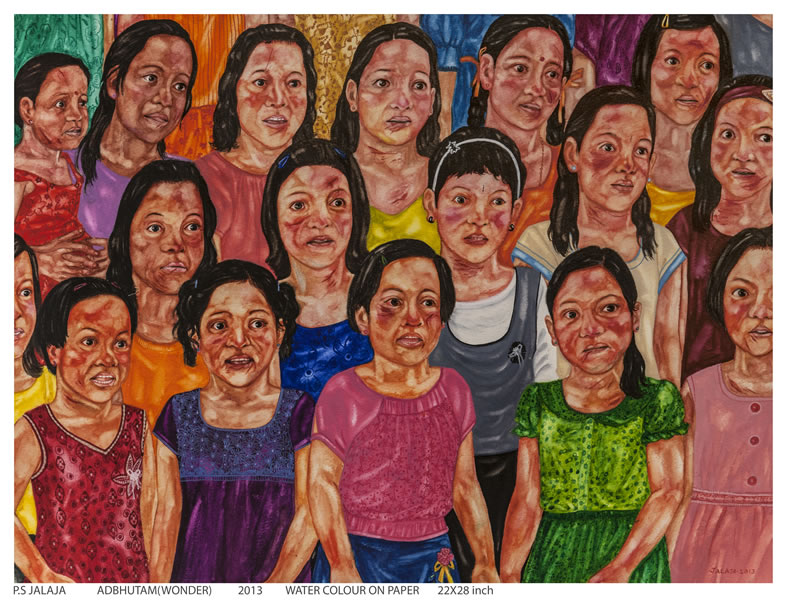
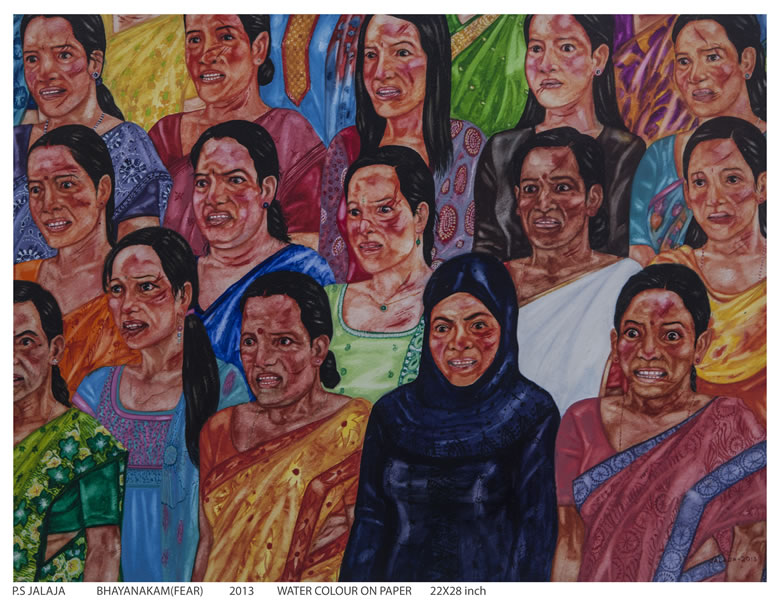
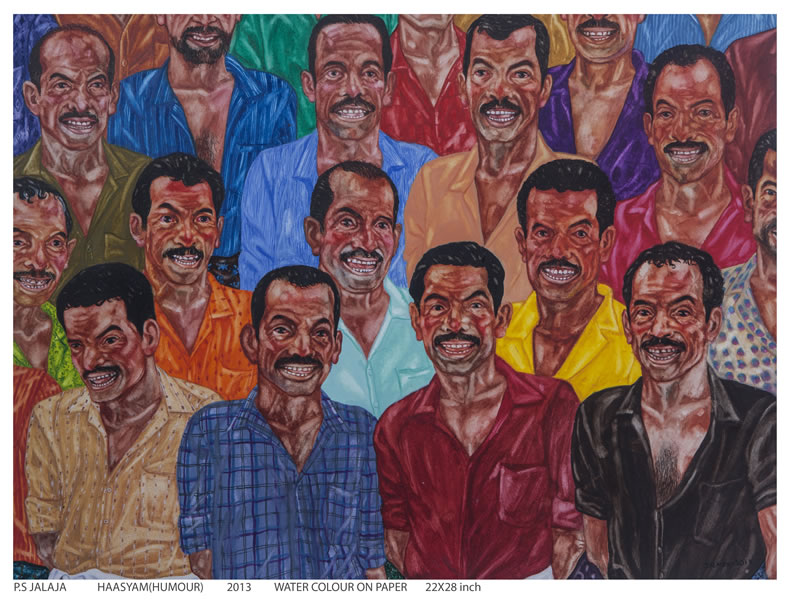
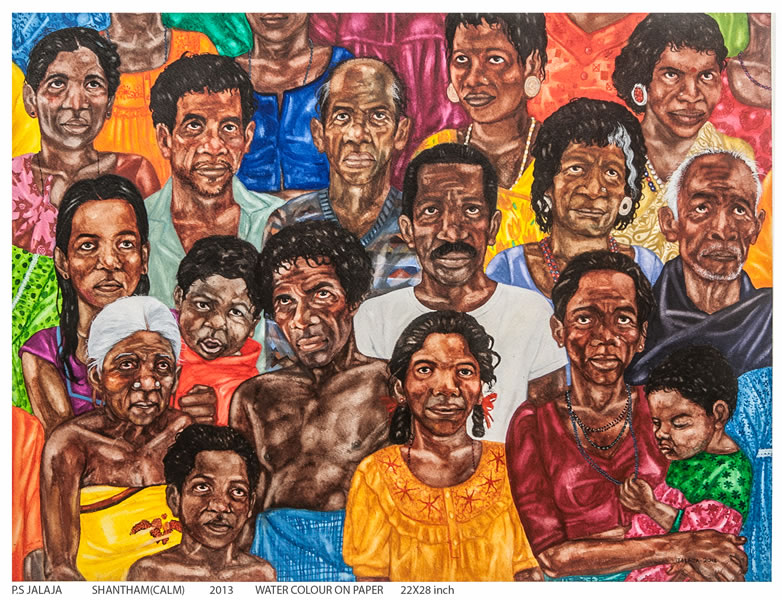
Artist P.S. Jalaja’s work titled “Shringaram”, which is part of her ‘Navarasa’ series of works, is a close-up of a homogenous crowd in the grip of a telling emotion, rasa. Working further on her favorite motif of crowd, she has transformed her canvas into a cauldron of intensely individual emotions transferred to a think-alike mob. These personally political ‘navarasa’ series of paintings are remarkable for their social currency, satirical undertone and tremendous local appeal and are not easily conceivable.

Artist Annie Ravi has depicted the rasas in the form of a self-portrait, inspired by the nine Indian sutras of dramatics, the colors of pop art and expressions from Japanese manga characters.

Navrasa by Annie Ravi

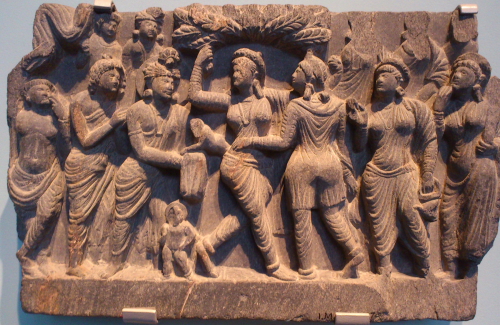
Apart from this, Navrasas have also been displayed as facial expressions in Kerala murals paintings and Indian sculptures.Here’s some more imagery depicting the rasas in art.

Now that we have talked about direct portrayal of the Navrasas through art, how do you think artists expressing emotions indirectly in their work?

Let’s consider some examples:

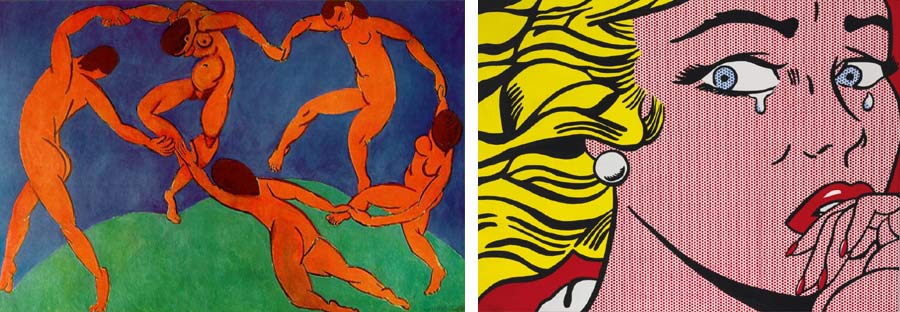
  • Henri Matisse’s famous artwork “Dance II” can be interpreted as a display of joy.
  • Roy Lichtenstein’s “Frighten Girl”, is suggestive in itself owing to the title, for the look of fear in the subject’s eyes speaks volumes.
  • “The Weeping Woman” by Pablo Picasso seems to be an attempt to express sadness.
  • Marc Chagall’s “Birthday”, expresses love, which is seemingly evident in the gait and stance of the couple.
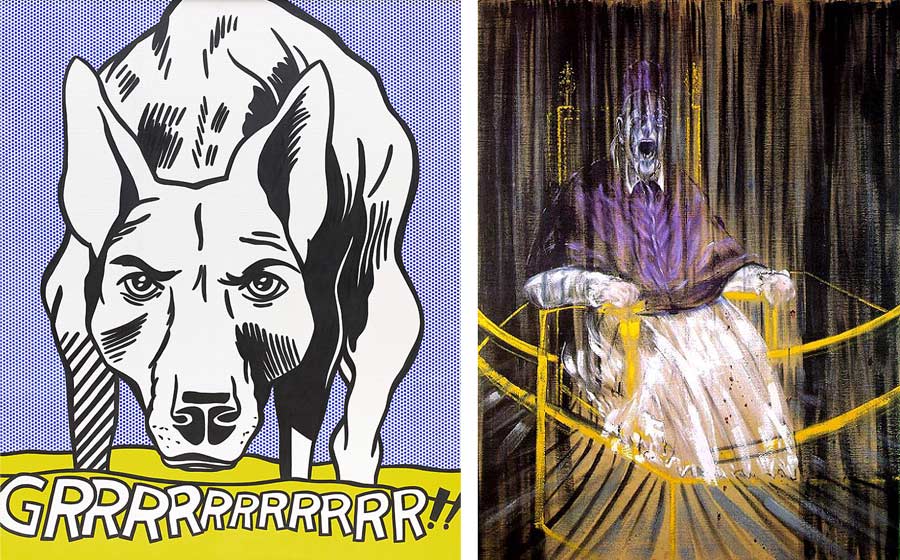
  • “Grrrrrrrrrrr!!”  by Roy Lichtenstein, is evidently displaying anger, but then again, it could also generate a feeling of fear in the viewer.
  • Francis Bacon’s, “Study after Velazquez’s Portrait of Pope Innocent X”, can be interpreted as anger as well pain.
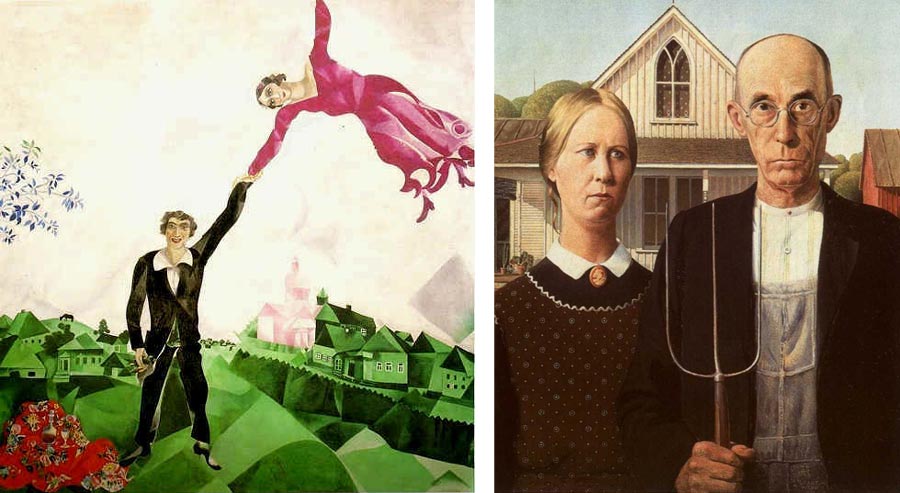
  •  “The Promenade” is also a creation by Marc Chagall that depicts happiness.
  • Grant Wood’s, “American Gothic”, is a painting that I personally find difficult to interpret owing to the grim and serious looks on the faces of the subjects. But these two are expressions and thus emotions, in themselves.

These are the most universally accepted interpretations of the emotions portrayed in the above paintings, but then again, there is no hard and fast rule. For all you know, your emotional response to any of these paintings can be totally different from mine, so, to each his own!

My Interpretation of Navrasas

In the next few posts, I will take you on a journey into the world of these nine emotions or rasas that not only govern Indian performing arts and fine arts, but also constitute the very cosmos of human expression. So, join me as I plunge into the fascinating world of Navrasas! 

I will introduce you to each rasa individually and describe how I have interpreted it in my art. My approach to every rasa has been a combination of direct as well as indirect portrayal. In some of my pieces, I have used the conventional elements in terms of the face and eyes, but I have attempted to use them symbolically to either convey or to evoke an emotion with a moral or social message attached to it. At the same time, I have also tried to depict certain emotions indirectly without the aid of these elements.I have also not followed the conventional norms of the emotional color spectrum alone. Instead, I have chosen to use other colors as well, in combination with these.

Just to give you a sneak peak into my world of Navrasas, here are some of the artworks from my upcoming Navrasa series:

Want to know more about them? Then, keep following my blog and read the upcoming posts!

Sources and Photo Credits

https://www.thehindu.com/news/cities/Kochi/keralas-decadence-in-jalajas-navarasa-series/article5617231.ece

https://dpstinkyfinga.wordpress.com/2014/09/09/the-navarasa-of-indian-sculpture/

https://artsology.com/artemotion.php

https://www.hinduismtoday.com/modules/smartsection/item.php?itemid=5938

http://drvidyahattangadi.com/the-navrasa-of-life/

https://thinkrasa.wordpress.com/

https://www.gallerist.in/pop-art-paintings/navrasa

http://archive.kashiartgallery.com/gallery/currentExhibition.htm

Done and Dusted! – Part 2

Hey all! In my last blog post, I introduced you to my passion for the dry medium and talked about soft pastels in particular. This post is a continuation of the last one, but this time around I will talk about yet another one of my dry medium favorites, Color Pencils.

Like most people, I too was initiated into the world of color pencils as a kid in school. This is when one just starts to learn the basics of art and coloring. For this very reason, color pencils, or any other dry medium for that matter, is the best choice, as not only does it provide ample amount of opportunities to explore freely, but is also one of the perfect non-messy mediums for kids to start with. So if you are obsessively compulsive about cleanliness, then color pencils are just right for you!

 Having said that, color pencils are advantageous for adult artists as well. First and foremost, they are extremely lightweight and portable. They don’t require any elaborate set-ups like brushes, solvent, mixing palettes and the works. One can always carry them when on the move and voila! You are good to go!! Some other reasons why I prefer colored pencils are:

  1. They are perfect for rendering the finer and more intricate details in your artwork.
  2. They’re clean, don’t smudge (unlike soft pastels) and leave behind no mess to clean.
  3. They are ready to use whenever and wherever you want!

Another very important aspect that attracted me towards color pencils was my need for a medium capable of producing the same, detailed effects as I was achieving with oils. I found this medium to be color pencils.

Like before, I do not want to get into the technicalities of how to use color pencils and where to find good ones, as there’s enough on the net already. So let’s keep things simple. I strongly believe that art is a learning process involving lots of trial and error. So, today, I am going to share with you my personal experience with this lovely medium as well as my exploration with it, the one that worked for me.

So if you are game, then hop on board!

In the first part of this blog post, I had introduced you all to the colorful festive season that forms a quintessential part of Indian culture. This time around, yet another festival became the source of my inspiration, namely “Janmashtami”, or “Krishna Janmashtami”. This one is celebrated annually in several parts of India as the birth anniversary of Lord Krishna.

There’s a very interesting story behind Janmashtami. According to Hindu mythology, the city of Mathura was reeling under the torment of king Kansa. But it was prophecised by the heavens that his evil ways would be laid to rest by his sister Devaki’s 8th child. On hearing this, Kansa sent his sister and her husband Vasudeva to prison. When Devaki was pregnant with her 8th child, Kansa got anxious. Krishna was in fact the eighth child of Devaki and also avatar of Lord Vishnu. When Devaki was going into labour, Vishnu appeared to Vasudeva, revealed this truth and also that he would kill Kansa.

On that dark and thunderous night, Vishnu unlocked the prison doors, put all the guards to sleep and told Vasudeva what to do. As per his instructions, Vasudeva left the palace with a wicker basket on his head, carrying his divine son. He crossed the Yamuna into the village of Gokul and exchanged the baby with the new born baby girl of Gokul’s head Nanda and his wife Yashoda. Thus, Krishna grew up in Gokul and eventually succeeded in putting an end to his maternal uncle’s tyranny.

Hindus celebrate Janmashtami by fasting, singing, praying together, preparing and sharing special food, night vigils and visiting temples. The actual celebration of Krishna Janmashtami takes place during the midnight because Lord Krishna was born on a dark, stormy and windy night. So, at around midnight, an idol of Krishna is bathed in water and milk by devotees, then dressed in new clothes and worshipped. Sweets are first offered to the God and then distributed as prasada.  

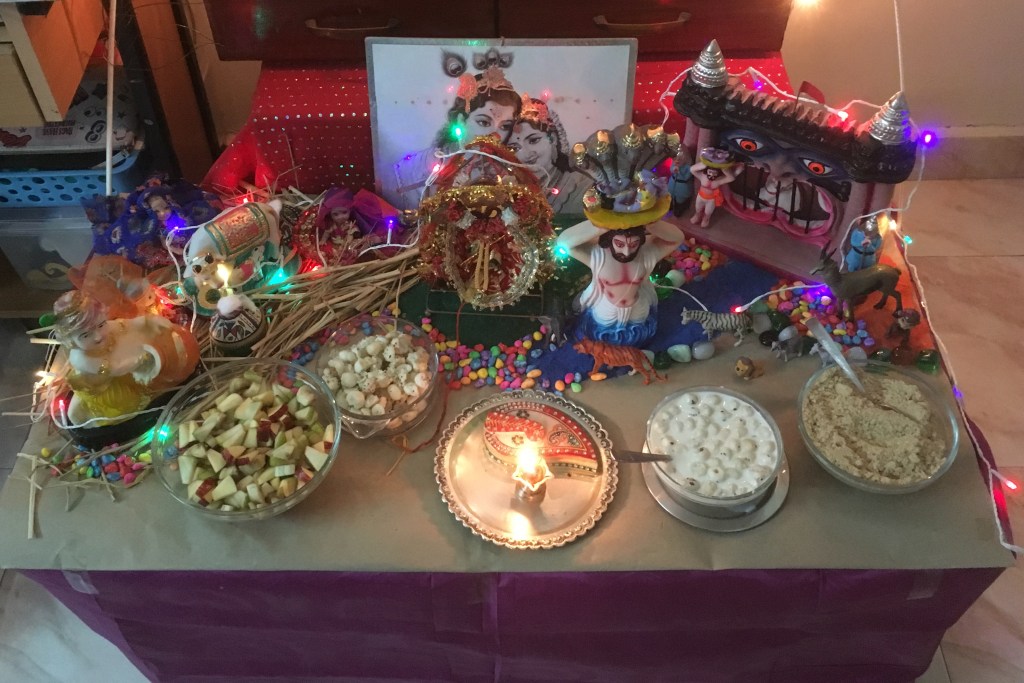
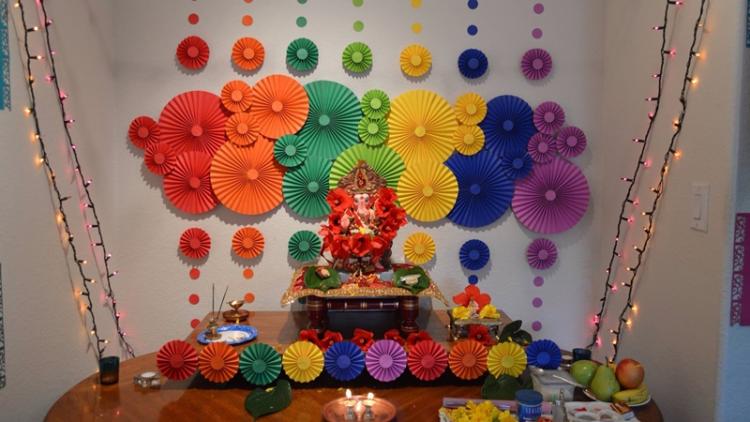
Many communities organize dance-drama events called “Rasa Lila” or “Krishna Lila”, depicting events from the life of Lord Krishna. At home, the story of his birth and other childhood anecdotes are depicted in the form of a colorful visual display called a “jhanki.” I am sharing below an image of one such jhanki that I display every year in my home.

There are several colorful legends that narrate incidents from the life of Lord Krishna. As a child, he was known for his pranks such as stealing butter and there are several images that show him dancing joyously with a ball of butter in his hands. As an adult, he is most commonly depicted as a dancer or a lover, often playing his flute and enchanting young women who are totally smitten by him. It was this vibrant imagery of Krishna that turned him into my muse for an artwork I call, “Mormukutdhari”, one among his many sobriques, which literally means the one who wears a peacock feather in his crown.

My muse…Krishna.

Now there’s another enchanting tale behind this name. Legend has it that Krishna played such a melodious tune on his flute that it mesmerized the peacocks and they danced in ecstasy. The king of the peacocks approached Krishna and requested him to join them. Krishna – who can never refuse a devotee’s appeal, accepted. When the dance ended, the king of the peacocks approached Sri Krishna with great humility and offered his plumage as a mark of gratitude. Sri Krishna lovingly picked up the peacock’s offering and placed a few on his crown. It was thus that he came to be called “Mormukutdhari.”

One aspect that has remained unchanged through time is depicting Krishna in blue. But this doesn’t mean his skin color was actually blue. It was his aura that was perceived to be blue. Anything that is vast and beyond our perception generally tends to be blue, like the ocean or the sky. Based on this, he has been shown with a blue body which is a symbol of his all inclusiveness too. This blue energy or aura surrounding his body also made him irresistibly attractive. It is for this very reason that I too have used the brightest hues of blue to render my Krishna. Not only does it make him look charmingly endearing, but also brings out his divinity.

I have used the form of a peacock feather to create a backdrop for Krishna’s face. The true beauty of a peacock feather is revealed when it scatters its multi-colored brilliance. It is this beauty that I have attempted to display through my artwork by rendering the peacock feather in a kaleidoscope of bright hues. My main objective in doing so is to compliment the blue I have used in the image of Krishna’s face, at the same time enhancing it further and making it stand out.

Coming to the medium, this was my maiden exploration with Prismacolor pencils, which I used for the face of Krishna and I have to say, I am a diehard fan of these pencils now! They are simply awesome!! Not only are they smooth as butter, but also blend to perfection. They produced effects that I would have achieved with my all time favorite oil paints.

For the peacock feather background, I had another trick up my sleeve. Instead of using prismacolor pencils, I chose to use soft pastels and I am glad to say, I have no regrets. They were as good at bringing out the majestic radiance of the peacock feather as the prismacolor pencils were at achieving the endearing charm of Krishna’s face. All in all, this was an experiment that combined two mediums and I am thrilled that this one went in my favour!

A Word of Caution – Although I successfully managed to create an artwork using both soft pastels and pencil colors, I faced a major hiccup when it came to using fixative for the soft pastel part. The problem was that fixative posed the risk of damaging the portion I had rendered with pencils colors, namely Krishna’s face. To solve this issue, I had to trace out a precisely accurate stencil of the face on a transparency sheet to cover and protect it from the fixative spray. To my relief,  it worked and all was well!    

 Now that I have shared my experiences with both soft pastels and pencil colors, I think it would be only fair to compare the two in terms of their strengths and weaknesses. Who knows? If a particular aspect is the weakness of one medium, the same feature may become the strength of the other! So, shall we?

To make it more comprehensible, I have listed it down in a comparative tabular form for you as below:

S.NO FEATURE SOFT PASTELS PENCIL COLORS
1. Solid, broad strokes Strength Weakness
2. Accurate lines Strength Strength
3. Minute detailing Weakness Strength
4. Wide range of shades Strength Strength
5. Minimal or no set up required Strength Strength
6. No drying time Strength Strength
7. No additives or solvents needed Strength Strength
8. Ability to combine with oils, water colors, acrylics Strength Weakness
9. Brittleness and dust Weakness Strength
10. Toxicity Weakness Strength
11. Versatility with paper Weakness Strength
12. Portability Strength Strength
13. Use of fixative Weakness Strength
14. Effect on hands Weakness Strength
15. Preservability Weakness Strength

I have formulated the above table after careful consideration of both mediums and the inferences displayed there are purely my personal opinion. If you do not agree with something, it’s perfectly fine as each and every artist has his or her own comfort zone as far as a particular medium is concerned.

I hope this comparative study helps you in deciding which dry medium suits your needs best and I hope you are ready to get started on your very own dry media art!

Done and Dusted! – Part 1

Heard enough about oil paintings? How about we talk about something different for a change? Let me tell you about my long lost love for dry media, specifically soft pastels and pencil colors.

But Hey! Hang on! When I say soft pastels, I don’t mean the adjective “pastel”, which means a pale color. I am talking about the beautifully vibrant and portable medium called Pastels, which has been used for centuries by artists to create colorful art without the aid of water, solvent, brushes or palettes. In general, Pastels is a wider term used to include different types of dry media like Oil pastel, Charcoal, Pencils, Conté, Sanguine etc.

So, let’s begin with Soft Pastels. It is essentially a dry medium that requires neither a liquid to facilitate its application nor any specific tools like brushes (unless you are doing “under-painting”, but that’s a topic for another post on another day!) That’s why I fell in love with it! So put away your palettes, brushes and paints and let’s talk pastel art!!

Before I dish out my “dry media art” as I like to call it, let me give you a little background as to what got me hooked to this wonderful medium. My first tryst with soft pastels was during the regular art lessons I took in school. It was like love at first sight. Since then, their vibrancy and fluidity have always fascinated me. (Don’t get me wrong when I use the word fluidity. I use it merely as a metaphor for their portable nature and ease of application and blending).

However, as I kept exploring different mediums, I came to love oils and began to dabble in them more and more. Eventually, oils took over as my favorite medium and my first love got lost in their glistening shine.

So, how did my fervor for soft pastels get revived? Being an Indian, the commencement of the colorful festive season in my country is not only joyous, but also extremely inspiring for me. The vivid and vibrant imagery of the Indian deities motivated me so much that I was dying to etch them in posterity. That’s when I recalled my passion for soft pastels. It was the perfect medium to capture the richness of all those beautiful colors!! So I rummaged through my art closet, dished out my box of pastels and we were all set to court our ideal muse!

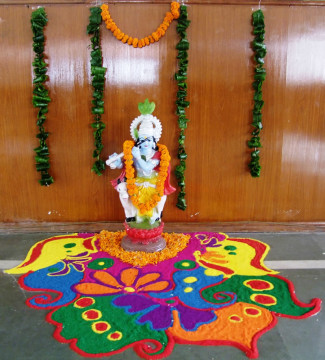
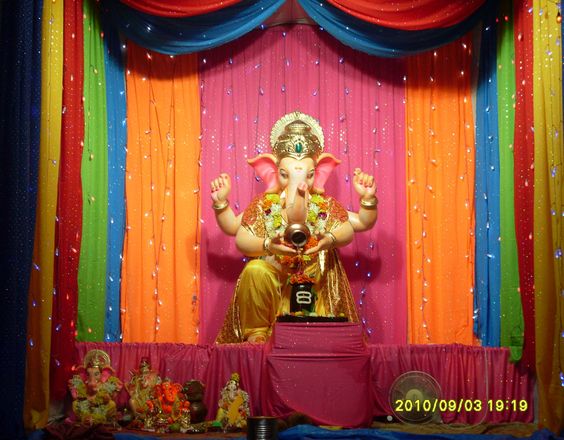
One such muse that inspired me was Lord Ganesha, the “Elephant” headed God. And the timing was just right too, what with the festival of “Ganesh Chaturthi” around the corner. Ganesh Chaturthi is a ten-day Hindu festival in honour of Ganesha’s birthday. It is celebrated on a grand scale in most parts of India, marked by the setting up of colorful “pandals” (temporary shrines), where devotees worship the Lord’s idols for ten days and pray for wisdom, prosperity and good fortune. The festival finally concludes with the “visarjan” (immersion) of the idols into a local river or water body.

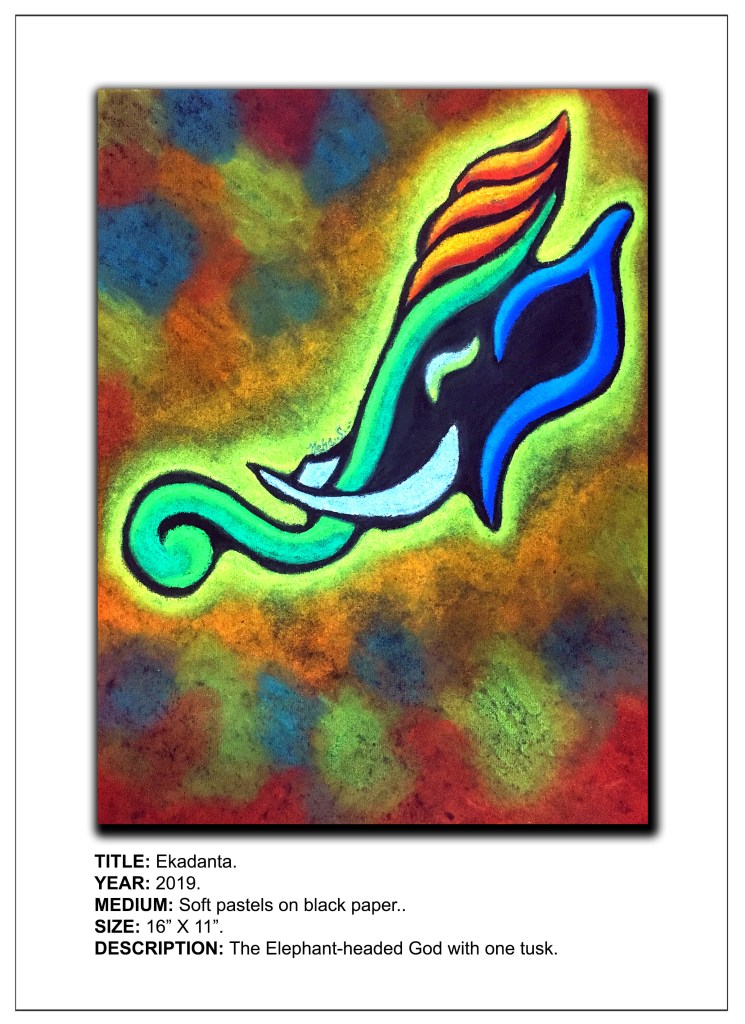
The idols, the rituals and the festivities are all brimming with bright and dazzling hues, which are what I have attempted to translate into my artwork titled “Ekdanta” (another name for Ganesha, literally meaning the one-toothed or one-tusked God). I felt soft pastels were THE medium I needed to bring out this rich brilliance of colors associated with the festival and hence Lord Ganesha. I have the used the conventional technique of layering and smudging with my fingers to create this colorful rendition of Ganesha. In order to enhance the brightness of the colors even more, I chose a black paper, which is regular craft paper (or chart paper, as we call it in my country).

My rendition of Ganesha in soft pastels.

 Now, I am pretty sure there’s enough on the net about what soft pastels are, so I am not going to bore you all with the nitty gritties. I am also not going to indulge in the technicalities of the medium as I am sure you will find innumerable lessons and tutorials on how to apply soft pastels.

 One interesting fact that I would like to point out though is that an artwork made using pastels is also called a pastel (although some people may like to call it a pastel drawing or pastel painting as well). How cool is that?!

Besides their wide range of colors and blending ability, the other pros that led me to make soft pastels the medium of choice for this artwork are:

  1.  They can create solid, broad strokes as well as accurate lines and marks.
  2. Pastels aren’t mixed like oils, watercolors or acrylic paints. One has to be precise with specific color values or skillfully layer them to blend evenly so as to give an illusion of being merged. This requires a wide assortment of pastel shades which is not a problem with this medium.
  3.  A pastel painting requires little set up, there is no need for solvents, and there are no brushes to clean. Hence, it is the perfect medium to employ when time is of essence.
  4. Pastels make artists connect on a more intimate level with their artwork as they use their fingers to paint instead of brushes. This also gives them the power to understand and control their strokes better than they would with a brush.
  5. Owing to their portable nature, they provide a greater allowance for spontaneity.
  6. No mixing medium/solvent or palette is needed for mixing the colors. 
  7. There is a limitless spectrum of pastel colors from the very lightest to the very darkest in as many brands, textures and categories by different manufacturers. 
  8. Because of the lack of additives (such as oil in oil paint) pastel paintings do not yellow or crack and can last a very long time.
  9. Soft pastel does not need to dry like other paints. They can be used to draw as well as paint, hence they are ideal for busy people who can’t afford to wait for a paint layer to dry. Also, they don’t require any prepping up like priming a canvas or setting up a palette.
  10. Last but not the least, they can be combined with other mediums like oils, watercolors, acrylics, etc.

While soft pastels have several pros, just like any other medium, they have their cons too:

  1. Pastels are dusty and crumbly and the particular dust constantly falls off the painting.  
  2.  Although most of the trusted pastel brands claim that they do not use metals, lead, or cadmiums, but breathing in lots of dust is never a good idea as too much of it can turn out to be toxic.
  3. Pastels do not work as well on smooth paper as they do on toothed sheets. Tooth is a slight texture in the paper which will holds the pastel in place, since they are loose pigments. Smooth paper lacks texture or has minimal texture, hence does not hold soft pastels well and is not recommended for pastel painting.
  4. Pastels are a very predictable medium in terms of color mixing and the final outcome. Once laid down on the paper there’s isn’t much scope for change.
  5. Since the artist uses his or her fingers to smudge and blend the pastels, it can cause them to become rough and dry.
  6. In order to prevent the painting form smudging, a fixative is required which darkens the color values besides fixing the colors. This may alter the final look of the artwork.

Despite these disadvantages, soft pastels continue to be my favorite dry medium as these drawbacks can easily be taken care of with the help of the following precautions:

  • Wear a mask to prevent breathing in the dust particles and moisturize your hands with a cream after using soft pastels to protect them from dryness.
  • Avoid blowing the dust with your mouth so as to not inhale what floats in the air.
  • Use an easel or an inclined table when working with pastels so that the dust can slide down to the bottom.
  • A moist towel at the bottom of the easel or table can absorb the falling dust.
  • It is not compulsory to use a fixative at the end of the painting. One can use it sparingly between layers in order to ensure that the colors adhere better and also to intensify them further.
  •  Always frame a pastel painting behind glass, with a space between the art work and glass to avoid smudging due to any residual particles left over even after using the fixative.
  • If you want to preserve your pastel painting in an unframed form, keep it flat, with a sheet of glassine paper or butter paper over it to prevent smudging. Tape the glassine paper to the edges of the painting to make sure it does not move and smudge the pastel. Then store this painting in a sturdy folder or keep it flat in a drawer.

But don’t get bogged down by all these precautions. The trick to creating a successful pastel artwork is to put your hair down and let your pastels do the talking. So turn up the music and just go with the flow – until it’s done and dusted!!